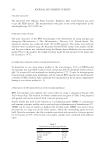
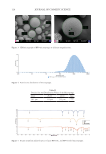
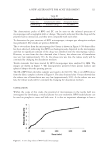
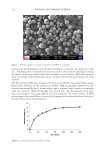
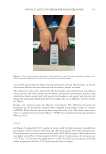
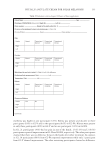
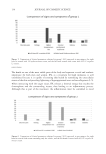
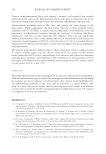
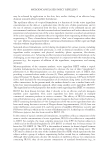
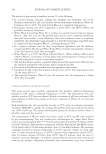
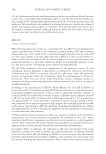
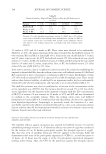
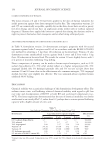
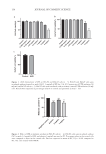
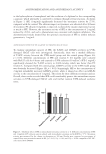
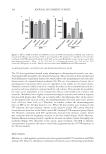
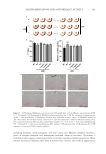
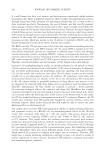
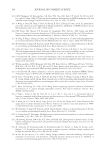
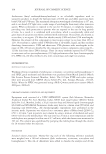
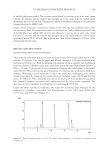
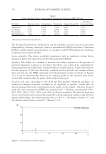
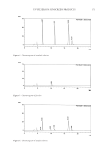
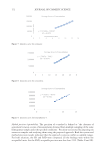
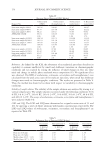
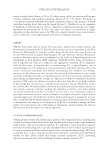
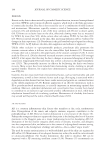
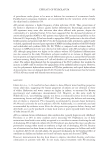
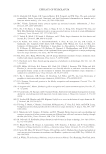
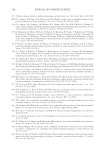
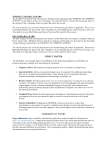
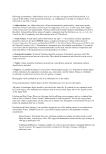
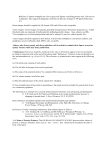
172 JOURNAL OF COSMETIC SCIENCE Method precision (repeatability). The precision of a method is defined as “the closeness of agreement between a series of measurements obtained from multiple sampling of the same homogenous sample under the specified conditions.” Precision was assessed by preparing six sunscreen samples and analyzing them using the proposed approach. Both the system and method precision results indicated that the approach is precise within acceptable ranges. For both solutions, the SD and RSD were computed all the findings were within the acceptable limits. For the RSD, acceptable precision was less than 2.0% (Tables II and III). y = 131604x - 109307 R² = 0.9975 0 500000 1000000 1500000 2000000 0 2 4 6 8 10 12 14 CONCENTRATION(PPM) Average Area vs Concentration Figure 7. Linearity curve for octinoxate. y = 57467x - 79915 R² = 0.9974 0 500000 1000000 1500000 0 5 10 15 20 25 30 Average Area vs Concentration Figure 8. Linearity curve for octocrylene. y = 73287x - 48710 R² = 0.9911 0 200000 400000 600000 800000 1000000 0 5 10 15 Average Area vs Concentration Figure 9. Linearity curve for benzophenone-3. AVERAGEAREA

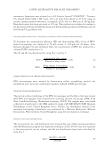
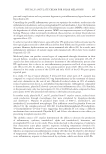
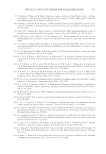
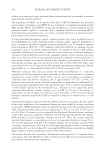
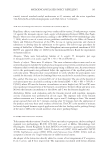
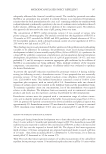
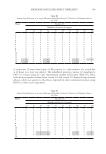
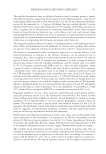
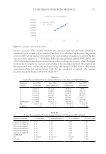
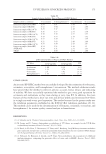
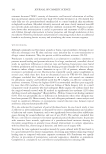
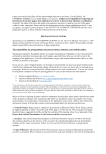
173 UV FILTERS IN SUNSCREEN PRODUCTS Recovery (accuracy). The closeness between the expected value and the value obtained is expressed by the accuracy of an analytical method. It is calculated by dividing the percent recovery (R%) of the analyte recovered by the total number of analytes recovered. In this case, successive analyses (n = 3) for three different concentrations spiked (80%, 100%, and 120%) of standard solution were carried out in order to evaluate the accuracy of the developed method. To investigate the recovery and validity of the developed method, the results from the experiment were statistically evaluated using the formula [% Recovery = (Recovered concentration/Injected concentration) 100]. To be considered acceptable, the average recovery should be between 90-110% (Table IV). Table III Method Precision Data From the Sample Solution of the Proposed HPLC Method Replicate number % octinoxate % benzophenone-3 % avobenzone % octocrylene Sunscreen sample A 6.65 5.49 2.49 1.62 Sunscreen sample B 6.42 5.49 2.51 1.6 Sunscreen sample C 6.37 5.44 2.41 1.61 Sunscreen sample D 6.39 5.29 2.55 1.55 Sunscreen sample E 6.31 5.26 2.54 1.55 Sunscreen sample F 6.35 5.34 2.49 1.58 AVERAGE 6.42 5.38 2.5 1.59 SD 0.120391 0.099227 0.0481 0.03 % RSD 1.87 1.84 1.92 1.91 Table II System Precision Data From the Standard Solution of the Proposed HPLC Method Replicate number Area STD octinoxate Area STD benzophenone-3 Area STD avobenzone Area STD octocrylene 1 1103415 632449 281941 799917 2 1091212 630491 294664 781772 3 1133370 645920 292924 819501 4 1123155 642783 284795 813077 5 1133241 648833 283581 820173 6 1116939 636718 280476 808599 AVERAGE 1116888.7 639532.3 286396.8 807173.2 SD 16847.16 7452.67 5938.95 14530.87 % RSD 1.51 1.17 2.0 1.80 y = 29845x - 49575 R² = 0.9951 0 50000 100000 150000 200000 250000 300000 350000 0 5 10 15 Average Area vs Concentration Figure 10. Linearity curve for avobenzone.
Purchased for the exclusive use of nofirst nolast (unknown)
From: SCC Media Library & Resource Center (library.scconline.org)