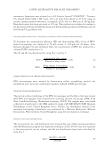
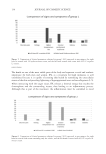
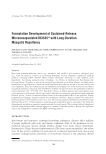
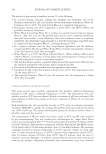
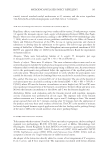
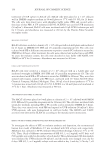
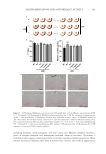
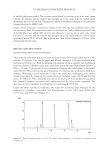
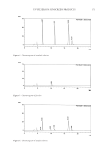
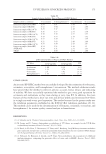
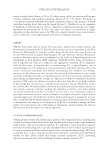
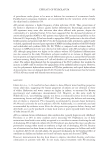
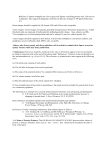
169 UV FILTERS IN SUNSCREEN PRODUCTS of mobile phase were added. The mixture was allowed to sonicate on an ultra-sonic water bath for 10 minutes and the volume was brought up to the mark with the mobile phase (methanol: water 90:10 vol/vol). The prepared solution was filtered through a 0.45 μm nylon syringe filter for the HPLC vials. Sample solution preparation. A sunscreen sample of 350–400 mg was transferred into a 100- ml volumetric flask. The sunscreen sample was dissolved in 2 mL of chloroform and 20 mL of mobile phase was added. The solution was allowed to sonicate on an ultra-sonic water bath for 10 minutes and the volume was brought up to the mark with the mobile phase (methanol: water 90:10 vol/vol). The solution was then filtered through a 0.45 μm nylon syringe filter for the vials. RESULTS AND DISCUSSION METHOD DEVELOPMENT AND OPTIMIZATION The method development was started with methanol: water (70:30) with a flow rate of 1 mL/ min for 20 minutes. The mobile phase was filtered through a 0.45 µm membrane filter and sonicated before use. Peak broadening and merging of the octinoxate and avobenzone peak was observed. Further trials were carried out using the same Baker bond Q2100 C 18 (250 × 4.6 mm, 5 µm in particle size) column but changing the mobile phase to methanol: water (80:20). There still was not good separation of octinoxate and avobenzone with these changes. Obtaining a good separation of these two peaks was challenging, and another attempt was made by changing the mobile phase to methanol: water (90:10) and the flow rate to 0.7 mL/min. This caused the run time to increase to 25 minutes but the separation was observed between octinoxate and avobenzone and the other peaks improved. The detection of each component was monitored at a wavelength of 303 nm. Under the above optimized conditions, the respective retention times obtained for the avobenzone, octinoxate, octocrylene and benzophenone-3 were 17.907 min, 16.619 min, 11.373 min, and 6.827 min (Figure 2). Figure 2. Typical chromatogram of four UV filters (benzophenone-3, octocrylene, octinoxate, and avobenzone).

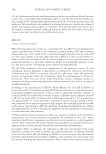
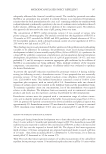
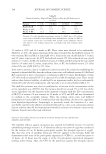
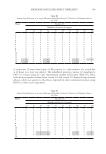
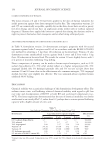
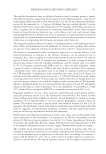
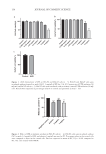
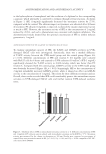
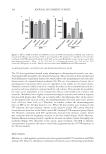
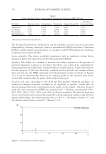
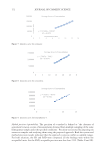
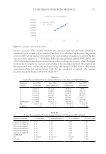
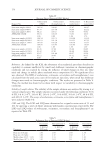
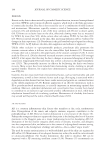
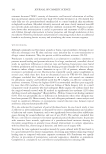
170 JOURNAL OF COSMETIC SCIENCE ANALYTICAL METHOD VALIDATION The developed method was validated for system suitability, recovery (accuracy), precision (repeatability), linearity, sensitivity (limit of quantification [LOQ] and limit of detection [LOD]), sample stability and robustness in accordance with ICH guidelines for validation of analytical procedures Q2 (R1). System suitability. The system suitability parameters such as resolution, tailing factor, theoretical plates and capacity factor (K’) were performed (Table I). Specificity. The ability of a method to measure the analyte response in the presence of potential impurities is known as specificity. Specificity was evaluated by comparing the chromatograms each of the blank, standard solution, sample solution, and placebo solution. For this purpose, 20 µL from the blank, standard solution, placebo and sample solution were injected into the HPLC separately and chromatogram results are shown in Figures 3–6. It can be observed that there are no coeluting peaks at the retention time of the actives. This indicates that the peaks of the analytes were pure. Linearity and range. According to the ICH Q2 (R1) method validation guideline, an analytical technique’s linearity is defined as its capability to produce “results that are directly proportional to the concentration of the analyte in the sample”. Linearity between peak area and concentration (PPM) was analyzed with 7 different concentrations (70%, 80%, 90%, 100%, 110%, 120%, and 130%) of all four standards. The data for peak area versus concentration were statistically analyzed by doing regression analysis using the least squares methodology. In a linear regression line y = mx + c, the slope is constant “m,” and the ordinate intersection is constant “c”(Figures 7–10). Table I System Suitability Data for the Standard Solution of the Proposed HPLC Method UV filter Retention time Tailing factor Resolution Capacity factor (K’) Number of theoretical plates Avobenzone 17.9 1.404 2.403 3.887 15319 Octinoxate 16.61 1.062 11.995 3.535 18110 Octocrylene 11.37 1.091 14.278 2.103 14281 Benzophenone-3 6.82 1.167 12.795 0.863 11372 Figure 3. Chromatogram of blank solution.
Purchased for the exclusive use of nofirst nolast (unknown)
From: SCC Media Library & Resource Center (library.scconline.org)