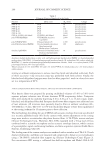
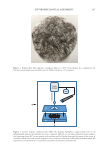
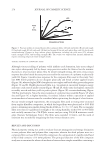
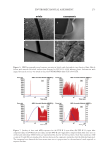
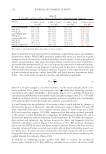
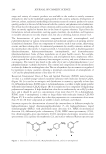
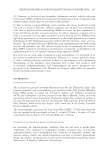
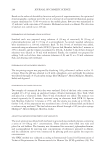
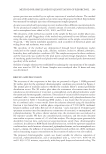
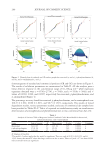
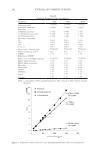
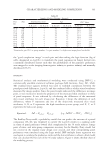
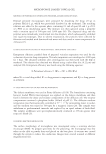
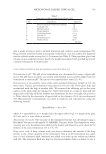
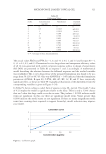
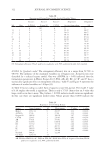
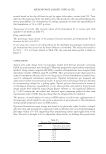
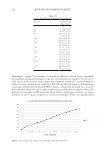
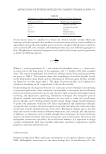
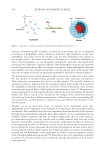
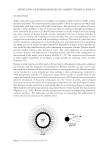
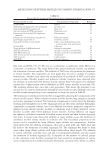
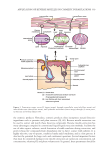
266 JOURNAL OF COSMETIC SCIENCE stirring at ambient temperature to remove most free lipids and adsorbed surfactant. Each of three successive 1-day extraction steps was performed with fresh solvent. Finally, the bleached-and-delipidated snippets were dried on filter paper for 1 week in a forced-air oven set to a temperature of 80°C. AED IN CONJUNCTION WITH MECHANICAL ANALYSIS OF FIXATIVE-FIBER COMPOSITES Neat fixative films were prepared by pouring established volumes of 3.0% or 5.0% (w/w) aqueous polymer solutions into 60-mm diameter PTFE evaporating dishes. Composite films were produced by randomly dispersing 0.10 to 0.20 g of 5- to 15-mm virgin, triple- bleached, and delipidated-bleached European dark brown fiber snippets into additional sets of neat solutions. All mixtures were passively dried to films at ambient conditions (40– 45% RH) for 5 days. The 0.50- to 0.70-mm thick films (Figure 1) were then equilibrated at the testing isohume for 45 minutes prior to data collection. The methodology describing the use of DHSA with acoustic envelope detection was detailed in a recently published study (16). In the current work, minor adjustments to the testing stage were made to accommodate the planar fixative films. A TA.XTplus texture analyzer (Texture Technologies Corp., Hamilton, MA, USA) equipped with a 50-kg load cell was combined with a scientific microphone and an acoustic envelope detector, which consists of a preamplifier, signal conditioning hardware, and data acquisition systems (Stable Micro Systems, Goldaming, UK) (19). The loading arm of the texture analyzer was outfitted with a stainless-steel TA-8 0.25-inch diameter ball probe, and films were mounted and compressed to failure at several isohumes using a TA-108S-5i indexable film support rig (Texture Technologies Corp.) (Figure 2). For concomitant AED testing, a calibrated free-field microphone and Model 4188-A-021 Table I Polymeric Fixatives Employed in the Study Polymer INCI name Mw (kDa) Charge PVP K-15 PVP 10 pseudocationic PVP K-30 PVP 50 pseudocationic PVP K-60 PVP 350 pseudocationic PVP K-90 PVP 1,400 pseudocationic PVP K-120 PVP 1,800 pseudocationic PVP K-30:PEG 400 blenda PVP/PEG-400 Blend blend pseudocationic/nonionic poly(VP/DMAPMA) VP/DMAPA Acrylates Copolymer 2,800 cationic poly(VP/MAPTAC) Polyquaternium-28 1,300 pseudocationic poly(OAA/Acrylates/BAEM) Octylacrylamide/Acrylates/ Butylaminoethyl Methacrylate Copolymer 100 amphoteric Imidized p(IB/MA) Isobutylene/Ethylmaleimide/ Hydroxyethylmaleimide Copolymer 70 pseudocationic Acrylates: methyl methacrylate, acrylic acid, and hydroxypropyl methacrylate BAEM: tert-butylaminoethyl methacrylate DMAPMA: 3-(dimethylaminopropyl) methacrylamide IB: isobutylene MA: maleic anhydride MAPTAC: [3-(methacryloylamino)propyl]trimethylammonium chloride OAA: tert-octylacrylamide PVP: polyvinylpyrrolidone VP: vinyl pyrrolidone. a Blend consisted of 0.1% (w/w) PEG 400 and 1.0% (w/w) PVP K-30, which produced a 1.1% (w/w) polymer solids solution.

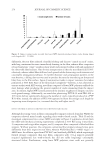
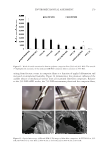
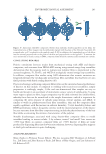
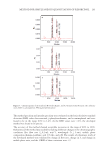
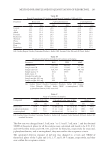
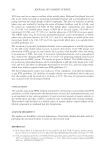
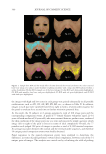
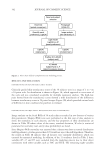
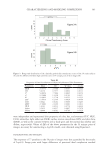
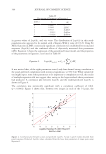
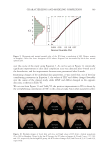
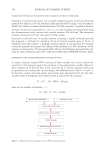
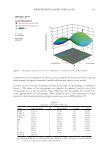
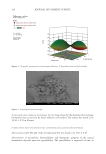
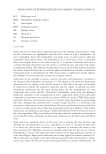
267 Enviromechanical Assessment Figure 1. Polymer-fiber film composite. Composite films are 90% (w/w) polymer. As a comparison, the fixative-treated omega loop assemblies used in DHSA testing are 2% polymer. A Texture Analyzer C B A D AED Figure 2. Texture analyzer combined with AED. The diagram highlights a single testing zone on an indexable film support rig. Initially, the intact composite film (A) was securely fastened between stainless- steel retaining plates (B,C) a one-quarter-inch stainless-steel ball probe then applied pressure to the center of each film, and the force and acoustic responses were recorded as a function of time and penetration depth. All experiments were performed in a humidity-controlled environmental enclosure (D). Compression
Purchased for the exclusive use of nofirst nolast (unknown)
From: SCC Media Library & Resource Center (library.scconline.org)