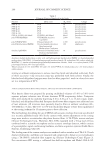
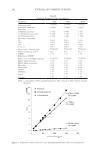
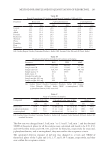
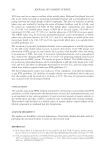
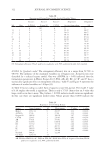
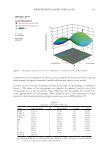
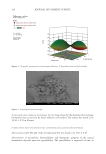
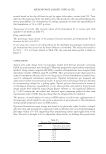
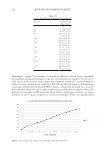
285 J. Cosmet. Sci., 73, 285–296 (September/October 2022) Address all correspondence to Shanta Kumari Adiki, skatakam9@gmail.com Chemometric-Assisted, Stability-Indicating Reversed- Phase High-Performance Liquid Chromatography Method for Simultaneous Quantitation of Resorcinol, p-phenylenediamine, and m-aminophenol in Commercial Hair Dyes SHANTA KUMARI ADIKI, PRAKASH KATAKAM AND FATHI H. ASSALEH Department of Pharmaceutical Analysis, Nirmala College of Pharmacy, Mangalagiri, Guntur, Andhra Pradesh, India (S.K.A.) Department of Pharmaceutics, Indira College of Pharmacy, Nanded, Maharashtra, India (P.K) Department of Chemistry, Libyan Academy for Postgraduate Studies, Tripoli, Libya (F.H.A) Accepted for publication December 22, 2022. Synopsis This work aims to develop a chemometric-assisted, stability-indicating reversed-phase high-performance liquid chromatography method, optimized by a combined D-optimal design approach of response surface methodology, for simultaneous quantitation of resorcinol, p-phenylenediamine, and m-aminophenol in cosmetic hair dyes. The reversed-phase high-performance liquid chromatography method was developed for routine estimations of resorcinol, p-phenylenediamine, and m-aminophenol in cosmetic hair dyes. The chromatographic conditions (i.e., flow rate, ratios of mobile phase composition, and run time) were optimized by a combined D-optimal design approach. The retention times for the estimation of resorcinol, p-phenylenediamine, and m-aminophenol were found to be 7.273–7.232, 9.976–10.114, and 11.639–11.735 minutes, respectively. The linearity for resorcinol, p-phenylenediamine, and m-aminophenol were obtained in the range of 10–150 ppm with correlation coefficients (r2) 0.9991, 0.9994, and 0.993, respectively. The compound amounts estimated by the proposed method were in agreement with the labeled claim. We used a minimal amount of organic solvents in the mobile phase and thus could be considered more eco-friendly over existing methods. The proposed method could be employed for routine, quality control analysis of the titled compounds in combined hair dye formulations. Optimization of chromatographic conditions by response surface methodology adds a new dimension to analytical method development. INTRODUCTION Quality control of any type of product is of paramount importance to ensure efficacy and safety of the products for consumer use and acceptance. It is also desirable to determine whether all features of a product will be properly maintained during its shelf life. A wide

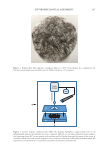
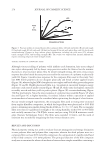
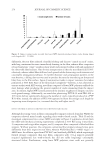
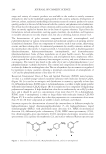
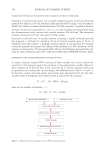
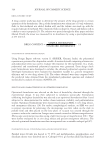
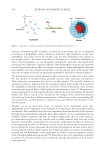
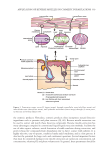
286 JOURNAL OF COSMETIC SCIENCE range and variety of cosmetic products are available in the market to satisfy consumer demands (1). Due to the worldwide rapid growth of the cosmetic industry, development of low-cost, robust, analytical methodologies for routine assays of cosmetic products to ensure quality products is the need of the hour in both the cosmetic and pharmaceutical industries. Use of hair dyes for the purpose of hair coloration and beautification has increased markedly. Dyes are mostly applied to human hair in the form of aqueous solutions. Typical hair dye formulations include antioxidants, wetting agents, mordants, dye modifiers, and fragrances in variable amounts to not only impart color, but also a softening, lustrous texture (1,2). The determination of polar aromatic compounds resorcinol, m-aminophenol, and p-phenylenediamine in various environmental and industrial samples is of growing interest in analytical chemistry. These are components of cosmetics such as sun creams, skin-toning creams, and hair-coloring dyes. A commercial permanent dye usually contains a mixture of dye intermediates that involve 1,2-(pyrocatechol), 1,3-(resorcinol), and 1,4-(hydroxyquinone) dihydroxybenzenes hydroxyaminobenzenes (aminophenols) and diaminobenzenes (phenylenediamines). Some of these ingredients are of great health concern. For example, p-phenylenediamine causes allergic dermatitis, and aminophenols have a nephrotoxic effect. It was reported that all these substances have mutagenic activity, and some of them are even carcinogenic. The toxicity was found in the order of p-2 and o-2 phenylenediamines m-2 phenylenediamine phenol derivatives. The content and composition of dye intermediates in a hair dye define the resulting hair color. The use of synthetic dyes in cosmetics is regulated by legislation in many countries, allowing a maximum concentration of aminophenols of 2% and for phenylenediamines of less than 4% (3–6). Resorcinol, International Union of Pure and Applied Chemistry (IUPAC) name benzene- 1,3-diol, is a reddish-orange–colored crystalline substance with molecular formula C 6 H 6 O 2 (Figure 1A). It is used as an antiseptic and disinfectant in cosmetics, especially in hair dyes (4). p-Phenylenediamine, IUPAC name 1,4-diaminobenzene, is a white to light purple powder with molecular formula C 6 H 8 N 2 (Figure 1B). It is mainly used as a component of engineering polymers and composites. It helps darken hair color due to oxidization by air or H 2 O 2 in hair dyes, and it should be used in a concentration of not more than 1% (5). m-Aminophenol, IUPAC name 3-aminophenol, is white to beige flakes with molecular formula C 6 H 7 NO (Figure 1C). It is used as synthetic dye in hair dye preparations in a concentration of not more than 2% (6). All three compounds are soluble in water, methanol, and ethanol. Literature reports the determination of several dye intermediates in different samples by high-performance liquid chromatography-ultraviolet (7−12), high-performance liquid chromatography (HPLC) with photodiode-array detection (13), HPLC-electrochemical detection (14), differential pulse voltammetry (15,16), HPLC–mass spectrometry (17,18), Gas chromatography–mass spectrometry (19,20), desorption electrospray ionization–mass spectrometry (21), capillary electrophoresis (22), and surface-enhanced Raman spectroscopy Figure 1. Structures of (A) resorcinol, (B) p-phenylenediamine, and (C) m-aminophenol.
Purchased for the exclusive use of nofirst nolast (unknown)
From: SCC Media Library & Resource Center (library.scconline.org)