264 J. Cosmet. Sci., 73, 264–284 (September/October 2022) Address all correspondence to: Timothy W. Gillece, tgillece@gmail.com Enviromechanical Assessment of Fixative Hair Fiber Composite Films TIMOTHY W. GILLECE AND ROGER L. MCMULLEN Ashland Inc., Bridgewater, New Jersey, USA (T.W.G, R.L.M.) Accepted for publication December 04, 2022. Synopsis Mechanical analysis with acoustic emission detection was used to characterize bonding failure in polymer-fiber composite films composed of styling resins and virgin or bleached hair fiber snippets. Composites prepared with bleached snippets required more energy to induce film rupture while producing greater numbers of detectable acoustic emissions than films containing virgin fibers. Texture analysis and scanning electron microscopy revealed that film-fiber composites failed adhesively at lower humidity levels, while augmented film ductility inhibited brittle fracturing in higher-humidity environments. The work to rupture film-fiber composites correlates with the maximum force response (R2 =0.94) and toughness (R2 =0.86) that were evaluated using treated omega loop assemblies and dynamic hairspray analysis. In addition, outcomes from dynamic vapor sorption, humidity-controlled differential scanning calorimetry, humidity-controlled dynamic mechanical analysis, tensile testing, and impact testing were considered. INTRODUCTION Apart from trained-panel, half-head, and costly in-home usage testing protocols, numerous objective laboratory methods have been established to routinely characterize the durability of hold after applying styling fixatives to shaped hair tresses (1–17). Early fixative-testing evaluations were adopted from the lacquer and adhesives industries, wherein film-formation, dry times, tack, resistance to bending and extension, and film-flaking protocols were used to differentiate products and establish performance claims (4). In the years that followed, digital analysis and instrumental methods were introduced to quantify fixative strength and weld durability, including curl retention (1–3), twist-retention analysis (5), single-fiber junction analysis (6), three-point bending (8,13), two-point stiffness (7), dynamic hairspray analysis (DHSA) (10–17), DHSA in conjunction with acoustic emission detection (AED) (DHSA-AED) (16), and dynamic mechanical analysis (DMA) (9). Each stiffness-testing assay employs specialized instrumentation to controllably introduce a load to the sample— wherein Instrons, texture analyzers, torsional braid analyzers, rheometers, and DMAs are commonly used. In addition, researchers routinely integrate environmental control with mechanical measurements to account for atmospheric film plasticity.

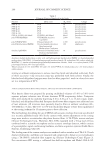
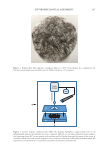
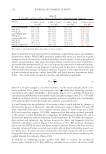
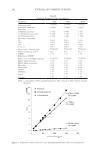
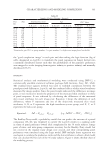
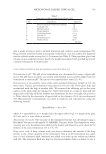
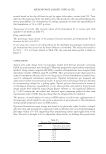
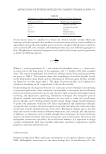
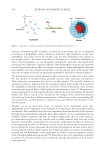
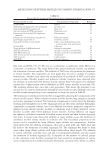
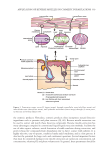
265 Enviromechanical Assessment Although each novel approach offers unique capabilities for characterizing fixative performance, all measurement outcomes share a common factor—the fundamentals of adhesion, which are deeply rooted in polymer science principles. By adopting tenets from adhesion theory, it is worthwhile to visualize how the various modes of practical adhesion may contribute to the strength and durability of fixative-treated hair fiber assemblies (18): (a) chemical interactions—including ionic, Lewis acid/base polar attractions, and hydrogen bonding—promote adhesional strength between the hair fiber and fixative resin at distances of less than a micron (b) physisorption involves the physical adsorption of fixative to the surface of the hair fiber and is driven by weak Lifshitz-van der Waals forces, which are induced electrostatic attractions that take place over short intermolecular distances (c) mechanical interlocking of welds likely occurs as aqueous polymer wets the fiber surface and subsequently dries into hook-and-loop microstructures in the accessible cracks and pores of the fiber and between layers of lifted cuticle cells (d) diffusive processes create an interdigitated bonding interface in which interfacial keratin and long fixative chains entangle and reptate and e) substrate failure, in which the 6 to 10 layers of overlapping cuticle cells introduce sacrificial layers that can be torn from the fiber if the fixative-fiber adhesive strength exceeds the energy to delaminate cuticles from the hair shaft. In the current work, we sought to simplify fixative performance studies by reducing the sample matrix to a planar film composed of dried fixative and dispersed fiber snippets. Outcomes from scanning electron microscopy (SEM), tensile strength, impact testing, dynamic vapor sorption (DVS), DMA-RH, DSC-RH, and DHSA-AED (16) were used to correlate material properties and changes in ambient humidity with the work-to-break neat and fixative-fiber composite films. MATERIALS AND METHODS MATERIALS A description of the polymeric fixatives used in this study is provided in Table I. The absolute weight–average molecular weight (MW) information was determined using GPC/MALLS, and the data reported in Table I was collected from Ashland Inc. technical reports. The fixatives were supplied by Ashland Inc. (Wilmington, DE, USA), and PEG 400 (polyethylene glycol) was furnished by Sigma-Aldrich (St. Louis, MO, USA). The properties of the various fixatives were tested on virgin, bleached, and bleach- dilapidated hair. Chemical oxidation of hair was carried out on medium-density European dark brown hair tresses that were purchased from International Hair Importers &Products Inc. (Glendale, NY, USA). The bleaching mixture was prepared by blending 120 g of Clairol Professional BW2 powder lightener (The Wella Corporation, Woodland Hills, CA, USA) with 147 mL of Salon Care Professional 20 Volume Clear developer (Arcadia Beauty Labs LLC, Reno, NV, USA). The tresses were triple bleached in three successive steps using fresh bleaching solutions, wherein the duration of each bleaching step was 60 minutes. Between bleaching steps, the lightened hair was rinsed with warm tap water. After the final bleaching step, the tresses were washed with 3% (w/w) sodium lauryl ether sulfate. The oxidized hair tresses were then soaked in Milli-Q (Merck KGaA, Darmstadt, Germany) deionized water (18.2 MΩ·cm) for 5 days to gently remove soluble leachate. In addition, sections of the triple-bleached tresses were cut into 5- to 9-mm snippets. The snippets were subsequently soaked in a 4:1 (w/w) chloroform–methanol solvent with gentle
Purchased for the exclusive use of nofirst nolast (unknown)
From: SCC Media Library & Resource Center (library.scconline.org)