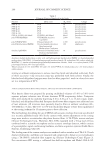
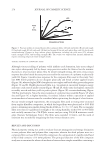
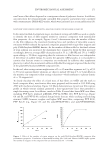
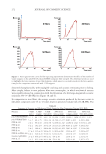
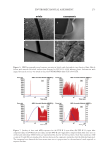
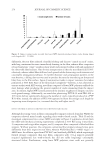
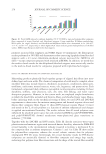
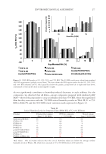
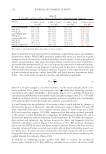
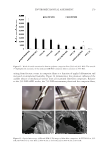
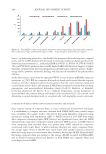
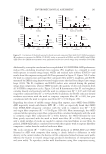
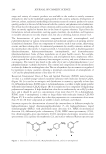
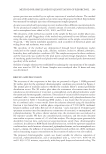
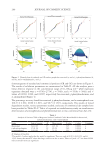
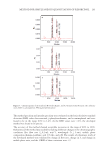
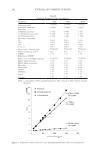
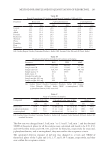
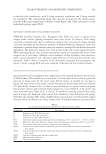
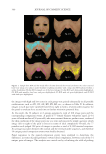
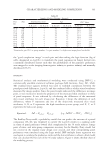
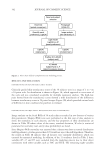
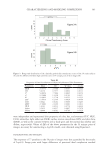
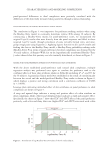
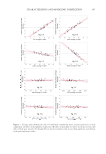
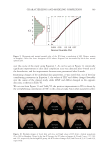
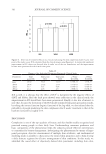
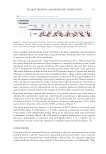
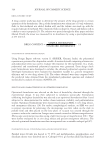
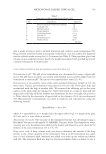
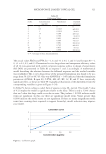
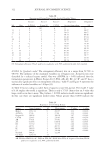
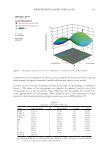
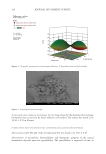
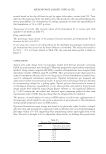
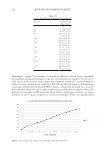
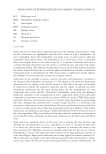
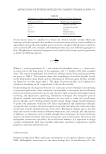
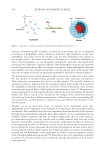
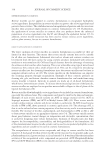
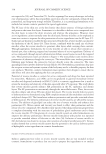
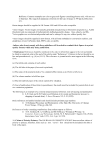
274 JOURNAL OF COSMETIC SCIENCE differently, the neat films released a handful of sharp and discrete “crunch or crack” noises, with long continuous fractures immediately forming in the film, whereas fiber composites released numerous “crispy” sounds as many small cracks merged within welds and augmented the observable film haziness. One obvious interpretation is that the neat films failed 100% cohesively, whereas added fibers diffused crack growth while obstructing crack initiation and catastrophic propagation pathways. To further illustrate crack propagation patterns in the neat fixatives, a falling dart test was used to produce fractures by introducing an abrupt and blunt force to the film surface. Figure 8 summarizes trends in impact resistance for studies performed at 48% RH. None of the films failed completely—however, as was observed in texture analysis with AED testing, neat films composed of lower MW polymers suffered the most damage while producing the greatest number of cracks emanating from the impact zone. In contrast, higher MW systems possessed the intrinsic toughness to dissipate excessive crack-growth energy. Additionally, we noted that plasticizing PVP K-30 with PEG 400 at 10% (w/w) did not significantly decrease the number of cracks typically produced in a PVP K-30 film instead, the addition of PEG 400 appeared to blunt the average crack length by improving stress dissipation (i.e., increased ductility and higher tan ∂). EFFECT OF FIBER SURFACE CHEMISTRY ON COMPOSITE FILM FAILURE Although fracturing events in films containing fiber snippets released abundant #AED, the composites showed mixed trends regarding their work-to-break results. Table II and the maximum compression force versus #AED scatterplot in Figure 9 summarize details from the AED with mechanical testing experiments completed at 50% RH using 1) neat films 2) composites with virgin fiber snippets and 3) composite films comprised of bleached fiber snippets. Without question, the composites containing fiber snippets released stress quite differently than their respective neat films, wherein #AED bleached #AED virgin #AED neat. In addition, apart from PVP K-15 and imidized p(IB/MA), which surprisingly formed stronger composites than neat films, composites with 0.1-g snippets generally required significantly less work-to-break but did not suffer long-range catastrophic structural failure. Furthermore, using lower MW polymers, more work was generally Figure 8. Impact testing results revealed that lower MW materials produced more cracks having longer crack lengths (48 ± 2% RH).

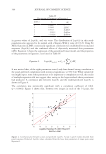
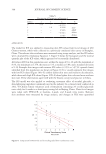
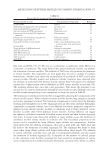
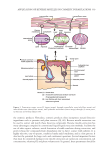
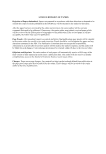
275 Enviromechanical Assessment required to break bleached fiber films than virgin fiber composites, demonstrating that maximizing interfacial adhesion is an essential fixative design element. However, whereas the work to rupture lower MW PVP K-30 and PVP K-30/PEG 400 composites followed the trend: neat bleached virgin, the work to break PVP K-15 and imidized p(IB/ MA) virgin and bleached fiber composites was greater than the work to break their neat films, where bleached =virgin neat. Hence, the addition of oxidized or hydrophobic fibers to PVP K-15 and imidized p(IB/MA) solutions formed synergistic film composites, in which the breaking mechanisms for PVP K-15 and imidized p(IB/MA) neat films were rendered less brittle by the addition of elastic hair fiber snippets. Interestingly, the work-to-break trends are reversed for the higher MW composite films, wherein the work required to fracture films with virgin fiber snippets was marginally higher than the compulsory work to break bleached fiber composites however, like trends with lower MW composites, more audible emissions were discharged when breaking bleached instead of virgin composites. One plausible reason for the apparent discrepancy is that viscous fixative solutions prepared with cationic and higher MW globular chains engaged the chemically oxidized fiber surface (DCA =71°), but less intimately intermingled with the pores, cracks, and asperities of the fiber prior to drying to rigid and glassy films however, where efficient contact was made, the entangled chains at the interface bound strongly to a myriad of anionically charged cysteic acid moieties (14,20,21). Consequently, instead of cohesive properties driving lower-humidity crack propagation in higher MW bleached fiber composites, fracture probabilities and #AED were presumably associated with adhesion failures in which disorganized interfacial bonding limited the composite film strength. In distinction, interactions of higher MW (pseudo)cationic polymers with virgin hair cuticles— which are quite hydrophobic (DCA =100°)—were likely less charge-specific hence, it is conceivable that the organization of the fiber-weld interface was improved by balancing electrostatic attractions with increased dispersive adhesion and optimized chain entangling. In a supplementary experiment, a section of a triple-bleached hair tress was delipidated in an organic solvent to determine whether removal of additional lipids and surfactant Figure 9. Effect of bleached snippets on the maximum force of compression and associated #AED for composite films ruptured at 50% RH. In general, the chemistry of the fiber surface had minimal influence on the maximum force to burst composite films (compare to the work-to-break trends in Table II) however, for all composite films except imidized p(IB/MA), the #AED liberated by composites containing bleached snippets was greater than films prepared with virgin snippets.
Purchased for the exclusive use of nofirst nolast (unknown)
From: SCC Media Library & Resource Center (library.scconline.org)