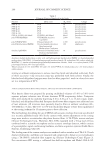
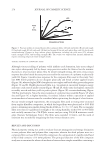
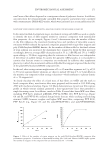
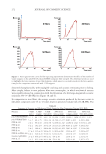
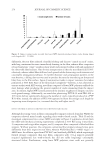
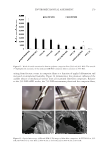
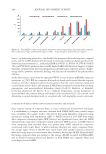
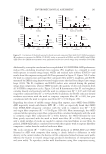
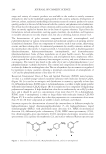
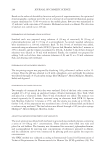
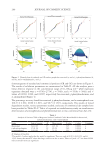
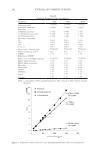
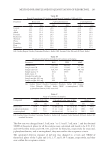
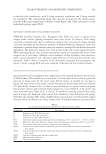
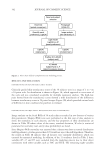
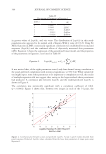
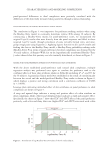
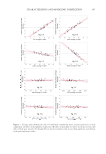
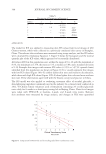
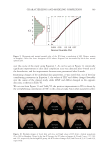
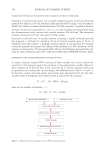
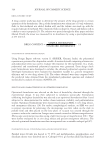
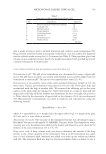
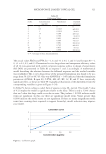
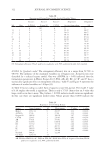
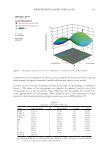
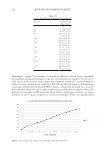
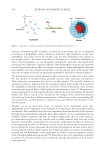
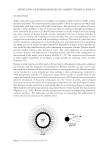
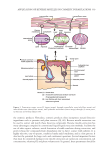
316 JOURNAL OF COSMETIC SCIENCE ULTRAVIOLET SPECTROSCOPIC METHOD FOR ESTIMATION OF BENZOYL PEROXIDE Preparation of standard stock solution. An accurately weighed quantity of 100 mg of benzoyl peroxide was taken in a 100 mL volumetric flask and dissolved by using 5 mL of methanol. Finally, the volume was made with methanol up to 100 mL to produce 1 mg/mL of solution. Scanning. A series of concentrations (i.e., 0.5, 1, 2, 3, 4, and 5 µg/mL) were prepared by using the aforementioned stock solution and scanned between 200–400 nm. The absorption maxima obtained was 235 nm and used for further studies. Preparation of calibration curve. A standard solution containing 1 mg/mL of benzoyl peroxide was prepared in methanol by dissolving 50 mg of benzoyl peroxide pure in 50 mL of methanol. From this solution, a working standard solution of concentration 0.5–5 µg/mL of benzoyl peroxide was prepared by dilution with methanol (12). The absorbance of the solution was measured at 235 nm against blank. All spectral absorbance measurements were made by using a Shimadzu ultraviolet–visible spectrophotometer (SRIHER, Chennai, India). PREPARATION AND CHARACTERIZATION OF MICROSPONGES A central composite design (CCD) consisting of three variables was used to analyze the sensitivity of the responses against the variations in the experimental variables (Figure 1). CCD comprises of 2k factorial from center, 2k points for α, and the quadratic terms used for generation of a center point. In this design, two different levels coded as +1 and −1 for factorial, central, and axial points, respectively, were investigated (13). For the three variables under investigation, the response model is depicted by the equation: N k =++=[]2 2k 14 N0 runs, where K, the number of variables, =3, N =++=[]8 6 0 14 runs. Figure 1. Preparation of microsponges (14,15). PVA: polyvinyl alcohol.

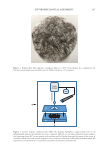
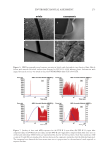
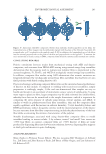
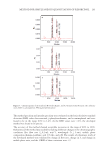
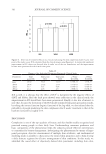
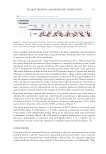
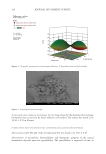
317 Microsponge Loaded Topical Gel METHODS OF PREPARATION OF BENZOYL PEROXIDE–LOADED MICROSPONGES Benzoyl peroxide microsponges were prepared by dissolving the drug (2.5 g) in polymer PLGA (1 g), which was previously dissolved in the methanol. The resulting solution was added to the aqueous phase containing 0.1 mL of span 80 and 1 g of 1% w/v PVA as an emulsifying agent. The mixture was then agitated using a propeller with a rotation speed of 500 rpm and 1,000 rpm (16). The dispersed drug and the polymer were immediately transformed into fine droplets, which subsequently solidified into rigid microsponges. Due to solvent evaporation, the particles were collected by filtration and washed with demineralized water and desiccated at room temperature for 24 hours (17). CHARACTERIZATION STUDIES OF MICROSPONGES: ENTRAPMENT EFFICIENCY Entrapment efficiency purified form of prepared vesicular suspension was used for the evaluation of percent drug entrapment. Vesicular suspension was centrifuged at 4,000 rpm for 1 hour. The obtained sediment after centrifugation was then lysed with the help of methanol. The solution thus obtained was filtered using a nylon filter disc (0.22 µm) and analyzed (18). Entrapment efficiency was found using the following equation: %Entrapment efficiency Wa (Ws Wp)/Wa], =-+[where Wa =total drug added Ws =drug present in supernatant and Wp =drug present in sediment. IN VITRO DRUG RELEASE STUDIES FOR MICROSPONGES The dialysis membrane was used in Franz diffusion cell (19). The formulation containing benzoyl- loaded PLGA (microsponges) was applied on the dialysis membrane and then fixed in between the donor and receptor compartment of the diffusion cell. The receptor compartment contained a phosphate buffer (100ml) of pH 5.5. The diffusion medium temperature was thermostatically controlled at 37° ± 1° by surrounding water in jacket, and the medium was stirred at 500 rpm by a magnetic stirrer (20). The samples were withdrawn at predetermined intervals and replaced by an equal volume of fresh fluid. The samples withdrawn were spectrophotometrically estimated at 235 nm against their respective blank (21). SCANNING ELECTRON MICROSCOPE The surface morphology of microspheres was investigated using a scanning electron microscope (SEM). To prepare specimens for the polarizing, the microsponge was first taken on the slide as powder form and placed on the base plate. A vacuum was created through the system to reduce the conduction. Images were created scanned at different magnifications (22).
Purchased for the exclusive use of nofirst nolast (unknown)
From: SCC Media Library & Resource Center (library.scconline.org)