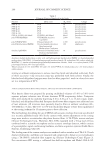
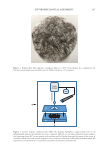
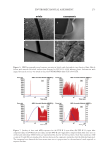
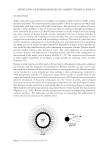
268 JOURNAL OF COSMETIC SCIENCE preamplifier (Brüel-Kjær, Nærum, Denmark) were coupled with the acoustic envelope detector and set at a fixed distance (1.25 cm) from the film surface. The acoustic emissions were collected over a 3- to 12-kHz frequency envelope, and the high-pass corner frequency filter was fixed at 3.125 kHz, which adequately removed high-frequency instrumental noise (19). For all measurements the gain was set to 18 dB. Exponent v.6 software (Stable Micro Systems) was used to record acoustic emissions information as a function of time, in which the acoustic envelope detector summed the total voltage over the set frequency range and converted the calibrated signal to discrete sound pressure level (dB-SPL) values (19). SEM OF DAMAGED NEAT AND FIXATIVE-FIBER COMPOSITE FILMS Film-fiber composites were imaged using field emission SEM. Samples were fixed to aluminum Pelco pin stubs using double-sided 25-mm conductive carbon tabs (Ted Pella, Redding, CA, USA) and then coated with Au/Pd using a high-vacuum Leica EM ACE600 sputter coater (Leica Mikrosysteme GmbH, Wetzlar, Germany). A Hitachi SU-5000 FESEM (Hitachi High Technologies, Schaumburg, IL, USA) was used to image the samples at several magnifications. SINGLE-FIBER CONTACT ANGLE MEASUREMENTS A Biolin Scientific (Gothenburg, Sweden) Sigma700 force tensiometer was used to evaluate the dynamic contact angle (DCA) of individual 2- to 3-mm fiber segments. Each fiber snippet was immersed tip-end first into Milli-Q deionized water, and the advancing contact angle was measured. The measured DCA values include virgin fibers =100 ± 6° bleached fibers =71 ± 4° and delipidated-bleached fibers =67 ± 4°. At least 22 DCA measurements were completed for each type of hair fiber. DMA-RH: CRITICAL HUMIDITY AND VISCOELASTICITY OF FILM-FIBER COMPOSITES The mechanical stiffness of polymeric fixatives is compromised by increased ambient humidity. At a critical humidity level, absorbed water vapor facilitates a water-plasticized glass transition (T g ),which is assessed by a negative inflection in the storage modulus (E’) plateau (intersecting lines method) at a particular isotherm. For our studies, film-fiber composite films were prepared as described in the “AED in Conjunction with Mechanical Analysis of Fixative-Fiber Composites” section. Additionally, composites with porous poly(ethylene terephthalate) (PET) were prepared by saturating PET felt strips in 5% (w/w) solutions of each fixative. The critical humidity measurements were performed uniaxially using a TA Instruments (New Castle, DE, USA) Mark IV DMTA. A custom Model 5503 Electro-Tech Systems Inc. (Perkasie, PA, USA) environmental chamber, which is capable of humidity (2–95% RH) and temperature control, was affixed to the DMA sample stage. After equilibrating samples at 20% RH and 26 ± 1°C, an Electro-Tech Model 5100 RH microcontroller was used to increase the humidity of the isothermal environment from 20% to 90% RH at a rate of 0.5% RH/min. The following dynamic methodology was applied: initial static force =1 g auto tension =120% frequency =1 Hz strain =0.075%. In other work, a Q800 DMA equipped with a DMA-RH fixture (TA Instruments) was used to assess the viscoelasticity of polymer-fiber film composites. The composites

269 Enviromechanical Assessment were mounted in a film tension clamp and equilibrated at 20% RH for 3 hours prior to testing. Then, the humidity was raised from 20% to 75% RH in discrete 5% RH steps, wherein samples were conditioned at each humidity level for 90 minutes prior to stepping to the next isohume. At each isohume, the steady-state viscoelastic properties, including E′, loss modulus (E″), and tan δ (E″/E′) at 26 ± 1°C, were documented. The following dynamic methodology was applied: initial static force =1 g auto tension =120% frequency =1 Hz strain =0.075%. Typical sample sizes for uniaxial DMA testing were ca. 8 × 8 × 0.7 mm. DVS: MOISTURE REGAIN OF FILM-FIBER COMPOSITE FILMS Moisture management of composites was studied by DVS. A small section of composite film (8–10 mg) was loaded into the sample chamber of a TA Instruments Q5000 SA. Samples were then subjected to the identical humidity rate protocol listed in the “DMA-RH: Critical Humidity and Viscoelasticity of Film-Fiber Composites” section, in which the films were equilibrated at 20% RH for 180 minutes prior to increasing the humidity from 20% to 90% RH at 0.5% RH/min. All runs were performed at 26 ± 1°C. The mass regain of the films was used to assess relative film hygroscopicity. DSC-RH: THERMAL PROPERTIES OF HUMIDITY-EQUILIBRATED NEAT FIXATIVES A TA Instruments Q2000 DSC with aluminum Tzero hermetic pans and lids (TA Instruments) was used to assess the humidity-dependent T g values of hydrated fixatives. Neat polymer films were prepared as described in the “AED in Conjunction with Mechanical Analysis of Fixative-Fiber Composites” section. The dry films were subsequently crushed with a mortar and pestle into powders and weighed into open DSC pans. The samples were then placed in a Model 5503 Electro-Tech Systems environmental chamber and equilibrated for 72 hours, which was done to achieve steady-state water regains at 26°C using three different humidity setpoints (25%, 50%, and 75% RH). Finally, all hydrated samples were hermetically sealed in DSC pans within the climate-controlled environment. The DSC-RH methodology involved heating from −50° to 130°C at 10°C/min. Standard DSC using perforated aluminum lids was completed to assess the dry T g ,which was evaluated by heating neat polymers from −20° to 220˚C at 10˚C/min. The second heat results were reported as the dry T g .IMPACT TESTING OF NEAT FILMS A falling dart test was used to assess the impact toughness of films under the abrupt application of a fixed load. Fixative films were fabricated by pouring highly concentrated polymer solutions (i.e., 10% (w/w)) into custom silicone-caulk walled glass troughs to produce dried-film thicknesses between 1.5 and 2.0 mm. A custom falling dart device (GS Robotics LLC, Green Brook, NJ, USA) was used to direct a pointed 68-g stainless-steel tipped dart to the surface of the film from a height of 7.0 cm (1.04 m/s). The resultant film damage was evaluated by tallying the number of cracks emanating from the point of contact and measuring the length of each crack. The ambient testing conditions were 48 ± 3% RH and 24 ± 2°C.
Purchased for the exclusive use of nofirst nolast (unknown)
From: SCC Media Library & Resource Center (library.scconline.org)