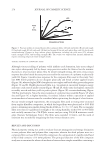
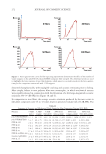
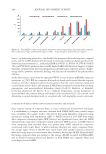
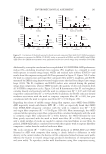
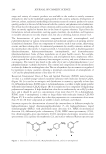
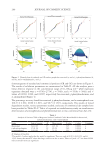
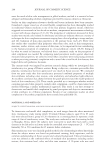
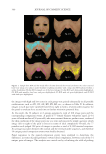
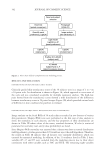
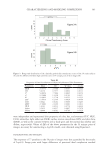
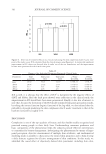
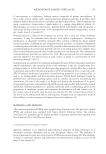
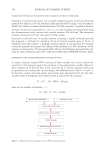
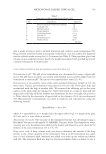
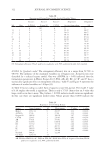
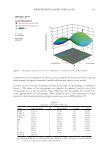
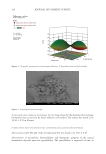
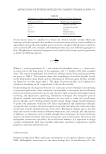
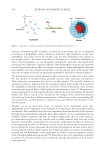
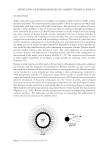
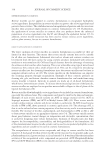
280 JOURNAL OF COSMETIC SCIENCE hence—by deforming plastically—the flexible film mitigated the brittle response to applied stress, and the #AED dramatically decreased. Concerning interfacial charge specificity, the lower-viscosity treatments (i.e., imidized p(IB/MA), PVP K-15, PVP K-30, PVP K-30/PEG 400, and PVP K-60) produced directionally higher #AED with bleached snippets at higher humidity, demonstrating that annealing plasticized hygroscopic polymers against a higher- energy surface promotes relaxation, healing, and efficient self-assembly of the polymer-fiber interface. In the final analysis, apart from the apparent PVP K-15 and imidized p(IB/MA) composite synergism, at ≤50% RH the composite film work-to-break results reveal that the requisite energy to introduce dissipative plasticity was greater than the crack initiation energy and critical failure stress—hence, the majority of #AED were attributed to brittle-film cracking, propagation, and near-interfacial debonding events (16,18,23). However, at humidity levels that plasticized the fixative T g to ambient temperature, viscous dissipation of stress modified the polymer matrix and limited crack initiation (16,23–25) instead, weld debonding occurred elastoplastically or viscoplastically, with negligible acoustic emissions. COMPARISON OF RESULTS FROM COMPOSITE FILMS AND DHSA-AED ANALYSES Since rupture testing of composite films is a less conventional measurement technique, it is worthwhile to compare outcomes obtained with DHSA-AED using treated omega loop assemblies (16) against results collected by fracturing film-fiber composites using mechanical testing with synchronous AED: 1) #AED released at 50% RH from virgin fiber composites containing higher MW fixatives was significantly lower than the #AED liberated from virgin fiber composites formed with lower MW fixatives 2) #AED released from composites with bleached fibers was greater than #AED released by composites constructed with virgin fibers 3) when breaking bleached and virgin composite films, the average upper limits of dB-SPL were much lower than audible intensities observed when fracturing respective neat fixative films however, the average dB-SPL liberated while fracturing composite films was similar to the average dB-SPL recorded in DHSA-AED and 4) absorbed moisture plasticized fixatives in both DHSA and composite films, and accordingly lowered #AED. Figure 14. Total #AED as a function of applied deformation and testing humidity for polymer-fiber composite films comprised of virgin and bleached snippets. EDB =virgin European dark brown hair snippets.

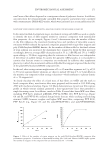
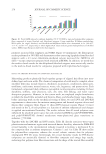
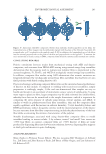
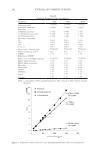
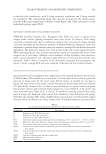
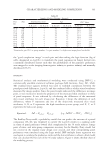
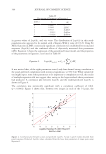
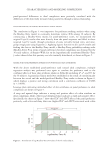
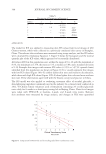
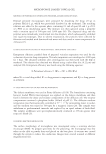
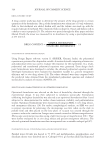
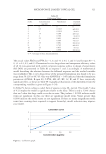
281 Enviromechanical Assessment Additionally, scatterplot correlations between published 50% RH DHSA-AED performance indices (16)—including maximum force response (F1), toughness (i.e., strength to avoid weld ruptures in treated omega loops), #AED, and residual style stiffness (E10/E1)—and results from film-rupture testing with AED are presented in Figure 15. Figure 15A–C relate the work to compress neat and virgin fiber composite films with F1, toughness, and E10/E1 measured by DHSA using fixative-treated virgin tresses that had been shaped into omega loops (13,16). The F1, toughness, and E10/E1 indices were assessed during the primary omega loop compression, whereas #AED includes the quantity of detected emissions from all 10 DHSA compression cycles. Figure 15A and B demonstrates that F1 and toughness correlate linearly and positively with the work to compress neat (R2 =0.87 and 0.84) and virgin fiber composite films (R2 =0.94 and 0.86). In addition, the E10/E1 indicator showed moderate associations with the work to compress composite films (R2 =0.62), but poor correlations with the work to rupture neat films (R2 =0.33) (Figure 15C). Regarding the release of audible energy during film rupture, since #AED from DHSA- AED negatively trends with fixative MW (R2 =0.84), we expectedly found that #AED from DHSA-AED adequately correlates with the work to compress neat (R2 =0.74) and virgin fiber composites (R2 =0.79) (Figure 15D) (16). More interestingly, the #AED captured while rupturing virgin fiber composite films correlated moderately with the work to compress virgin fiber composites (R2 =0.60) however, the #AED liberated by neat films poorly associated with the work to break neat films (R2 =0.26), indicating that only a small number of cracks are needed to initiate structural failure in neat films. In general, DHSA-AED indices correlated better with the requisite work to rupture film-fiber composites—rather than the work to break neat films. The weak correlation (R2 =0.49) between #AED produced in DHSA-AED and #AED liberated in AED with composite film testing is clearly linked to differences in weld density in the current studies, the fixative in film composites formed tortuous seam welds, whereas the fixative in treated omega loops produced distributions of interspersed spot and seam welds. To reproduce similar weld distributions using film composites testing, Figure 15. Correlation of the work required to break neat and composite films with (A) F1 DHSA parameter (B) toughness as measured in DHSA (C) E10/E1 index as measured in DHSA and (D) #AED from DHSA- AED. Note that DHSA measurements were performed on fixative-treated omega loop assemblies (50% RH).
Purchased for the exclusive use of nofirst nolast (unknown)
From: SCC Media Library & Resource Center (library.scconline.org)