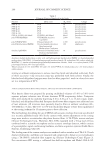
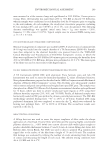
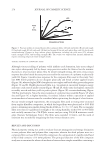
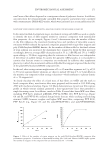
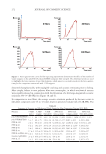
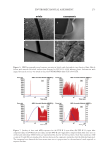
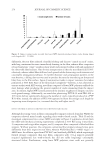
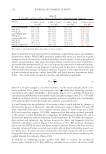
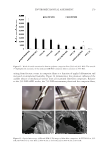
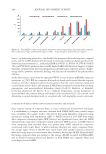
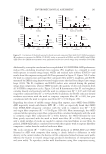
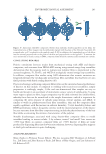
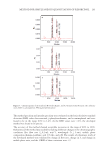
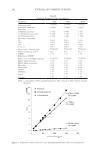
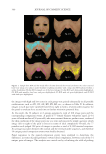
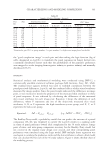
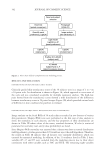
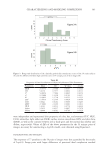
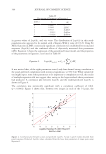
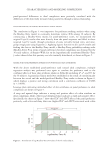
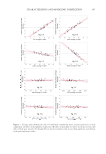
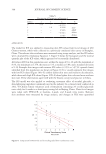
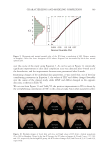
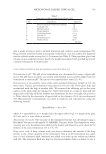
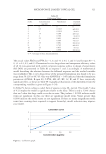
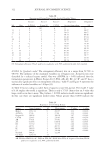
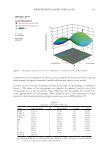
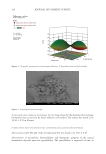
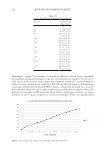
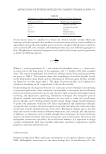
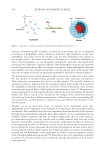
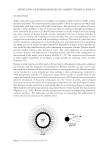
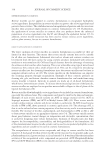
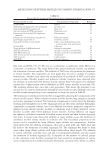
308 JOURNAL OF COSMETIC SCIENCE APPLICATION The model for ICS was applied to measuring skin ICS values from facial images of 480 Chinese women, which were collected in a previously conducted skin survey in Shanghai, China. The relevant skin attributes were measured using image analysis, and the ICS values were calculated by employing Equation 3. Figure 9 shows the histogram and the normal quantile plot of the ICS values, which appeared to be normally distributed. All values of ICS in this population were within the range of 0 to 10 with the maximum at 8.751, the minimum at 1.579, the mean at 5.75, a median at 5.88, and a standard deviation of 1.29. Example skin images with extreme ICS values (2.5% or 97.5% quantile limit) identified from this population are shown in Figure 10. It is visually apparent that images with low ICS values (Figure 10A–C) exhibit darker skin tone and extensive discoloration, while those with high ICS values (Figure 10D–F) show lighter skin color and more uniform skin tone. These observations agree well with the beauty concept and practice in China. The ICS model was also applied to evaluating treatment effect of ascorbyl glucoside, a skin-lightening ingredient commonly used in the industry. In a clinical study conducted in 2012, 45 Chinese female volunteers used a formulation containing 2% ascorbyl glucoside twice daily for 8 weeks in a third-party testing lab in Beijing, China. Their facial images were taken with VISIA-CR at baseline, 4-week, and 8-week time points. Relevant skin attributes were measured by image analysis, and changes in ICSs were quantified Table V Description of Parameters in Equation 3 Index, i a b Ci Pi 0 13.5 – −8.2233 – 1 – 1.8 0.2028 ITA° 2 – – 0.5065 dINT 3 – – −0.5913 daStar 4 – – −3.0467 dbStar Figure 8. Comparison between ICS and clinically graded skin translucency scores.

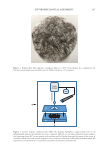
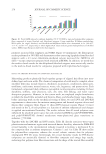
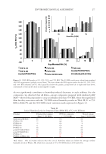
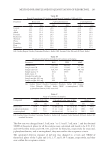
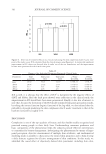
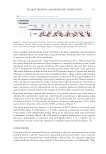
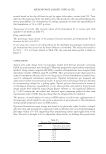
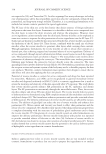
309 Characterizing and Modeling Complexion over the course of the study using Equation 3. As can be seen in Figure 11, statistically significant improvement in skin ideal complexion score was detected after 4-week use of the formulation, and the improvement became more pronounced after 8 weeks. Examining changes of the individual skin parameters, it was noted that, out of the four contributing parameters in Equation 3, the values of ITA° and daStar changed favorably over the course of the clinical study, while dINT and dbStar changed in the opposite direction, as shown in Table VI. We can see from Figure 11 and Table VI, the positive improvement in ICS is driven by the overwhelming contribution of ITA° in this clinical study. Since other parameters affect Figure 9. Histogram and normal quantile plot of the ICS from a population of 480 Chinese women in Shanghai, China. Bar chart: histogram of ICS values. Diagonal line surrounded by black dots: normal quantile plot. Figure 10. Example images of facial skin with low and high values of ICS from a female population (N =480) in Shanghai, China. In the low ICS group, the ICS values of images A, B, and C were 2.37, 2.96, and 2.52, respectively. In the high ICS group, the ICS values of images D, E, and F were 8.33, 8.75, and 8.39, respectively.
Purchased for the exclusive use of nofirst nolast (unknown)
From: SCC Media Library & Resource Center (library.scconline.org)