41 Sustainable Fragrances
The Lacey Act (16 U.S.C. 3371-3378), first enacted in 1900 and significantly amended in
1981, is the United States’ oldest wildlife protection statute. The Act combats trafficking
in illegally taken wildlife, fish, or plants. The Food, Conservation and Energy Act of 2008,
amended the Lacey Act by expanding its protection to a broader range of plants and plant
products (Section 8204, Prevention of Illegal Logging Practices). Under the statute, plant,
and plant products covered by the Lacey Act cannot be imported into the U.S. without
an import declaration. Concerning the fragrance industry, in 2021 the essential oils of
sandalwood, rosewood and cedarwood were included (Phase VI) and from end 2024, vetiver
and potentially other essential oils are included (Phase VII).
HUMAN SAFETY
The safety use of fragrance ingredients is managed through the IFRA standards, which
considersing human exposure to a substance with a given hazard level to establish safe
limits by product categoryization [32]. IFRA provides guidance to its members on the
appropriate Hazard classification to apply to substances via the annually updated Labelling
Manual [33]. Concerning the hazard classification of fragrance ingredients, a period of
significant change is underway with potentially significant consequences for the industry.
The key changes are:
(i) More and more substances classified H317 and self-classified or officially classified
CMR 1 and 2 – CMR stands for Carcinogenic, Mutagenic and Reprotoxic.
(ii) The introduction in the latest CLP of a new hazard category, Endocrine disrupter (ED),
1 and 2.
(iii) The assessment of natural substances under CLP.
(iv) EU focus on skin sensitisers.
Taking the topics in turn, pre-REACH (the Regulation on the registration, evaluation,
authorisation and restriction of chemicals), testing of substances was largely focused on
high volume and new substances. Following the REACH legislation (“no data, no market”),
the European Chemicals Agency (ECHA) has required more data in general for chemicals
including fragrance ingredients, but now specifically on the large number of lower volume
substances used by the fragrance industry. In very crude terms, the implementation
timeframe for REACH registration was 2010 for 1,000 T/y, 2013 for 100 T/y and 2018
for 1-100 T/y. A key objective of REACH was to fill data gaps to better protect workers
with massive exposure to undiluted chemicals during their working hours. This has led to
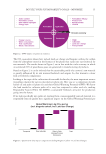
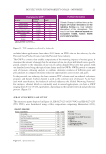
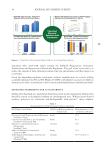
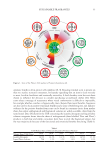
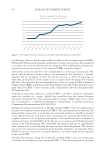
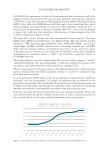
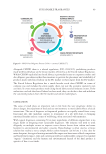
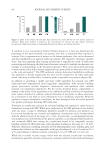
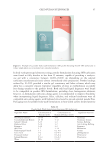
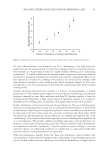
a sharp increase in the number of substances classified H317 “may cause an allergic skin
reaction”, as shown in Figure 5 below for the more than 1,500 chemical substances in the
Labelling Manual. It can be anticipated that for H317 the future will now be more stable.
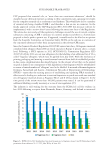
Concerning substances classified as CMR there has been a similar tendency. Historically
there were few, and the industry legislation and functioning were organised around the
few exceptions CMR 1s cannot be used in cosmetics (safrole being the exception at very
low dose as a natural constituent) and for CMR 2s an expert opinion was sought from
the competent authorities to establish safe levels of use case by case, a process typically
taking years. Following the precautionary principle ECHA tends to propose a more severe
classification if in doubt and invite the registrant to conduct additional testing to show
the contrary. Given the expense and uncertainty of the final outcome, many registrants
accept the severe classification. With a rise in substances proposed for CMR 1 and CMR 2
The Lacey Act (16 U.S.C. 3371-3378), first enacted in 1900 and significantly amended in
1981, is the United States’ oldest wildlife protection statute. The Act combats trafficking
in illegally taken wildlife, fish, or plants. The Food, Conservation and Energy Act of 2008,
amended the Lacey Act by expanding its protection to a broader range of plants and plant
products (Section 8204, Prevention of Illegal Logging Practices). Under the statute, plant,
and plant products covered by the Lacey Act cannot be imported into the U.S. without
an import declaration. Concerning the fragrance industry, in 2021 the essential oils of
sandalwood, rosewood and cedarwood were included (Phase VI) and from end 2024, vetiver
and potentially other essential oils are included (Phase VII).
HUMAN SAFETY
The safety use of fragrance ingredients is managed through the IFRA standards, which
considersing human exposure to a substance with a given hazard level to establish safe
limits by product categoryization [32]. IFRA provides guidance to its members on the
appropriate Hazard classification to apply to substances via the annually updated Labelling
Manual [33]. Concerning the hazard classification of fragrance ingredients, a period of
significant change is underway with potentially significant consequences for the industry.
The key changes are:
(i) More and more substances classified H317 and self-classified or officially classified
CMR 1 and 2 – CMR stands for Carcinogenic, Mutagenic and Reprotoxic.
(ii) The introduction in the latest CLP of a new hazard category, Endocrine disrupter (ED),
1 and 2.
(iii) The assessment of natural substances under CLP.
(iv) EU focus on skin sensitisers.
Taking the topics in turn, pre-REACH (the Regulation on the registration, evaluation,
authorisation and restriction of chemicals), testing of substances was largely focused on
high volume and new substances. Following the REACH legislation (“no data, no market”),
the European Chemicals Agency (ECHA) has required more data in general for chemicals
including fragrance ingredients, but now specifically on the large number of lower volume
substances used by the fragrance industry. In very crude terms, the implementation
timeframe for REACH registration was 2010 for 1,000 T/y, 2013 for 100 T/y and 2018
for 1-100 T/y. A key objective of REACH was to fill data gaps to better protect workers
with massive exposure to undiluted chemicals during their working hours. This has led to
a sharp increase in the number of substances classified H317 “may cause an allergic skin
reaction”, as shown in Figure 5 below for the more than 1,500 chemical substances in the
Labelling Manual. It can be anticipated that for H317 the future will now be more stable.
Concerning substances classified as CMR there has been a similar tendency. Historically
there were few, and the industry legislation and functioning were organised around the
few exceptions CMR 1s cannot be used in cosmetics (safrole being the exception at very
low dose as a natural constituent) and for CMR 2s an expert opinion was sought from
the competent authorities to establish safe levels of use case by case, a process typically
taking years. Following the precautionary principle ECHA tends to propose a more severe
classification if in doubt and invite the registrant to conduct additional testing to show
the contrary. Given the expense and uncertainty of the final outcome, many registrants
accept the severe classification. With a rise in substances proposed for CMR 1 and CMR 2