80 JOURNAL OF COSMETIC SCIENCE
Assume that a formulator has narrowed down the potential replacements to only a few
candidates based on their experience, supply, and cost guidelines. However, in reality, the
number of potential options could be significantly higher. It is unlikely that any single
emollient among these candidates on its own would be a perfect match to dimethicones.
The number of potential binary or ternary mixtures that could match the performance
of dimethicones can easily become very large. It is important to note that no formulator
would explore all possible candidates, as it would be extremely time-consuming and
expensive. However, it is highly likely that the ideal natural-based candidate to replace
dimethicones is present within these possible mixtures. Therefore, it is evident that one
needs an alternative method to capture potential candidates.
An effective approach to overcome this challenge is to leverage digitization, scientific
modeling, and the benefits derived from enhanced computing power. One such option
is Emollient Maestro12, a digital service that can be utilized to identify natural-based
candidates as replacements for a wide range of synthetic silicones, including D5 and
dimethicones with viscosities ranging from 1 to 200 cSt, mineral oils, and hydrocarbon-
based emollients such as isododecane, isohexadecane, squalene, and many more.
The algorithm powering Emollient Maestro employs prediction and optimization models
that theoretically explore all possible emollient combinations and then return the best ones
that match a given synthetic dimethicone benchmark. This service offers a highly efficient,
quick, and cost-effective solution for formulators to identify potential replacements for
dimethicones and other synthetic emollients.
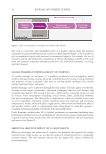
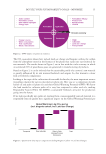
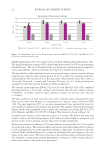
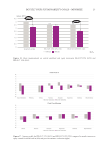
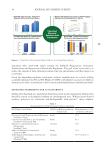
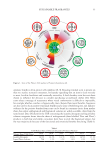
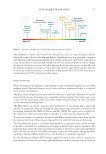
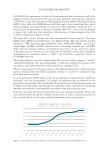
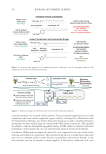
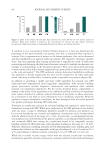
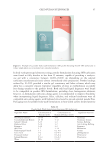
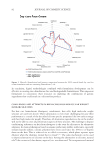
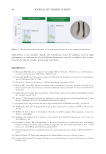
Figure 2 illustrates the emollient-level performance profiles of dimethicone 5 cSt, which is
commonly used in skin care emulsions for its sensory benefits, and an optimized natural-
based emollient mixture of dicaprylyl carbonate, dicaprylyl ether, and undecane/tridecane
(ratio 1.7:3.2:1) obtained from Emollient Maestro. The left panel in Figure 2 shows an
overlapping physico-chemical profile of the silicone (which was experimentally measured)
versus the natural-based emollient mixture (which was predicted). In this panel, various
properties that formulators consider when selecting a new ingredient, i.e., viscosity,
Figure 2. Physico-chemical (left) and monadic sensory (right) comparisons between dimethicone 5 cst
(experimentally measured) and a natural-based emollient combination recommended by Emollient Maestro
(prediction), exhibiting a good agreement at the emollient level.
Assume that a formulator has narrowed down the potential replacements to only a few
candidates based on their experience, supply, and cost guidelines. However, in reality, the
number of potential options could be significantly higher. It is unlikely that any single
emollient among these candidates on its own would be a perfect match to dimethicones.
The number of potential binary or ternary mixtures that could match the performance
of dimethicones can easily become very large. It is important to note that no formulator
would explore all possible candidates, as it would be extremely time-consuming and
expensive. However, it is highly likely that the ideal natural-based candidate to replace
dimethicones is present within these possible mixtures. Therefore, it is evident that one
needs an alternative method to capture potential candidates.
An effective approach to overcome this challenge is to leverage digitization, scientific
modeling, and the benefits derived from enhanced computing power. One such option
is Emollient Maestro12, a digital service that can be utilized to identify natural-based
candidates as replacements for a wide range of synthetic silicones, including D5 and
dimethicones with viscosities ranging from 1 to 200 cSt, mineral oils, and hydrocarbon-
based emollients such as isododecane, isohexadecane, squalene, and many more.
The algorithm powering Emollient Maestro employs prediction and optimization models
that theoretically explore all possible emollient combinations and then return the best ones
that match a given synthetic dimethicone benchmark. This service offers a highly efficient,
quick, and cost-effective solution for formulators to identify potential replacements for
dimethicones and other synthetic emollients.
Figure 2 illustrates the emollient-level performance profiles of dimethicone 5 cSt, which is
commonly used in skin care emulsions for its sensory benefits, and an optimized natural-
based emollient mixture of dicaprylyl carbonate, dicaprylyl ether, and undecane/tridecane
(ratio 1.7:3.2:1) obtained from Emollient Maestro. The left panel in Figure 2 shows an
overlapping physico-chemical profile of the silicone (which was experimentally measured)
versus the natural-based emollient mixture (which was predicted). In this panel, various
properties that formulators consider when selecting a new ingredient, i.e., viscosity,
Figure 2. Physico-chemical (left) and monadic sensory (right) comparisons between dimethicone 5 cst
(experimentally measured) and a natural-based emollient combination recommended by Emollient Maestro
(prediction), exhibiting a good agreement at the emollient level.