4 JOURNAL OF COSMETIC SCIENCE
there are only a few published examples of noncovalent derivatization in cosmetics so far.
One example is the formation of ferulic acid cocrystals in topical formulations.45 Another
example is the use of salicylic acid and phenylalanine cocrystals in a cosmetic cream.46
Principle 9: Catalytic reagents (as selective as possible) are superior to stoichiometric
reagents.
Synthetic organic chemistry has advanced significantly over the past several decades due to
the design and implementation of catalytic processes. In addition to transition metal catalysts,
enzymatic transformations are becoming more and more prevalent in the preparation of
cosmetics.47 Enzymatic transformations are becoming prevalent biomedicine, cosmetics,
and food applications.48 Enzymatic preparations of biosurfactant esters, antioxidant
esters, fragrance and flavor esters, and emollient esters have been described under several
commercially relevant conditions.49 A more specific discussion of lipase catalyzed synthesis
of geranyl esters as flavor additives has also been described.50
Principle 10: Chemical products should be designed so that at the end of their function
they do not persist in the environment and instead break down into innocuous degradation
products.
The persistence of molecules in the environment has received intense regulatory and NGO
scrutiny. Materials that do not biodegrade and a subset of materials that have been referred
to as “forever chemicals” are being deselected in formulations. Per and polyfluoroalkyl
substances (PFAS) in cosmetics have received significant attention.51 While there are no
significant alternatives available yet, there is some hope for some emerging technologies.
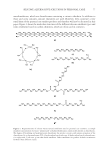
Fatty acid estolides show some promise as PFAS alternatives in some applications.52 There
is a lot of effort in trying to organize research to identify these alternatives.53
Principle 11: Analytical methodologies need to be further developed to allow for real-time
in-process monitoring and control prior to the formation of hazardous substances.
There are a lot of resources being spent to invent new technologies to monitor the progress of
chemical reactions in manufacturing. If one can address deviations from plan in the middle
of a manufacturing process by altering concentrations, spinning rates and temperature,
sustainable goals can be achieved, especially minimization of waste. Many examples in
cosmetics have their origin in process analytical tools in pharmaceutical manufacturing.54
A relevant example includes using process analytical technology in the process of freeze
drying.55 Another useful example for cosmetics involves process analytical technology in
the crystallization process in manufacturing.56
Principle 12: Substance and the form of a substance used in a chemical process should be
chosen to minimize the potential for chemical accidents, including releases, explosions,
and fires.
The big picture issues around toxicity and environmental damage often take center stage
when discussing the sustainability of products. But it should be remembered that the
largest category of deaths in the chemical industry is from explosions, fire, and burns at
56%.57 The flammability of components in personal care products has also been identified
as an issue.58 The historical invention of fluorocarbons as a safer alternative to refrigerants
is an interesting case study, where the initial substitutes themselves were found to be
problematic, requiring yet another generation of materials to be invented.59 Ionic liquids
have been pursued as potential alternatives to flammable solvents, but health and safety
issues have moved the field toward natural deep eutectic solvents.60
there are only a few published examples of noncovalent derivatization in cosmetics so far.
One example is the formation of ferulic acid cocrystals in topical formulations.45 Another
example is the use of salicylic acid and phenylalanine cocrystals in a cosmetic cream.46
Principle 9: Catalytic reagents (as selective as possible) are superior to stoichiometric
reagents.
Synthetic organic chemistry has advanced significantly over the past several decades due to
the design and implementation of catalytic processes. In addition to transition metal catalysts,
enzymatic transformations are becoming more and more prevalent in the preparation of
cosmetics.47 Enzymatic transformations are becoming prevalent biomedicine, cosmetics,
and food applications.48 Enzymatic preparations of biosurfactant esters, antioxidant
esters, fragrance and flavor esters, and emollient esters have been described under several
commercially relevant conditions.49 A more specific discussion of lipase catalyzed synthesis
of geranyl esters as flavor additives has also been described.50
Principle 10: Chemical products should be designed so that at the end of their function
they do not persist in the environment and instead break down into innocuous degradation
products.
The persistence of molecules in the environment has received intense regulatory and NGO
scrutiny. Materials that do not biodegrade and a subset of materials that have been referred
to as “forever chemicals” are being deselected in formulations. Per and polyfluoroalkyl
substances (PFAS) in cosmetics have received significant attention.51 While there are no
significant alternatives available yet, there is some hope for some emerging technologies.
Fatty acid estolides show some promise as PFAS alternatives in some applications.52 There
is a lot of effort in trying to organize research to identify these alternatives.53
Principle 11: Analytical methodologies need to be further developed to allow for real-time
in-process monitoring and control prior to the formation of hazardous substances.
There are a lot of resources being spent to invent new technologies to monitor the progress of
chemical reactions in manufacturing. If one can address deviations from plan in the middle
of a manufacturing process by altering concentrations, spinning rates and temperature,
sustainable goals can be achieved, especially minimization of waste. Many examples in
cosmetics have their origin in process analytical tools in pharmaceutical manufacturing.54
A relevant example includes using process analytical technology in the process of freeze
drying.55 Another useful example for cosmetics involves process analytical technology in
the crystallization process in manufacturing.56
Principle 12: Substance and the form of a substance used in a chemical process should be
chosen to minimize the potential for chemical accidents, including releases, explosions,
and fires.
The big picture issues around toxicity and environmental damage often take center stage
when discussing the sustainability of products. But it should be remembered that the
largest category of deaths in the chemical industry is from explosions, fire, and burns at
56%.57 The flammability of components in personal care products has also been identified
as an issue.58 The historical invention of fluorocarbons as a safer alternative to refrigerants
is an interesting case study, where the initial substitutes themselves were found to be
problematic, requiring yet another generation of materials to be invented.59 Ionic liquids
have been pursued as potential alternatives to flammable solvents, but health and safety
issues have moved the field toward natural deep eutectic solvents.60