INFLUENCE OF ALIPHATIC CHEMISTRY DEVELOPMENTS as one of the principal building blocks of aliphatic synthesis, is also widely obtained by fermentation of natural products, and with gradual exhaustion of mineral deposits, a vast extension of such sources is a very real ultimate possibility. Finally, though one hesitates to as- sociate it in any way with so refined an industry as cosmetics, there is sewage, which actually is worked up to produce high-grade hydrocarbon gases. When I was a boy at school, and as an undergrad with a yen for chemistry which, to me at any rate, does not seem exactly an epoch, one started learning organic chemistry with the fatty compounds. There were, of course, the industrial oils, fats and waxes, and the quick vine- gar process, but pupils and teacher• alike seem to race through a rather featureless series of aldehydes, ke- tones, primary, secondary and ter- tiary amines, and a most confusing mass of carbohydrates and sugars, all the excitement and importance being reached with the coal tar chemicals with their brilliant colours and thrilling explosions. The ter- penes, essential oils and synthetic perfumes seemed to occupy a sort of intermediate state. The Institute of Chemistry, as you know, has an excellent and rather stiff series of examinations for its associateship, and every now and then I rather enjoy, with a feeling of comfortable detachment, reading about the trials and ordeals of the young who submit themselves to their rigours. There is generally a sort of post-mortem examination, published by the examiners, usually in decidedly deprecatory terms. You know the sort of thing--" the criti- cal survey of classical polypeptide synthesis was very discouraging, and very few candidates correctly inter- preted the significance of the gamma diketone structure in question one". Well, only two or three years ago I noticed that an indm•trially minded professor had floored an examina- tion class, probably with their heads full of benzenoid structures, with the question: "Write an essay on the modem industrial applications of compounds with not more than two carbon atoms ". All this goe• •o indicate that a very profound change has taken place in recent years, and in that period the tonnage of industrial ali- phatic chemicals (excluding hydro- carbon fuels and lubricants) has begun to exceed that of the aromatic compounds. This was especially true, admittedly under a highly ab- normal econonay, in wartime Ger- many but it is also true of post-war conditions in the United States as regards tonnage, though not quite as regards value. The inception of the synthetic aliphatic industry throughout the world is considered to be the intro- duction of industrial acetylene in 1896, made by the indirect hydro- genation of carbon through the elec- tric furnace conversion of carbon and lime into calcium carbide. About the time of the first world war it was learned how to convert acetylene to acet al d ehyde by 127

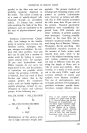
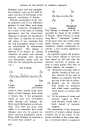
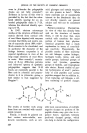
JOURNAL OF THE SOCIETY OF COSMETIC CHEMISTS means of mercury or manganese catalyst: C2H2 q- H20 = CHaCHO. From this, the first synthetic acetic acid and acetone were made. In December, 1914, a young re- search chemist, Dr. George Curme, began an investigation at the Mel- lon Institute, Pittsburgh, which in- troduced olefines as starting materials and fairly started the syn- thetic ball rolling . . . Soon after the end of the first war the work was ready for industrial development, and a beginning was made on a river island .4ite in West Virginia. It is still the principal plant of several. I have been privileged to visit that factory, and I can best describe it as a gigantic open air laboratory, with aluminium painted stills, frac- tionating columns, gas purifiers, reaction vessels, autoclaves, cata- lysers, and so on. It is so huge that a bus service runs along the main avenue, in appearance just like a single decker bus in an English country town instead of stopping at the station, the corn market, the co-op., the Horse and Jockey, and so. on, you get out at Acetic Anhy- dride No. 1, Ethylene Oxide No. 2, Ethanolamines, Isopropanol, etc. ENTER ETHYLESE Oxm•. The king-pin of all this early work was the compound ethylene oxide, made from ethylene by indirect or direct oxidation: C=H• q- O -- (CH2)20 or C2H4 q- HOC1 ---- CH2 C1.CHaOH ---- (CH=)20. This com- pound, besides being a valuable fumigant and pesticide, has the most prodigious and versatile chemical 128 reactivity, and is readily converted to glycols and glycol ethers or, by introducing ammonia, ethanolam- ines. Later, propylene and buty- lene were introduced and different methods of treatment perfected. The products which can be ob- tained by synthesis or semi-synthesis from natural, petroleum or coal-de- rived hydrocarbons range to-day from familiar chemicals such as glycerin, to complete novelties, and include alcohols, aldehydes, ketones, acids, esters, amines, polyhydric alcohols, etc., which may contain carbon atoms up to six in number in straight chains, 15-20 in branched carbon chains, over 300 in poly- ethylene oxide linkages, and many thousands in cross-linked polymers such as those deriving from unsatur- ated polar structures such as vinyl chloride or acrylic esters. These compounds may truly be said, especially as regards the United States, to enter in one way or an- other, not only into every field of industrial manufacture, but into surgery, medicine, the household, the kitchen, the growing of crops and the raising of ,livestock, the equipment of the armed forces and the fire brigades, and the pursuit of the fine arts. To give anything like a complete description, far more than a single lecture would be re- quired for the broadest general- ities. For a few minutes, however, let us imagine an American taking his family or friends for a day's out- ing, and see how they may meet synthetic chemicals without know- ing it.
Purchased for the exclusive use of nofirst nolast (unknown)
From: SCC Media Library & Resource Center (library.scconline.org)