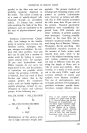
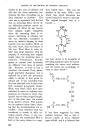
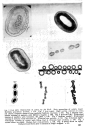
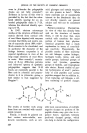
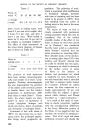
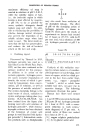
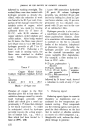
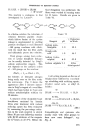
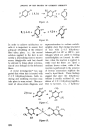
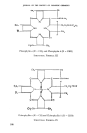
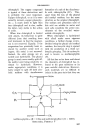
EMULSIONS AND THE COSMETIC CHEMIST faces", Parts 1 & 2. (Transactions of the Faraday Society No. 230, Vol. XXXXVI, Part 6, June, 1940), Part 3 of this subject was given later by A. E. Alexander and J. H. Schul- man. The value of this work was brought to the attention of interested parties by Frank Arkins a few years ago. Drs. Schulman and Cockbain showed a close analogy between previously studied interactions at the air/water interface and 'those at the oil/water interface. According to these authors, the stability of mineral oil-in-water emulsions depends upon the following considerations: The interfacial tilm must be electrically charged. The interfacial film must be stable and in the condensed state, i.e., as many charged molecules as possible should be crowded into the interface. 3. The above two conditions are satisfied when the interfacial film consists of a •nolecular complex of two suitable sub- stances, one of which is an oil soluble substance, and the other an ionisable water soluble substance. 4. •he stability of the interfacial complex film is markedly increased by the presence of excess water-soluble mole- cules above that necessary for a monolayer around the drop- lets, whereas only a monolayer is necessary for the oil soluble component. The following conditions for the stability of water-in-mineral oil emulsions are laid down by the authors: 1. The interfacial film should possess no electrical charge. 2. The interfacial film should possess considerable rigidity. The publication reveals that an inversion from an o/w to a w/o state in an emulsion may be accomplished by removing the electric charge on the oil droplets which results in a breaking of the emulsion. If the composition of the aqueous and oil phases is such as to enable a solid condensed film or, better, an "inter- linked" solid condensed film, to be formed at the interface, then an inversion process occurs with the formation of a w/o emulsion. It had previously been shown that when water soluble substances con- taining an ionised polar group were injected below oil soluble substances containing a polar group, molecular association followed, due to the polar forces on one hand and the non- polar interactions such as van der Waals' on the other. This resulted in a penetration of the water-soluble surface-active agent into the mono- layer structure. This phenomenon at the air/water interface was found to hold good at the oil/water inter- face and was demonstrated by dis- solving polar substances in water and shaking with mineral oil solu- 14b

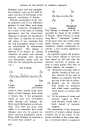
JOURNAL OF THE SOCIETy OF COSMETIC CH.EMISTS tions of substances which led to molecular interactions at the air/ water interface. For example, an aqueous solution of sodium cetyl sulphate gave a stable thin emulsion when shaken with a solution of cholesterol in •nineral oil. When cholesterol was replaced by cetyl-alcohol the result- ing emulsion was stable, but viscous. The importance of the close associa- tion of the non-polar portions of the interacting substances is shown by the fact that sodium cetyl sulphate gave stable emulsions with elaidyl alcohol but not with oleyl alcohol. Similarly, cholesterol and sodium elaidate gave stable emulsions, while cholesterol and sodium oleate did not. Elaidyl alcohol and elaidic acid are transisomers of oleyl alcohol and oleic acid respectively. The latter pair resist close adlineation on account of the cis configuration of the molecule. The manner in which this type of steric hindrance may adversely affect emulsion stability is further demon- strated by the fact that strong com- plexes are formed between long chain alcohols and long chain amines, but less strong complexes between the same alcohols and the quarternary amonium compound corresponding to the amine. Also, sodium lauryl sul- phate -- CH• (CH2)nOSO3Na in conjunction with cholesterol forms s t a b 1 e emulsions spontaneously, while the corresponding sodium s e c o n d a r_y lauryl sulphate-- CH, C•0H2• •CHOS0.•Na is considerably less effective. PRACTICAL APPLICATIONS OF THE ABOVE THEORIES WITH REFERENCE TO O/W EMULSIONS The theory of interfacial cmnplex film formation is of .the greatest significance to the cosmetic chemist. It explains why emulsions stabilised by alkali soaps reverse when poly- valent salts, e.g., calcium salts, are added. The polyvalent cations neutralisc the charge on the oil particles and allows them to coalesce. The film is strengthened by a cross linking of the long-chain fatty acids by the polyvalent ions. OI, L-IN-WATER EMULSIONS Stable low viscosity o/w emulsions are not easy to prepare, but as a starting point the following experi- ment is of interest. When 2 gms. of high grade wool wax are dis- solved in 50 ccs. of mineral oil and shaken with 50 ccs. of an aqueous solution containing 2 grns. of so.dium lauryl sulphate (905/0 ester), emul- sification is spontaneous. One sharp shake is sufficient, and the tempera- ture of the solutions is not significant. The resulting emulsion is very thin despite the high oil concentration, and extremely stable. Emulsifica- tion takes pla, ce at very low tempera- tures which is very often a distinct advantage, When wool wax is replaced by qetyl alcohol the resulting emulsion is very viscous and' stable. By using mixtures of wool wax and cetyl alcohol. it is possible to produce emulsions which vary in viscosity between the two extremes. This 146
Purchased for the exclusive use of nofirst nolast (unknown)
From: SCC Media Library & Resource Center (library.scconline.org)