EMULSIONS AND THE COSMETIC CHEMIST By JACK PICKTHALL, F.R.I,C.* THE HIGH percentage of cos- roetic preparations in emulsified form makes the study of the under- lying principles of emulsification of paramount importance to the cos- metic chemist. Many excellent papers have been written on the theory of emulsification, and it is possible, by careful study o.f them, to form a fairly clear picture of the essential principles. From the practical viewpoint the chemist's own experiences and observations are of much greater value than the numerous formulae offered to the reader of many books and articles xvritten on the subject. The cosmetic chemist of to-day has knowledge of a comprehensive range of emulsified products and, backed by a great number of emul- sifying agents, has small difficulty in formulating attractive and effec- tive preparations. However, when new preparations, which mu•t possess specific properties or contain specific ingredients are required, then a deeper understanding of emulsion technique is necessary. Likewise, there is the emulsion "which has been made in the same way for years" but which suddenly separates after a relatively short shelf life. Also the question of sub- *Chief Chemist, Polak & Schwarz (England) Ltd. stitution of an emulsion ingredient for, perhaps, reasons of economy is best answered by a clear understand- ing of the part, if any, it plays in the emulsion. It is difficult, under the heading of "Cosmetic Emulsions", to intro- duce certain preparations which, while containing both oil and water, are not in the generally accepted state of emulsification. Thus a bath essence is an example of a clear dispersion of oil and water. Such a preparation may be designed to pro- duce a clear solution or an emulsion on dilution with water. The follow- ing classified list, certainly incom- plete, indicates how great is the cosmetic chemists' interest in the dis- persion of oil and water. (a) (b) (6) Transparent dispersion of oils designed to produce emul- sions when diluted with water, e.g. bath essences, disinfectants, p e r f u m e d sprays, etc. Transparent dispersions of oils designed to produce clear solutions on dilution with water, e.g., toilet water, bath essences, disinfectants, per- fumed sprays. Lotions or milks consisting of an oil base emulsified in water, e.g. beauty milks, 141

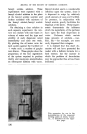
JOURNAL OF THE SOCIETY OF COSMETI• CHEMISTS cleansing lotions, hair creams. (d) Pourable emulsions of the water-in-oil type, e.g. hair creams and certain massage preparations. (e) Creams of the oil-in-water type, e.g. foundation creams, "all purpose creams", hand creams, brushless shave creams, cold creams, etc. (f) Creams of the water-in-oil type, e.g. cold creams, emol- lient creams, "skin foods", etc. THE NATURE OF EMULSIONS Briefly, an emulsion is a system in which one liquid is suspended as globules in a second liquid. From the cosmetical aspect we may pre- sume one phase to be water and the other a water-immiscible substance such as mineral oil, vegetable oil, stearic acid, cetyl alcohol or possibly a compound perfume. The emul- sions to be discussed are those stabilised by a third substance, namely the emulsifier. Extremely dilute suspensions of oil in water which can be stabilised by an electric charge and not an emulsifier, are not normally employed in cosmetics and will not, therefore, be considered. Although cosmetical emulsions often contain water-immiscible ingredients which are not liquid at room tem- perature, it is more convenient to refer to. them as oil. When two liquids such as water and mineral oil are shaken together, one of them will disperse into 142 globules. The more vigorous the shaking the smaller the particle size of the globules, and the greater the degree of dispersion, but if left to stand undisturbed, the particles will re-unite or coalesce unless a stabiliser is introduced to the system. When two immiscible liquids are in con- tact, there is an urgent desire for the interface to take up its smallest possible area, for each phase to gather all its scattered offsprings into one united family. This is explained by the fact that each individual liquid possesses very strong family ties, internal forces which strain to keep the molecules together, reluct- ant to allow even one small member to migrate. The strength of these molecular cohesive forces are measurable and are responsible for the surface tension, each liquid hav- ing its own value. At the same time two liquids exert a certain attraction for one another and the forces tend- ing to draw them together are known as forces of adhesion. When the forces of cohesion of two liquids are much stronger than their forces of adhesion, then the particles will not mix that is, the liquids are immis- cible. In other words, there will exist a strong state of tension between the surfaces of the two liquids. The effect of reducing this state of tension is simply demonstrated by taking a vessel con- taining distilled water and a second vessel containing a solution of a sur- face active agent such as sodium lauryl sulphate in distilled water. If a coloured mineral oil is run into each vessel from a pipette, dipping
Purchased for the exclusive use of nofirst nolast (unknown)
From: SCC Media Library & Resource Center (library.scconline.org)