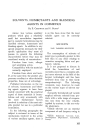
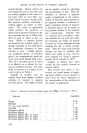
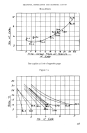
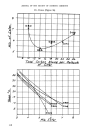
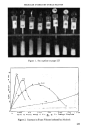
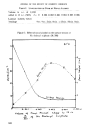
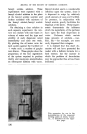
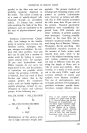
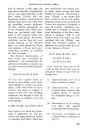
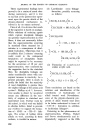
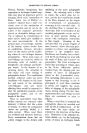
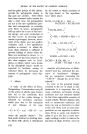
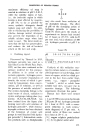
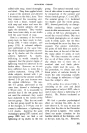
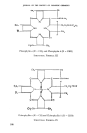
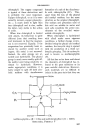
SOLVENTS, HUMECTANTS AND BLENDING AGENTS mole fraction it is evident that pro- vided the vapour pressure of F is low, the smaller its molecular weight the more efficient it will be in terms of weight concentration. For compounds of fixed molecular weight, low vapour pressure is as- sociated with the more polar struc- tures. Hence the criteria of low vapour pressure and low molecular weight imply the use of materials with polar structures. Other factors of importance relate to the degree of affinity between the fixative and the volatile component. In practice, Raoult's Law holds in few cases only, where the mixing is ideal (i.e., without volume change or heat change) and curves of the type shown in Fig. 2 are more com- mon than those depicted in Fig. 1. Where high affinity exists between two components curves of the type B.F. are obtained whereas A.F. and C.F. represent binary mixtures be- tween components of little mutual affinity. For balancing the rate of evapora- tion of various components it will thus be evident that the fixative should have greater affinity for the more volatile than for the less vola- tile components. Whereas the prediction of affinity between perfume components and fixatives is further complicated by the ternary and multicomponent sys- tems involved so as to become im- practicable the evidence favours the use of highly polar compounds as fixatives. The ultimate compound- ing will depend on practical trial. HAIR DYE SOLVENTS Many eminent authorities have been concerned with the materials and processes involved in hair dye- ing but the mode of application has received less attention and has not undergone any radical change for ELC4 •. ¾ApOu • • E S5 Ut•,6- 0F NON-IDEAL 113

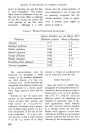
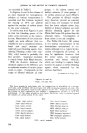
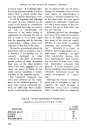
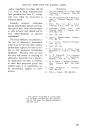
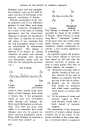
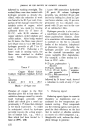
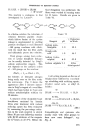
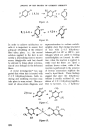
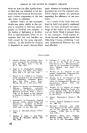
JOURNAL OF THE SOCIETY OF COSMETIC CHEMISTS several decades. Henna extracts are still co.mmonly used as hair dyes and are usually applied in the form of a hot paste with an inert filler, e.g. fuller's earth or from a •veakly acidi- fied aqueous solution containing a wetting agent, as toners in hair- rinses. The mode of application which involves the presence of dilute acid to promote fixation of the dye precludes the use of dilute solu- tions of soap or alkali as dye sol- vents. Water or aqueous alcohol are therefore the common media, al- though solubility of the chief henna dye constituent (lawsone) in these solvents is poor. Certain glycols, e.g. propylene glycol, or hexylene glycol, are comparatively good sol- vents even when diluted with water. Thus 25% hexylene glycol in water is as effective as a solvent for law- sone as undiluted alcohol. The solu- bility of lawsone in a number of sol- vents is given in Table 4. Samples of scoured wool are rapidly dyed from slightly acidified solutions of lawsone in aqueous hexylene glycol. The depth of shade can be readily varied by adjusting the concentration of dye. Since the solubility of lawsone is approxi- mately proportional to the concen- tration of hexylene glycol present in an aqueous mixture a saturated or nearly saturated solution of lawso•:e in hexylene glycol can be made up and portions diluted to the required dye concentration. Dilution with 1'/o aqueous citric acid gives a solu- tion suitable for use and such acidi- fied solutions are stable for periods in excess of 3 hours although on long standing the dye is slowly precipi- tated. After the usual soap rinse the dyeings are fast to washing with dilute acid, alkali or soap, and thc time required for dying is approx- imately 10-15 minutes at 30øC. Samples of human hair when treated by this method showed no adverse effects. This solvent thus offers a con- venient and rapid means of apply- ing henna either in heavy shades or tone rinses by direct regulation of the concentration of the solution and the period of application. TABLE 4. SOLUBILITY OF LAWSONE IN gm. PER 1009m. SOLVENT AT 20 ø C. Solvent Solubility Water ............ Ethanol ...... 5% aq. soap solution ...... Glycerol ......... Propylene gfol ......... Hexylene glycol ...... Hexylene glycol 56•o in water Hexylene glycol 25% in water ... Hexylene glycol 10% in water ... 0.05 1'38 •2 1.00 9.25 7' 00 3'5O 1-40 1-00 !14
Purchased for the exclusive use of nofirst nolast (unknown)
From: SCC Media Library & Resource Center (library.scconline.org)