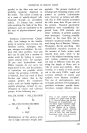
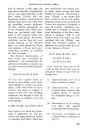
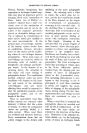
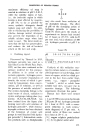
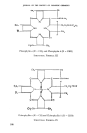
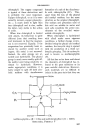
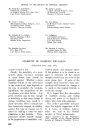
PROPERTIES OF KERATIN FIBRES parallel to the fibre axis and are probably randomly dispersed in the scales. The cortex is made up of a mass of spindle-shaped cells dispersed through an amorphous matrix. In human hair, cortical cells constitute the bulk of the fibre substance, and are considered to be the seat of physico-chemical prop- erties. CHEMICAL CONSTITUTION. Chemi- cally, hair belongs to the keratin group of proteins and contains the elements carbon, hydrogen, oxy- gen, nitrogen and sulphur. In com- mon with other proteins, wool and hair can be split into a number of amino acids by boiling in concen- trated mineral acids for example, 20 per cent hydrochloric acid. Milder reagents do not carry the degradation so far, and the producta of hydrolysis are peptides which contain the grouping -CO-NH-. It is believed, from the work of Emil Fischer and others, that in the original protein the constituent amino acids are linked together via peptide groupings, formed by con- densation o[ amino- and carboxyl groups, in the following way: NH:.CH.COOH + NHo..CH.COOH I -- NH2.CH.CO.NH.CH.COOH + H•O Multiplication of this process gives rise to high molecular weight poly- peptides. The pioneer methods of isolating and estimating amino acids present in protein hydrolysates were, however, so tedious and diffi- cult that in 1910 analysis accounted for little more than 50 per cent of the protein. Classical gravimetric procedures were considerably im- proved from 1918 onwards and newer methods of protein analysis were developed. Growing scientific interest in the wool fibre led to extensive analytical studies, notable work being that of Marston, Vickery, Rimington, Barritt and King. But considerable variation occurred in the amount of basic amino acids isolated from wool, while in the case of the sulphur-containing amino acid, cystine, variation was found not only in different wools but also along the length of fibres and in cells of cortex and medulla. More recently, asta result of work carried out in the early 1940's, rapid and accnrate methods of amino acid analysis have become available *. The use of electrophoresis, ionic exchange, partition chromatography, periodate oxidation, specific decar- boxylases, isotopic dilution, micro- This is the original English version of a paper read by Dr. J. L. Stoves before the Soci6t6 Fran•aise de Cosm(•tologie, at the latier body's Keratin Sym- posium, held in March, 1951, at the Maison de la Chimie, Paris. Other papers dealing with keratin and various as- pects of hair, fur and leather treatment were also presented on that occasion. 159

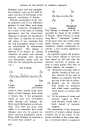
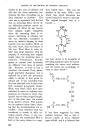
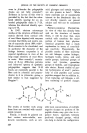
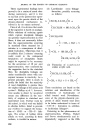
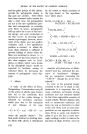
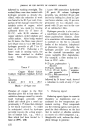
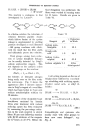
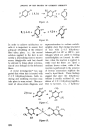
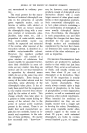
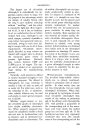
JOURNAL OF THE SOCIETY OF COSMETIC CHEMISTS biological assay and new precipita- tion methods, open up the field for rapid extension of knowledge of the chemical constitution of keratin. Physical examination of the elas- tic properties and X-ray diffraction patterns of wool fibres went along with the analytical investigations. As a result of the study of swelling phenomena and the .stress/strain diagrams of normal and deanimated wool fibres in solutions of various pH values, it was concluded that the long polypeptide chains of wool are cross-bonded by electrovalent salt linkages 8. This linkage is believed to be formed by mutual attraction of amino and carboxyl residues remaining when diamino and dicarboxylic amino acids are built into the polypeptide structure, e.g.-- Salt Linkage / CO CO CH.(CH2)5.NHaOOC.CH2CH2.CH ," NH NH ',, Lysine Aspartic residue acid residue Acids or bases readily bring about fission of smch linkages, from which it follows that if the polypeptide chains of wool were cross-linked solely through salt linkages, the fibres would disintegrate in acid solu- tions. This does not occur, from which it is concluded that stable linkages must als•o be present be- tween adjacent polypeptide chains. These stable linkages are believed to be formed from cystine ø, so: ,,' CO CO x, CH.CH2.S.S.CH•_.CH NH NH Disulphide Cystine Linkage This linkage is thought to be re- sponsible for much of the stability of keratin, which behaves in many ways like a "vulcanized" protein. At the same time, the cystine disul- phide linkage can, under certain conditions, exhibit considerable re- activity, a fact of great significance in cosmetology. An argument against the presence of the cystine linkage in wool has been based on the fact that the chemical reactivity of protein sul- phur is much greater than that of cystine sulphur, for example:-- (a) Treatment of protein with an alkaline solution of lead ace- tate removes 98 per cent of sulphur as compared with 60 per cent in the case of cystine. (b) Sulphur can be removed from insulin by treatment with alkali under conditions which lead to no reaction with cystine. (c) In the presence of water and mercury vapour at 55øC. wool becomes coated with a black deposit of mercuric sulphide. The explanation of this increased reactivity of protein sulphur almost certainly lies in the nature of the groups attached to the cystine link- age, a conclusion which is supported 160
Purchased for the exclusive use of nofirst nolast (unknown)
From: SCC Media Library & Resource Center (library.scconline.org)