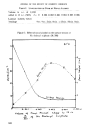
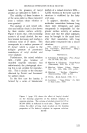
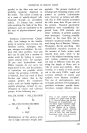
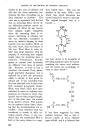
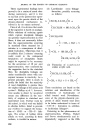
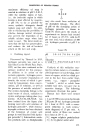
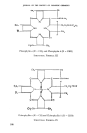
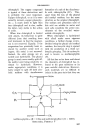
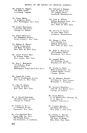
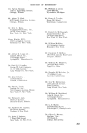
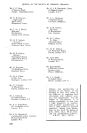
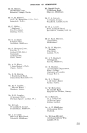
CHLOROPHYLL By WILLIAM MITCHELL, B.SC., PH.D., F.R.I.C.* (Abbreviated Version) The speaker began by referring to the extensive use o.f chlorophyll as a colouring matter for soaps and, to a lesser extent, for colouring other toilet preparations. He also. referred to its more recent applications as a personal deodorant and as a con- stituent of room deodorants. True chlorophyll, he pointed out, is not in fact used for any of the purposes mentioned, various chlorophyll derivatives being employed instead. All green vegetable matter has true chlorophyll as a constituent, most species of plar•ts containing two closely related forms, chlorophyll tt and chlorophyll b, in a fairly con- stant ratio of 3 parts of • to 1 part of b. It is• probably no exaggeration to say that natural chlorophyll is one of the most essen, tial substances in the world, ranking, for example, with water o.r oxygen in importance. Without chlorophyll, life as we know it could not exist. Chlorophyll is present mainly in the leaves and other aerial parts o.f plants, where it occurs in the company of the yel- low pigments, carotene and xantho- phyll, as well as fats, waxes, sterols, proteins and phospholipoids, etc. It seems almost certain that the chloro- phylis exist in the chloroplas.ts corn- * Chief Chemist,' Stafford Allen and Sons Ltd. Abstracted, abbreviated version of the original paper. bined in some manner with proteins --possibly as part of a more com- plex enzyme system. That the chlorophylIs exist in the platit com- bined in some way is certainly sug- gested by the fact that they cannot be adequately extracted, even from dead, dried leaves, by hydrocarbon solvents such as benzene though when isolated by other means they are readily soluble in such solvents. The complicated chemistry of the chlo.rophylls was next referred to by the speaker, who spoke of the im- portant work on the subject that had been carried out by Willst•ttter, Stoll, Fischer, Conant et alia. He pro- ceeded to show, by means of lan- tern slides, the various structural formulae herewith introduced. As will be seen, Formula 1 is the struc- tural formula now assigned to chloro- phyll. In the words of the speaker: Its main features are well estab- lished and the formula is provi- sional only to the extent that the placing of certain of the double link- ages is still not finally determined. ß . . The structure has four pyrrole rings linked by carbon in the form of a d'ihydro-porphin ring, partial reduction of one of the pyrrole rings accounting for the two extra hydro- gens. Substitution in the 3 and 4 positions of the individual pyrrole rings of such a structure gives rob- 183

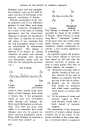
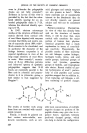
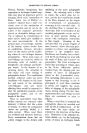
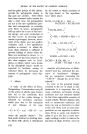
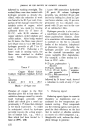
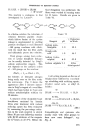
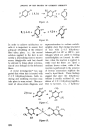
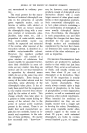
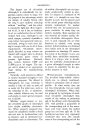
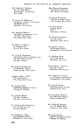
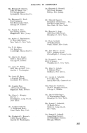
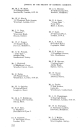
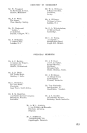
JOURNAL OF THE SOCIETY stances known as porphyrins. It will be noted that this applies in the case of chlorophyll, which is a porphyrin derivative. One does not need to consider the detail of the various sub- stituents on the dihydro-porphin ring other than that shown as "R ", since it is the only one that differs in the two chlorophylIs a and b. In the case of chlorophyll a, R is a methyl group whereas in chloro- phyll b it is an aldehyde grouping. Chlorophyll has a magnesium atom bound by covalent and co-ordinate linkages to the nitrogen atoms. It is also a diester. One of the acid groupings in the porphyrin molecule is estertried with methyl alcohol, and the other with phytol, C2oH:• OH. Phytol is• a primary, unsatur- ated, fatty alcohol that appears in several naturally occurring sub- stances. For example, it forms part of the molecule of the tocopherols (vitamin E). The chlorophyll mole- cule also possesses a characteristic isocyclic ring. It is worth looking at the similari- ties betwea the structure•, of chloro- phyll and of haem (II). The latter, in combination with the protein globulin, forms haemoglobin, the red colouring matter of blood. It will be remembered that chlorophyll is also thought to be associated with protein in the living cell. The struc- ture of haem is remarkably similar to that ooe chlorophyll. It also is a porphyrin derivative, and most of the substituents on the pyrrole tings are identical with those of the chloro- phylis. The important differences are that in haem the magnesium 184 OF COSI•IETIC CHEMISTS ato•n of chlorophyll is replaced by a similarly-bound iron atom that haem does not possess the character- istic isocyclic ring of chlorophyll and that it is not an ester, the two carboxyl groups being free. It is this remarkable similarity in struc- ture of ,these two substances that has undoubtedly prompted the at- tempts to treat anaemias, resulting in haemoglobin deficiency, by the administration of chlorophyll deriv- atives. Changes which can be made in the chlorophyll molecule were next dis- cussed, special attention being paid to the relation of these changes to the production of technical chloro- phylis. When chlorophyll isl treated with acids, the co-ordinately-bound magnesium atom is removed in fact this removal takes place very easily indedd. The product, which con- tains two hydrogen atoms attached to two. of the nitrogen atoms, is known as phaeophytin (III). Phaeo- phytin is still a neutral ester, con- taining the phytyl and methyl resi- dues unchanged. Like chlorophyll it is insoluble in water but soluble in many organic solvents. Unlike the original bright green chlorophyll, it is a dull olive-green substance. It is very easy to displace the magnesimn from chlorophyll by other metals such as copper, zinc, nickel, iron or silver. Equally, any of these metals is readily introduced into phaeophytin, the two hydro- gens directly attached to the nitro- gen atoms being replaced the re- suitant metallic derivative is identi- cal with that produced directly from
Purchased for the exclusive use of nofirst nolast (unknown)
From: SCC Media Library & Resource Center (library.scconline.org)