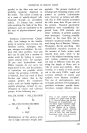
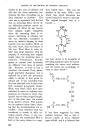
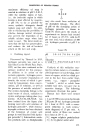
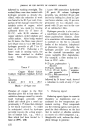
INFLUENCE OF ALIPHATIC CHEMISTRY DEVELOPMENT• pound is soluble enough. With 17 carbon atoms, the compound is only just soluble in water and there is a marked tendency for its solutions to spread laterally along a surface be- fore it penetrates inwardly. With 14 carbon atoms the compound is much more soluble in water and solutions penetrate inwardly rather than later- ally. For that reason such com- pounds have been valuable in fire fighting equipment, especially for such articles as cotton bales and stuffed furniture. When, however, the agent is added to salt solutions or other electrolytes, the solubility decreases rapidly, especially when heavy or polyvalent metals are pre- sent near the limit of solubility the wetting action reverts to lateral spreading. In the cosmetic and related fields agents of this sort are used in soap shampoos and shaving preparations to accelerate rinsing, and in phar- maceutical and household products they are used with phenolic disin- fectants and germicides, serving to intensify the effort both by promot- ing intimate contact, and by a specific synergistic action. Wetting agents of this type are also useful in hair waving and bleaching reagents to ensure full and uniform contact. In the field of detergency primary alcohol sulphates are better than secondary, and it is generally found that 12 carbon chains represent an optimum condition. Synthetic com- pounds have been produced on a commercial scale having this struc- ture for example the synthetic primary alcohol 2-butyl octanol C•H9 CHCH2OH CoHla This compound will yield detergents which can be called sodio isolauryl sulphates. The triethanolamino salt would be more soluble and furnish a fluid and emo]lient hair shampoo. Butyl octanol could also be con- verted into a genuinely and entirely synthetic non-ionic detergent by etherifying with ethylene oxide. GREATER PRECISION WITH SYN- THETICS. One of the virtues of syn- thetic organic materials is that to a far greater extent than in nature a single compound is produced. It is not part of nature's laboratory tricks to make single oils, fats and waxes. Nature can, of course, be amazingly selective: for example, in optically active compounds of edible type, nature makes only the dextro varieties. However, the only chemi- cally pure compounds occurring in nature are some of the simple crystalline inorganic compounds such as calcium carbonate. If it suited the vital system of plants and animals to be equipped with single fats instead of mixed ones, then the cosmetic chemist, the soap maker, the hairdresser, the tanner, the chandler, the makers of margarine, cooking fats, condiments, textile finishing agents, agricultural pesti- cides, speciality lubricants and a hundred and one other things would be able to get pure fats straight from the seed farm or slaughter house. Except for materials produced by the latest distillation processes, stearic and other fatty acids and al- 131

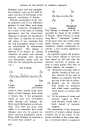
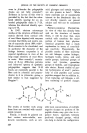
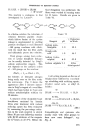
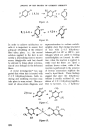
JOURNAL OF THE SOCIETY cohols of the very best quality are not single chemical compounds at all, and even now it is not possible to achieve the industrial resolution of fatty isomers. For many formu- lating purposes this is immaterial, but when it comes to making chemi- cal derivatives the use of a single entity makes for simiplicity and pre- cision. INSECT REPELLENTS. Turning now to eight carbon chain compounds, we begin to. leave the surface active territory behind, except for opera- tions in very concentrated electro- lytes. Instead, we get a series of qualities, frequently associated with very sparing but appreciable aque- ous solubility, including certain odour characteristics. Nearly every- body likes a nice smell, whether it is called an alluring perfume or a manly tang but there is a use in toiletry for smell that insects do not like, as well as for those that people do. Ethyl hexane diol is one of the best products available for repelling gnats, mosquitoes and summer pests of this kind. It has an interesting history, and one which is a certifi- cate of good value, for it and a very few others were selected from a very extensive range of possible products for use by American armed forces in tropical far eastern theatres of war for restraint of insect borne tropical disease, and for which it xvas remarkably effective. Used as a cosmetic formulation, ethyl hex- ane diol and other insect repellents have to be used in fairly high con- centration, so it is not customary 132 OF COSMETIC CHEl•IISTS to include them in ordinary creams and lotions. For example, neat ethyl hexane diol will protect for six hours or so against mosquitoes a lotion containing one-third of the active ingredient will protect for roughly one-third of the time. Slightly soluble diols and other al- cohols are also difficult materials to emulsify well, and finely dispersed particles in emulsified form will penetrate the skin like a cleansing or vanishing cream, whereas a repel- lent should stay well on the surface. For these reasons we find it better for an insect repellent cream not to incorporate water, but to stiffen the product with metallic stearates which confer a sort of barrier effect. Active ingredients, which being used in small proportions do not disturb or interfere with insect repel- lency, may be added, a very suit- able ingredient of this character being a sun-screening agent. A very attrac- tive combined liquid lotion of this kind isl made in America under the auspices o.f one of the industry's leading ladies. Ethyl hexane diol being a spar- ingly water- soluble long chain alcohol, has an emollient effect on the skin. The fatty chain imparts more marked softening than purely hydrophilic structures such as gly- cerin, and the two hydroxyl groups afford some penetration. As a con- centrated skin lotion ethyl hexane diol has shown no recorded adverse effect, and unlike dimethyl phthalate it does not dissolve or soften finger- nail varnish or plastic spectacle frames.
Purchased for the exclusive use of nofirst nolast (unknown)
From: SCC Media Library & Resource Center (library.scconline.org)