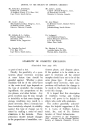
STABILITY OF COSMETIC E3iUL$iON$ manner that the size of the classifica, tion containing the largest numbel of particles remains constant, but the percentages of particles in the various size groups change in the direction of a larger average par- ticle size. After a time the rate of change decreases and perhaps stops, after which the emulsion will almost always be found to have been stabi- lised and undergo no further change. It is therefore of value to follow the progress of stored samples, which show no visual change, by means of microscopic determination of droplet size distribution. A halt in progressive changes in the size dis- tribution is thus an indication that the emulsion has reached a stable state as regards phase separation. It goes almost without saying that the product should be put through several freezing and thawing cycles. Some com•nercial products arc sub- ject to freezing during shipment, and should be able to withstand this treatment. It seems probable that attaining stability to freezing is re- lated to the problem of obtaining a stable emulsion where the internal phase is solid, as in a wax emulsion. This problem is often met by the selection of an emulsifier of high solubility. The gelling of an emulsion or col- loid is a result of the formation of an internal structure within the liquid. "Viscosity" of the gel de- creases as the emulsion is agitated, and the viscosity therefore depends on the degree of agitation and period of standing before viscosity is measured. It is sometimes possible to know when gelling is probable, as the liquid will show a departure from ordinary true solutions in its viscosity behaviour. This is measur- able with a rotating cylinder type of viscosimeter, where Newtonian liquids show constant viscosity in- dependent of the rate of rotation, while an emulsion subject to gelation will often show decreasing viscosity with increasing rotational speed of the viscosimeter. It seems paradoxical, but it is nevertheless true, that phase separ- ation sometimes occurs in emulsions when they are agitated. It is well known that one kind of mechanical work may produce a good emulsion, while the wrong kind of stirring re- sults in a poor product from the same formula. Milk may be taken as an example- rapid shearing motion for a short time results in homogen- isation, while prolonged slow churn- ing causes the separation of the butterfat. This phenomenon can perhaps be in part explained on the basis of one kind of mixing causing rapid motion of the dispersed par- ticles so that forceful collisions occur frequently, while a different motion may break droplets into smaller ones and give greater stab- ility. Many other factors involved have been postulated, but no com- pletely satisfactory explanation has been advanced. As a cosmetic pro- duct may be subjected to long periods of vibration during ship -• ment, tests with different types of agitation or vibration should be made. It is quite common actually to ship samples over long distances (Continued on Page 208) 197

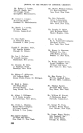
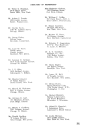
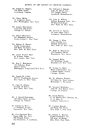
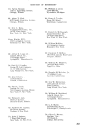
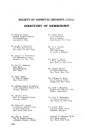
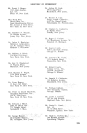
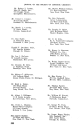
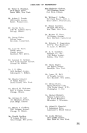
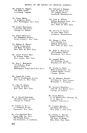
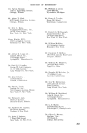
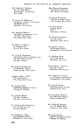
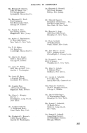
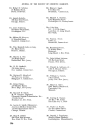
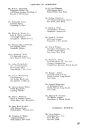
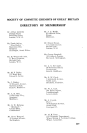
SOGIETY OF COSMETIC CHEMISTS, (U.S.A.) DIRECTORY OF MEMBERSHIP Dr. Philip D. Adams, Andrew Jergens Company, 2535 Spring Street, Cincinnati 5• Ohio. Dr. Jan,es Baker, 33-35 75th Strecl, Jackson Heights, Long Island, New York. Mr. Joseph A. Alexander, 315 West End Avenue, New York 23, New York. Mi'. tierman J. Amsterdam, 587 Montgomery Street, Brooklyn 25, New York. Dr. Carl N. Anderson, Pine Road, Briarcliff Manor, New York. Dr. Louis Appel, 3.1 West 85 Street, New York, N.Y. Ms'.- William 'F, dwin ArehSmeyer, 1278 Campbellton Road, S.W., Atlanta, Georgia. Mr. Douglas Atlas, 4443 S. Greenwood Street, Chicago, Illinois. ß , Mr. Edward F. Arnold, Commercial Solvents Corp., .t..7 East 42nd Street, 'New. York, New York. 'Mr,:.. Win.. S. 'Arnold, ._ '706 N. Patton Avenue, krling{on Heights, Illinois. 198 Mr. H. J. Bannon, Grove Labs., 2630 Pine Street, St. Louis 3, Missouri. Dr Louis C. Barail, 8 XVest 66th Street, New York 23, New York. Mr. Gabriel Barnett, 241 West 97th Street, New York, New York. Mr. William D. Barry, 241-17 Church Street, Douglaston, New York. Mr. Fred C. Beardsley, Packers Tar Soap Co., Inc.,. Mystic, Connecticut. Dr. Paul Z. Bedoukian, 511 West 232nd Street'. New York 63, New York. Dr. Arthur Behr, 406 East Grove Street, Midland, Michigan. .. Howard' T. Behrrnari, M.D..½ " 1125 Park Avenue ..... New York, New York.
Purchased for the exclusive use of nofirst nolast (unknown)
From: SCC Media Library & Resource Center (library.scconline.org)