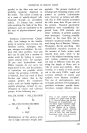
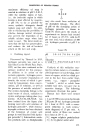
INFLUENCE OF ALIPHATIC CHEMISTRY DEVELOPMENTS freezing point, b.p. 245*C., about as hygroscopic as glycerin, but, like propylene glycol, more resist- ant against mould growth it is very sparingly soluble in oils, and is ap- preciably toxic internally. As we advance up the series, (CH..OH)• (CH•OCH•)n the boiling point increases to around 350øC. or a little over, and the freezing point rises rapidly the pounds become less and less hygro- scopic, and up to about n -:: lg they become better solvents for oils and fats, for essential oils, and also for various resins and cellulose esters and ethers. Above n = 12 these solubilities seem to decline again, probably because of the size of the molecule. Doubtless for the same reason, toxicity very much declines. In the polypropylene series, water solubility declines rapidly and oil and resin solubilities are much more •narked. They are also much more fluid than the polyethylene glycols. This type of solvent may well prove very satisfactory for blending spirit soluble colours with oils and waxes, as in lipstick base. Where n ::= 20 and over, the poly- ethylene glycols become solid and •nay be called "water soluble waxes" --strictly of course pseudo waxes, They are totally insoluble in petro- leum, and only slightly soluble in me.st animal and vegetable oils the harder members are therefore use- fully incorporated in industrial bar- rier creams for operatives in engin- eening,. paint works, oil refineries, petrol stations or simply for clean- ing out the gas cooker. They are very good hair conditioners or emol- lients for hair shampoos or setting lotions. Their emollient effect is free from stickiness or hygroscopicity. They can also be used to suspend high proportions of inorganic astrin- gents, so obviating the difficulties of emulsion techniques in these cases. Polyglycols can be further modi- fied, either by after-treatment or by •ntermediate 'treatment, by substi- tuting one or both of the hydroxyl groups. Simple interpolymerised other groups•as for instance compounds made by catalysing alcohols with a large excess of alky- lone o,xides- yield a series of s•vn- thetic lubricants of very low freezing points and quite exceptional viscos- ity characteristics, reduction of vis- cosity with increasing temperature being less than with the very highest class of naturally derived lubricating oils due to the incidence of oxygen linkages they also oxidise readily and leave little or no carbon or tar behind. These compounds are sometimes soluble in water and sometimes in- soluble the water insoluble types disolve in dilute alcohol. All have strongly oily character and have one free hydro.xyl group. They therefore have some of the physical and sol- vent qualities of castor oil, and have been used in America as bath oils, constituents of lotions, and condi- tioners and fixatives for the hair, incapable of rancidity. POLYGLYCOL ESTERS AND ETHERS. Finally, by substituting long c•rbon chains, either of ether or ester type, 137

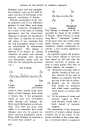
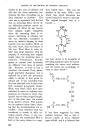
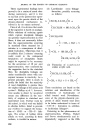
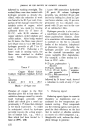
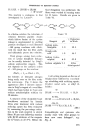
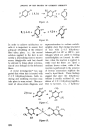
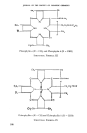
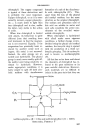
JOURN:.•L OF 'THE'• SO•I'ETY into the polyglycols, we find our- selves back in the emulsifying and surface active range, with the vital difference that the structures so formed are non-ionic and exert sur- face activity by their duality of con- stitution: -- + C•H•OCO N(CH2CH20H):• H Triethanolamine stearate (soap) L C•H•OCO M CHJCH20CH2)•CH20H Tetraethylene glycol oleate (ester) L = lipophilic portion kl = hydrophilic portion. Non-ionic emulsifying principles are the most versatile of all, since they are not liable to the rapid re- actions, solubility and concentration changes which may be brought about by electrolytes in ionised in- terfacial systems. Moreover, anionic and cationic agents precipitate each other, while non-ionics serve to supplement either. When improved emulsification is secured by using two agents in conjunction, usually of complementary solubilities and affinities, one is invariably non-ionic and the other commonly an ionised product. The polyethylene glycol or poly- oxyethylene fatty esters provide an especially versatile series for start- ing, say, with a dozen each of poly- glycols and fatty acids we can have our emulsifying agents "tailor made", or at least choose from a possible 144 fittings. The neutral and inert behaviour of these compounds compared with electrolytes generally renders them 138 OF COSMETIC CHEMISTS harmless towards the most sensitive tissues As a very general guide, the sur- face qualities of these surface active esters may be predicated upon the balance of lipophilic and hydrophi- lic portions of their structure. When these are more or less equal, as in polyethylene glycol 300 monostear- ate or polyethylene glycol 200 monolaurate, we have materials of unctuous or fatty appearance and external quality, which self-emul- sify in cold or warm water to give stable, opaque and somewhat vis- cous dispersions. On one side of this we can have an excess of the lipophilic portion, as in di-, tri- or tetraglycol oleate, insoluble in water but readily dis. persed by homogenisation or by small additions of more soluble members of the series. On the other hand, an excess of the hydrophilic portion, as in the monolaurates of polyglycol 400 and upwards, pro- duces increasing water solubility, declining viscosity in solution, and free but not persistent foaming. With polyethylene glycols of m.w. 1000, the diesters, which in general present qualities more of the character o,f saponifiable fats, also become water soluble and emulsify- ing, though they are rather difficult to prepare and do not seem to pre- sent any particular advantage over simpler monoesters of similar bal- ance. As has been pointed out in a pre- vious lecture to this Society, the less ,water soluble types can furnish either w/o or o/w emulsions. This
Purchased for the exclusive use of nofirst nolast (unknown)
From: SCC Media Library & Resource Center (library.scconline.org)