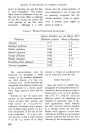
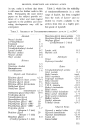
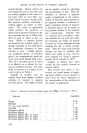
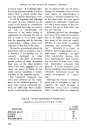
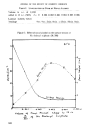
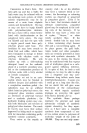
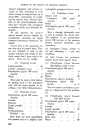
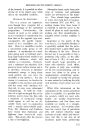
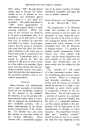
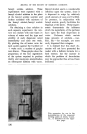
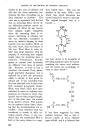
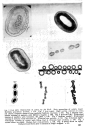
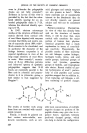
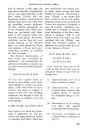
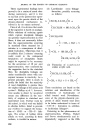
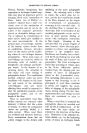
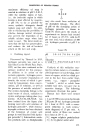
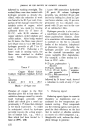
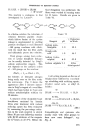
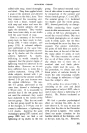
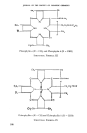
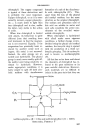
PROPERTIES OF KERATIN FIBRES R.S.S.R. + 2R'SH -- 2R.SH -{- R'.S.S.R' This reaction is analogous to that investigated by Lecher 3•' final elongation was performed, the fibres were washed in running water for 24 hours. Results are given in Table VI. NO b In alkaline solution the reduction oi cohesion between peptide chains which follows fission of the cystinc linkage is supplemented by swelling premure developed as each liberated --SH group combines with alkali, with the result that the fibre swells and ultimately passes into solution. Thiol groups arising from reduc- tion of cystinc disulphide linkages can be readily detected by Feigl's sodium azide-iodine reagent. This test depends on the catalytic action of --SH group,• on the reaction: 2NaN•,-t • 1:--- 2Nai + 3N: the bubbles of liberated nitrogen being easily seen on the fibre under the lnicroscope. Fig. 8 shows the appearance after 5 minutes immer- sion in Feigl's reagent of a wool fibre which had been boiled in 5 per cent sodium metabisulphite solution for 30 minutes. A measure of the disulphide bond breakdown sustained by keratin fibres after treatment with variou:i reducing agents has been estimated by measuring the percentage reduc- tion in the work required to stretch fibres 30 per cent following reaction with M/10 solutions of the reagents for 17 hours at 22.2øC. Before the TABLE \"I •/,• Reduction Reagent pH in Work Sodium meta- bisalphite 5.0 10.8 't'hiogly•)i•i• acid 1,0 16.2 __ . Sodium hydro- sulphite 6.0 Sodium sulphide 9.2 20.0 Fibrc disintegrated Cold setting depends on the use ot thioglycollate followd by cross-link- age rebuilding with oxidising agents, divalent metal salts, or alkyl di- halides: O 2R.SH ---- R.S.S.R. + H,.,,O Fe SO• 2R.SH ------- R.S.Fe.S.R + H.,,SO4 CH..,CI.z 2R.SH -- R.S.CIL,.S.R. + 2HC1 Formaldehyde and quinones also readily react with thiol groups to form new cross linkages aø, e.g. mg.a. 173

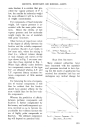
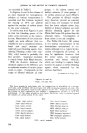
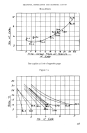
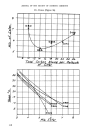
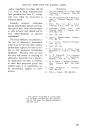
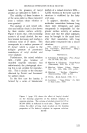
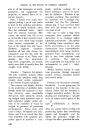
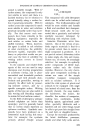
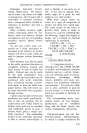
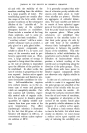
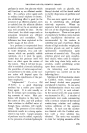
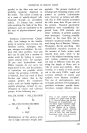
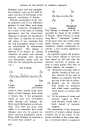
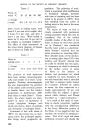
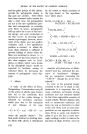
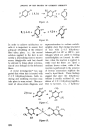
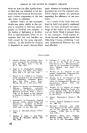
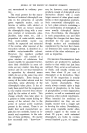
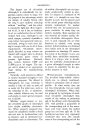
JOURNAL OF THE SOCIETY OF COSMETIC CHEMISTS o • Figure A. In order to achieve satisfactory rc- suits it is important to ensure that adequate rebuilding of the reduced fibre takes place, i.e., the second solution applied to the hair is not merely a neutralising rinse to remove excess thioglycollic acid but should be aUowed to bring about re-forma- tion of cross. linkages in the deformed fibres. A recent investigation 4ø has sug- gested that when hair is treated with 2:4:5 trihydroxytoluene, both re- ducing and oxidising reactions may take place to some extent. Measure- ment of stress/strain diagrams and supercontraction in sodium metaN- sulphite show that during treatment of hair with 2:4:5 trihydroxy- toluene pH 4 at 40 ø or 100øC., new linkages which are stable to boiling metabisulphite are formed. In addi- tion, when the reaction is applied to white wool the fibres are dyed a medium brown colour, while if the reaction is performed in the presence of ferrous ammonium sulphate the wool is dyed black. These findings suggest that since the trihydroxy- toluene is readily oxidbed (cf. oxi- dation of 1:2:4 trihydroxynaphtha- lene to lawsone, i.e., 2 hydroxy- •, R $ i.i o oH Figure D. 174
Purchased for the exclusive use of nofirst nolast (unknown)
From: SCC Media Library & Resource Center (library.scconline.org)