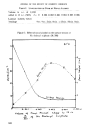
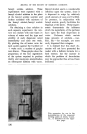
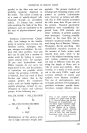
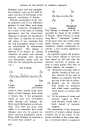
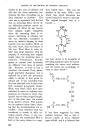
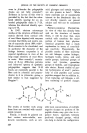
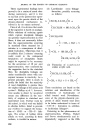
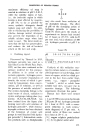
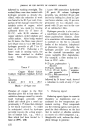
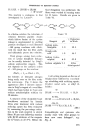
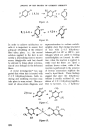
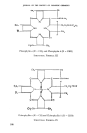
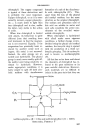
PROPERTIES OF KERATIN FIBRES 1:4 naphthaquinone), it might function asl a reducing agent towards the disulphide linkage (Fig. B). Reaction of the quinone with thiol groups should then be possible with formation of new cross-linkages (Fig,. C). In the presence of iron a co-ordin- ated iron salt ooe the type shown in Fig. D is. envisaged. In conclusion, our survey of the physico-chcmical properties of hair shows that, while nmch remains to bc learned about the finer detain of the molecular structure of keratin fibres, the broad principles of chemical constitution and histological organisation are now sufficiently clear to enable a rational interpreta- tion of fibre chemistry to be made. Such a corpus of knowledge makes possible an understanding of present practices in cosmetology and points the way to further developments. •E•E•ENCES 1. Stoves. Proc. l{oy. Soc. tSdm. 1944, 62, 99. 2. Stoves, Natur.e, !943, 151, 304 Proc. 1Roy. Soc. Edin. !945, 62, 132. 5. Stoves. J. Soc. Leath, T•ades Chern. 1948, 32• 254. 4. Gral•n. J. So(. Ds cts & Col., 1950, 66, 405. 5. Stoves. Fibrous Proteins Sym- posimn, So•. Dve:s & Cod. 1946, 58. 0. S.tove:,. Nature, 1940, 157, 230. 7. Chibnall. J. Int. Soc. Leather Trades Chem. 1940, 30, 1. 8. Speakman. J. Soc. Dyers & Col. Jubilee Issue. 1934, 34. 9. Marriott. J. Int. Soc. Leath. Trades Chem. 1933, 17, 178 Speakman. Nature 1933, 132, 931). 1U. Phillips. Fibrou:• Proteins Sym- posium. Soc. Dyers & Col. 1946, 39. 11. Astbury, J. Soc. Dyers & Col. Jubilee Issue 1934, 24. 12. Brill. Ann. Phys, 1923, 434, 204 Meyer, Mark. Ber. 1928, 61, 1932. 13. Astbury and Belin. Nature. 1941, 147, 696. 14. Bull and Gutn!an. J. ,Smer. Chem. Soc. 1944, 66, 1253. 15. Farrant, Rees and Mercer. Nattire. 1947, 159, 535. 1O. Ambrose et al. Nature. 1949, 163, 483 1951, 167, 264 Pmc. Roy. Soc. A. 1951, 205, 47. 17. Huggins. Ann. Rev. Biochem. 1942, 11, 27. _ 18. Bolliger. Med. Jour. Australia. t949, 536. 19. Consden, Gordon and Martin. Bio- chem. j. 1949, 44, 548 Lindley. Research. 1950, 3, 509. 2i•. Zahn. Melliand Textdberlchte. !950, 31, 481. 21. Speakman ct al. J. Text. Inst. 1933. 24, T.273 193o. 27, T.183. 22. Sch6berl. Collegit, m !930. 412. 33. Harrison. Proc. Roy. Soc. A. 1918, 94, 40O. 2,t. Shorter. Tram,. Farad. •oc. 1924, 20, 228. 23. Astbuly and Woods. t'rot. Roy. Soc. A. 1933, 232, 33.3. 20. Speakman. J. Soc. Dyers and Col. 1936, 52, 335. ,!7. Phillips. Natme, 1930, 138, 121. 28. Stoves. Trans. Farad. Soc. 1942, 38, 254. 29. Phillips et •,1. Biodmm. J. 1945, 39, 17 J. Soc. Dyer• & Col. 1940, 62, 203. 39. Stoves. J. S•c. Dyer:, & Col. 1947, 63, 70. , 31. Blackburn and Lindley. J. Soc. Dyers & Col. 1948, 64, 305. 32. Bunn and Garner. Proc. Roy. Soc. A. 1947, 189, 39. 33. Stoves. Trans. Farad. Soc. 1942, 38, 254. 34. Phillips and Cuthbe•:tson. Biochem. J. 1945, 39, 7. 35. Stoves. Trans. t,'a•ad. Soc. 1942, 38, 501. 30. Brauckmeyer and Rouelte. Melli- and Textilber., 1937, 18, 222, 293. 37. Consden, Gordon and Martin. Biochem. ]. 194•, 40, 580. 38. Lecher. Bet. 1920/ 53Ii, 591. 39. Stoves. J. Soc. Dyers and Col. '1947, 6•, 65. 40. Burton and Stoves. Nature, i950, 165, 569 J. Soc. Dyers and Col. 1950, 66, 474. 175

BLEACHING CREAMS ByD. F. The origins of bleaching creams, like tho•e of cosmetics in general, arc lost in the early history of man- kind. Unlike most cosmetic ducts, bleaching cream has been subject to indifference on the part of the industry as a whole. Careless. unwarranted and exaggerated at- tacks have been made upon it from time to time, by the medical profes- sion, regulatory bureaux, and pro- Iessional reformers. I a•n happy to have this opportunity to give you, as open minded scientists represent- ing the entire industry, a brief sum- mary of the modern history of this product, and the research recently conducted that firmly establishes it a,•.• a safe and beneficial product. For with all modesty and honesty, Am- moniated Mercury Ointments will do more for the skin than any other cosmetic product within my knowl- edge. Bleaching Creams and Freckle Creams first appeared on the market about 50 years ago. The original formulae were obtained from works on dermatology, current at that time: 10 per cent Ammoniated Mer- cury, 10 per cent Bismuth Subni- trate and 80 per cent White Petrola- .rum, is typical. Modifications of this formula, with 5 per cent Ammoni- *Lately Vice-President, National Toilet Company, Paris, Tenn., U.S.A. •EALON* ated Mercuw, are still in use by the indus,try. }towever, in the past few years there has been considerable progress in developing hydrophilic Ammoniated Mercury Ointments. They are more pleasant to use, as they leave no oily mask on the ,•tkin. They are said to have a higher germ- icidal value than the old petrolatum base creams. This type of product is already being marketed and wc shall soon have the consnmer's ver- dict. Much of the original work appeared in the Journal of the American Pharmaceutical Associa- tion*, •, • From 1900 to 1938 numerous pro- ducts of this natm'e were marketed. As frequently happens in many in- dustries, the somewhat overextended advertising claims of a few manu- facturers overshadowed the honest statements of the entire group. This condition attracted criticisdn of the industry as a whole, some of which was warranted and some unwar- ranted. In 1938 this condition had become seriou, enough for ,the man- ufactm'ers to form an association in order to determine the facts. Imagine yourselves in our position. My company had marketed a Bleaching Cream fo[ 40 years. Through simple-observ•atibh{ of its use by friends and employees we knew that it would fulfil our claims 176
Purchased for the exclusive use of nofirst nolast (unknown)
From: SCC Media Library & Resource Center (library.scconline.org)