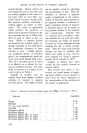
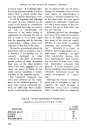
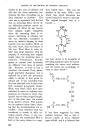
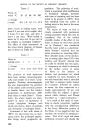
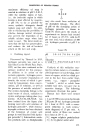
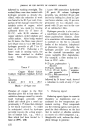
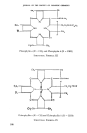
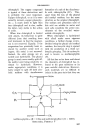
PROPERTIES OF KERATIN FIBRES maximum efficiency of soap is exerted in solutions of pH 9.5-10.5, while the stability region of hair, i.e., the isoelectric region in which keratin is least affected by reagents, is pH 5-8, so far as possible the newer synthetic detergents s!aould replace soap and alkali. In addi- lion to eliminating the possibility of alkaline damage neutral de.tergents also prevent the deposition of in- soluble calcium soaps when hard water i• used. The latter result en- sures that the hair has greater gloss, and reduces the risk of bacterial attack on the hair and scalp. O R.•.S.R II o may also result from oxidation of the disulphide linkage. The effect of pH on the damaging action of hydrogen peroxide is shown in Table IV which gives the results of experiments on human hair treated for 17 hours at 22.2øC. with 6.25 per cent (vol./vol.) solutions of 100 vol. hydrogen peroxide at pH 3 to 12: T).BI•E lV 4. Oxidising Agents Discovered by Thenard in 1818, hydrogen peroxide was used as a hair bleach at the World Fair, Paris, 1878, and has since continued as the primary material for this purpose. In addition to its action on the melanin pigments, hydrogen perox- ide causes oxidative degradation of keratin, the extent of which is. gov- erned by temperature, time, concen- tration, pH of solutions, as well as the presence of metallic catalysts .•. The cystinc disulphide linkage is the main centre of attack, oxidation to cysteic acid groups taking place (e.g. taurine, HaN.CH:.CH•S0:•tt, has been isolated from the liquor after treating wool with acid solutions of hydrogen peroxide •, while chroma- tographic evidence has been obtained of the formation of cysteic acid groups in wool bleached with hydro- gen peroxideS*.) Intermediate oxida- tion products such as disulphoxides pH 3'0 4'9 7'0 8'•1 0'412'0 % reduction in work 7'3 8'0 12'0 15'6 18'7 35'3 Catalysis of this oxidation reac- tion by certain metals is of consider- able importance in hairdressing, since traces of copper. nickel or cobalt pre- sent in the hair from earlier treat- ments, e.g., copper - pyrogallol "rasticks ", nickel or cobalt from metallic hair dyes, can give rise to excessive damage. The following experiments illustrate tlfi.• point: Human hair fibres were treated with 1 part 0. 880 ammonium hydroxperoxide 20 parts 20 vol. hydrogen for 1 hour at 28øC. with a conse- quent reduction in work (stre.qs/ strain diagram) of 17 per cent. A second series of fibres was soaked for 1 hour at 28 ø C. in 5% copper sulphate pentahyacid 1% (v/v) glacial acetia 171

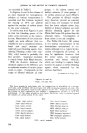
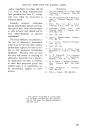
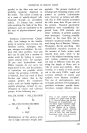
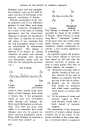
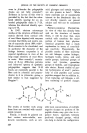
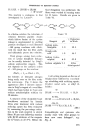
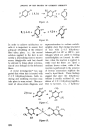
JOURNAL OF THE SOCIETY followed by washing overnight. The washed fibres were then treated with hydrogen peroxide as already des- cribed, when the reduction in work was found to be 30.7 per cent. Com- parison of the damage caused by the catalytic action of copper, nickel and cobalt was made by treating calibrated fibres for 17 hours at 22.2øC. with M/20 solutions of copper sulphate, nickel sulphate and cobalt acetate. After being washed for 24 hours, the fibres were placed in 6.25 per cent (v/v) of 100 volume hydrogen peroxide at pH 7 for 17 hours, at 22.2øC. Following a 24 hours' wash in running •vater, the fibres were stretched in distilled water. Table V summarises the results. TABLE V Copper Nickel Cobalt Catalyst Sulphate Sulphate Acetate reduction in work 49'3 21'4 2O'2 Blank -- 12.0 per cent OF COSMETIC CIIEMISTS 1 part ß 880 ammonium hydroxhydrogen 20 parts 20 volume peroxide, was stretched 40 per cent and set by boiling for •- hour in 2 per cent borax solution, only 15 per cent permanent set was obtained, cont.- pared with 25 per cent in the case of an unbleached fibre. tIydrogen peroxide is also used as a constituent of oxidation hair dyes, where p-phenylene diamine, alone or in association with amino-phenols, is oxidised on the fire to coloured bodies of the indamine, indophenol or phenazine type. Normally, the hydrogen peroxide acts primarily on the dyestuff intermediate and cause• negligible fibre degradation. For example, a fibre treated for 1 hour at 20øC. with: 0.25 g.m. p-phenylene diamine 0.25 g.m. Amidol 5.0 cc. 20 vol. hydro- gen peroxide 0.25 c.c. 880 ammonium hydroxide followed by 24 hours' wash, showed a reduction in work of only 2.7 per cent. per 100c.c. aqueous solution Presence of copper in the fibre therefore gives rise to four times the oxidative damage caused by uncata- lysed hydrogen peroxide, while nickel and cobalt give a result ap- proximately 1.75 times that obtained in the blank experiment. As m•ght be anticipated, attack by hydrogen peroxide impares the se•ting proper- ties of human hair, e.g., wh{,n a fibre which had been treated f•:r 1. hour at 28øC. with 5. Reducing Agents Reducing agents figure in cosmetic chemistry as depilatories and as assistants for low temperature per- manent waving. Thiol compounds are the reducing agents used and de- pend for their efficiency on the fact that in neutral or alkaline solution an excest• of a thiol compound, e.g., thioglycollic acid, reduces the disul- phide linkage in proteins: 172
Purchased for the exclusive use of nofirst nolast (unknown)
From: SCC Media Library & Resource Center (library.scconline.org)