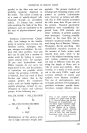
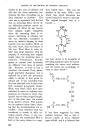
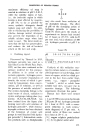
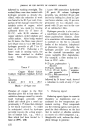
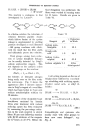
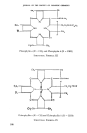
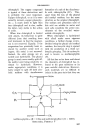
INFLUENCE OF ALIPHATIC CHEblISTRY DEVELOPblENT$ PERFUblES, •OLVENTS, PLAST[- C•SERS, HU•ECT^NXS. By abstrac- tion of water, ring closure and slight re-arrangement, ethyl hexane diol is convertible to trimethyl cyclohex- anol, a compound with a marked re- semblance to menthol, and with a similar odour. Other synthetic aromatic eight- carbon compounds useful for per- fumery esters and fixatives include acetophenone and the corresponding secondary alcohol, phenyl methyl carbinol. Six and four carbon atom com- pounds are, I think, principally re- presented in the industry by normal caproic and butyric acids, which are used to prepare various flavouring esters. Brief reference may also be made to the widely practised derivation of completely synthetic butanol and butyl acetate as used in liquid nail polish. Butanol may also be made by the aldol condensation from acetaldehyde and acetylation can be performed with acetic anhydride from acetylation through aceraide- hyde again, or from the labile com- pound ketene, CH2:CO which can be made transitorily from propylene through acetone. A great many lacquer solvents and plasticisers are made synthetically, and to take an example, the six carbon atom acid 2-ethyl butyric or diethyl acetic acid can be esterified with triethylene glycol to form a di-ester which gives a totally syn- thetic plasticiser. The outstanding feature of this particular plasticiser is that it renders nitrocellulose at least as flexible, if not more so, at OøC. or less than in summer heat, which might be a point for nail polish in very cold weather. With three carbon chains we arrive at a type of compound of simpler and often very varied uses. The latest recruit to the forces is glycerin itself, which is made in America by a process something like the following: simple and elegant in design, but a triumph of chemical engineering in execution: CHaCH = CH•_ + Cl.o -- CH2CHC1 = CHq. + HC1 CH2CHC1 = CH2 + HOC1 -- CHo. C1.CHC1.CH2OH 2NaOH fi dichlorhydrin CH2OH.CHOH,CH2OH 1:2 propylene glycol or deoxyglycerol CHa.CHOH.CH2OH is another well-established synthetic chemical used as a solvent, humec- rant and softening agent in creams, perfumery, flavourrings, edible colours, dontifrice. and many pre- scriptive and proprietary ointments and medicines. It is perfectly edible and is often preferred to glycerin for two reasons: it is less sticky and much less amenable to bacterial in- festation. The corresponding amino com- pounds, mono-, di- and triisopro- panolamines, can be considered along with the better known two carbon ethanolamine derivatives. TRIETHANOLAMINE AND THE ISO- PROPANOLAMINES. Triethanolamine, by which is usually understood the 133

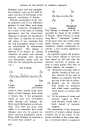
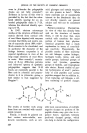
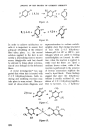
JOURNAL OF THE SOCIETY OF COSMETIC CHEMISTS commercial mixture of the three ethanolamines, most readily fur- nished by the interaction of ethy- lene oxide and ammonia, is a com- plete creation of manufacturing synthetic chemistry. It was origin- aly made for the American colour and dyestuff industry, and in the course of twenty years it has ac- quired something like a hundred .,d'istinc½ industrial uses. ,Cosmetic preparations account for a possible 5 per cent of the total, but it is true to say that in toilet products it achieves its succ•s d'estime. If you mention triethanolamine to anyone concerned with the other ninety-nine uses, the chance is that he will say "that is used for creams and make-ups, is it not?" One reason for this is that it does so many things. The introduction of nitrogen confers a basic reaction, but the hydroxyethyl groups restrain the strength of the base very much. Thus we get a compound combining the qualities of ammonia and gly- cerin, N(CH•CH.oOH)3: a very mild emulsifying base, a humectant and hairwaving reagent, and an ingredi- ent of many mild and emollient shampoos, soaps and soapless deter- gents. As an emulsifying base it is super- latively easy to use, and a very sound view of the quality of an emulsion is that the better it is, the easier it is to make. Triethanolamine calls for the bucket and spade type of emulsifying equipment. It is, of course, a soap-forming base, and its emulsions are subject to the usual limitations of soap emulsions. N(CH2CH2OH)a + RCOOH- H N(CH2CH2OH)a ROOC -- + It is really like an anhydrous and permanently liquefied ammonia, mild enough to be free from skin irritation. It is most effectively used asl a general rule by putting the amine into the soft or distilled water phase, and the corresponding fatty acid into the oil phase. The distri- bution of the soap at the emulsion interface is thereby encouraged. The fatty acid should always be in excess, stochiometric equivalents be- ing very nearly one of triethanola- mine to two of pure stearic acid. In a great many cases there is a sub- stantial excess of stearic acid, and creams of the vanishing or brushless shave types can be made from their ingredients ,in almost any manner of assembly. Cosmetic creams made from iso- propanolamines with other ingredi- ents equal, are distinctly softer than with triethanolamine, and it is often said that they are whiter or less liable to yellowing. I must admit that in my own ex- perience, a fairly comprehensive one so far as triethanolamine is con- cerned, this alleged discoloration is exceedingly capricious. In many cases it never appears at all, or at most amounts to a practically imperceptible off-white. It is most reported from tropical countries and is encouraged by exposure to the air. I believe myself that it is dis- tinct only where appreciable chem- ical unsaturation exists. Triethano- 134
Purchased for the exclusive use of nofirst nolast (unknown)
From: SCC Media Library & Resource Center (library.scconline.org)