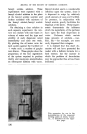
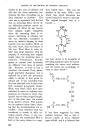
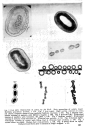
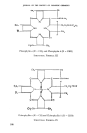
EMULSIONS AND THE COSMETIC CHEMIST below the surface, it will be clearly apparent that the droplets entering the sodium lauryl suphate 'solution are much smaller than those entering the pure water. In addition, the oil entering the latter spreads on the surface in a continuous. film, while the droplets in the other vessel remain separated from one another on the surface. The surface active agent, by lowering the interfacial tension, has reduced not only the tendency to coalesce but also the mechanical energy required to obtain small particle size. Unfortunately, conditions favouring ease of disper- sion of the globules are not in them- selves sufficient to guarantee emul- sion stability. The definition of stability must rest with the require- ments of the preparation the chemist is attempting to produce. .%dium lauryl sulphate by itself is a poor emulsifier while soaps of the alkali fatty acids are, under certain con- ditions, effective emulsifying agents. To explain why one surface active agent should be more effective than a second in promoting emulsion stability, it will be necessary to dis- cuss some of the more prominent theories of emulsification. THEORIES OF THE PART PLAYED BY THE EMULSIFIER THE VISCOSITY THEORY At one time it was thought that viscosity played an important part in emulsification and, remembering some of the old fashioned ointments and gum-containing preparations, this is understandable. Robinson's modified Stokes equation suggests that emulsion stability depends upon the attainment of a small particle size, the prevention of coalescence, the use of an oil phase having a density close to that of water, and lastly, the final emulsion being highly viscous. A study of modem emulsified products, especially thin milks, will make it plain that, while high viscosity may favour the stability of an emulsion, it is certainly not an essential condition. THE ADSORPTION THEORY This theory suggests that the emulsifier accumulates at the oil/ water interface and by positive adsorption, reduces the tension between the two phases, i.e. the dis- solved substance is said to be surface active. Positive adsorption refers to the accumulation of molecules at a surface. When a solute behaves in such a manner that the molecules concentrate at the surface of the sol- vent, the solute is said to be surface- active. The effect of this migration of the molecules from the interior of the solvent is to reduce the surface tension of the latter and if the sur- faces of two immiscible liquids are in contact, then by positive adsorp- tion, the inter/acial tension is lowered. Soaps are typical examples of substances which are positively adsorbed. On the other hand, most electrolytes and inorganic acids tend to accumulate at the interior of the solvent (water) and increase the sur- face tension. This phenomenen is kno•wn as negative adsorption. It is !43

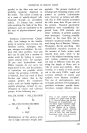
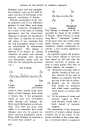
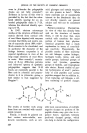
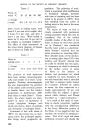
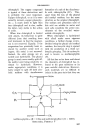
JOURNAL OF THE SOCIETY +hought that the concentration of molecules at an interface of oil and water results in the formation of a film which acts as a barrier between the water and oil globules and thus prevents their coalescence. It is suggested that the phase with the higher surface tension tends to bend the interfacial film and envelope the other phase. There' is a great deal of evidence to show that the mole- cules of emulsifier not only accumu-- late at the interface, but take up an orderly arrangement. It is obvious that a substance designed to hold dispemed globules, one phase in another, must have some affinity for each phase. A non- polar substance will have a strong affinity for non-polar solvents like mineral oil, and a polar substance will have a strong affinity for polar solvents such as water. We must, therefore, seek a substance embody- ing both these properties, that is a body containing both a polar and a non-polar group. The relative strength of these groups is an import- ant factor in determining the efficiency of the emulsifier. The balance in the two tendencies-- polar and non-polar--must be such that they remain at the interface, the polar group strong enough to resist being drawn into the oil phase but not strong enough to pull the whole molecule into the water. The affinity of the polar group for water and the non-polar group for oil results in the molecules taking up an oriented position with the polar heads towards the water particles, and the non-polar heads towards the oil 144 OF COSMETIC CHEMISTS particles. For example, when sodium stearate acts as an emulsifier the hydi•ocarbon or non-polar portion of the molecule faces the oil and the --COONa or polar group faces the water, the electrical charges at the droplet boundary result in the elec- trical repulsion of the suspended droplets and prevent their coales- cence. According to one theory, the dominant portion of the molecule in the emulsifier will cause a bulkiness on one side of the film which causes it to curve, and envelope the par- ticles of the phase facing the le•.• dominant portion of the molecule. Thus sodium stearate, dominantly polar in character and water soluble, will act as an O/W emulsifier. Cetyl Alcohol on the other hand, dominantly non-polar and oil soluble, will act as a W/O emulsifier. The theo• of oriented adsorption explains why only certain sub- stances are efficient emulsifying agents. The action of the soaps are clear under this theory, but we still lack a clear indication of the specific requirements of an emulsifier. The soaps play a most important part in the formation of cosmetics, but on their own they have but a limited application. THE COMPLEX FILM FORMATION THEORY Perhaps the greatest single con- tribution to the cosmetic chemist came from the work of J. H. Schu]- man and E. G. Cockbain, described in a paper entitled "Molecular Interactions at Oil/Water Inter-
Purchased for the exclusive use of nofirst nolast (unknown)
From: SCC Media Library & Resource Center (library.scconline.org)