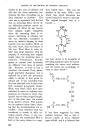
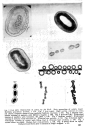
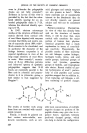
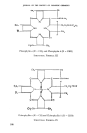
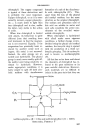
EMULSIONS AND THE COSMETIC CHEMIST tcchniquc forms a basis for the pro- duction of very many o/w emulsions. it is of particular interest on accourn of the small amount of mechanical energy required to effect emulsifica- tion, and thc fact that low tempera- tures may be employed. The theory of molecular complcx formation offers an explanation for thc success ooe many established emulsifiers. It is of interest even in the common vanishing cream made essentially from stoatic acid, water aml potassium hydroxide. In this case, complex formatiou occurs between the water-soluble potassium stearate and the oil-soluble stearic acid, which is used in excess of the a•mount requircd to neutralise the alkali employed. The fact that potassium distearate can be crystal- lised from such an emulsion supports the complex formation theory. Incidentally, therc is a strong prob- ability that this crystalline distearate is responsible for the phenomenon of "sheen" in vanishing creams. It is well-known that excess of fatty acid increases the efficiency of a soap as an emulsifier, and once more the formation of a complex between the soap and the fatty acid would sug- gest itself. The continued success of certain •nixed or compound proprietary emulsifying agents may reflect to some extent upon the ability of thc cosmetic chemist, but there is no denying the efficiency of these pro- ducts. Consider the value to the chemist of the type of agent based upon a mixture of cetyl alcohol with a surface active agent such as the corresponding cetyl sodium sulphate or phosphate. This substance no doubt functions in the way illus- trated by Schulman and Cockbain, i.c., a complex formation between the polar heads of the two sub- stances with close adlineation of the oil-soluble residues. When this type of emursifier is heated with water, thc water extracts the sodium alcohol sulphate, which forms a complex at thc interface with cetyl alcohol. The excess cetyl alcohol forms the oil phase and is emulsified in the water. In some cases., emulsions made from cetyl alcohol/cetyl sulphate mixtures require reheating to pro- duce fine particle size and homo- geneous emulsions. This is especially true in acid media and in the presence of high concentrations of electrolytes. This failure to produce stable emulsions at the first attempt is explained by thc fact that it is not always possible to extract all the cetyl sulphate from the mixture into the aqueous phase in one operation. This is strikingly demonstrated by making a mechanical mixture com- posed of 2 parts sodium cetyl sul- phate and 2 parts cetyl alcohol. This base will make a fairly good cream if heated with 50 parts of water and 50 parts of mineral oil. If, on the other hand, the 2 parts of sodium cetyl sulphate are dissolved in the 50 parts of water and the 2 parts of cetyl alcohol in the mineral oil, the effect of mixing the two phases is to produce an emulsion wh_ich can only be equalled. by the application of a great deal of mechanical effort 147

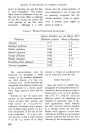
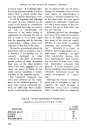
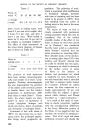
JOURNAL OF THE SOCIETY to the first cream. When cetyl alcohol is replaced by wool wax in the above experiment, the contrast is even more marked. Mixtures of soaps and long chain alcohols also yield excellent emul- sions but these are obviously suscep- tible to the influence of electrolytes, and are decomposed by strong acids. An old favourite which still retains its popularity is glyceryl mono stearate, probably the forerunner oi the present day, non-ionic emulsi- tiers. "Glyceryl mono stearate" (inverted commas because the per- centage of the mono stearate is low) is available in two distinct types. One type usually possesses a low acid value and is composed of a mixture of mono and di esters. Con- ditions of manufacture almost certainly preclude the possibility of the tri ester. Since it is made from commercial stearic acid, it is in fact a mixture of glyceryl mono and di palmirate and glyceryl mono and di stearate together with some mono and di oleate. This grade is used extensively in the food industry to stabilise w/o emulsions. The self-emulsifying grade has the following approximate analysis: Mixed Esters 80 Free "Stearic" Acid 10 Potassium "Stearate" 6 Glycerin 3 Water 1 Here again, we may assume that this agent acts as an emulsifier when the soap is extracted by water to OF COSMETIC CHEMISTS form a complex at the interface with the oil-soluble glyceryl mono stearate. J. H. Schulman, in "Emulsions in Vivo ", given at the Cambridge University S u m m e r School Colloid Science Course 1945, shows how a triple system of long chain substances produces very low interfacial tensions and will result in spontaneous emulsification. It is of interest, therefore, to learn that a self-emulsifying glyceryl mono stearate containing free fatty acid is a more effective emulsifier than one containing no free fatty acid. Whether results were obtained by a detailed knowledge of the principles involved or by trial and error, the c• r i g i n a t o r s of self-emulsifying glyceryl mono stearate offered to the cosmetic chemist a remarkably efficient emulsifier. Variations of this theme may be c•btained by using different polyhy- dric alcohols, e.g., propylene glycol, diethylene glycol, and polyethylene glycols of higher molecular weights, different fatty acids, e.g., oleic acid, lauric acid, and also different soaps, e.g., triethanolamine stearate. The combination of propylene glycyl lnono stearate and triethanolamine stearate is most effective as a stabiliser of thin o/w emulsions. Thinking of the two proprietary types of emulsifiers--the long chain alcohols and their sulphates and the soap-containing g 1 y c e r y 1 mono stearate, it is interesting to speculate as to why cetyl alcohol and soap were not mixed, for despite the advantage of the relative stability of the sulphates to acid, there is a !48
Purchased for the exclusive use of nofirst nolast (unknown)
From: SCC Media Library & Resource Center (library.scconline.org)