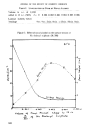
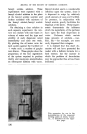
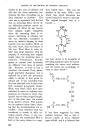
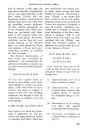
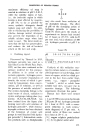
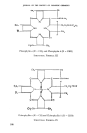
A METHOD FOR DETERMINING THE APPARENT MELTING POINT OF RESINS, WAXES, ETC. THis METHOD is based upon the property of the solid material to flow when liquefied and to separate by order of density when in contact with mercury. To the best of the writer's know- ledge, the method was first used by Dr. T. H. Durrans for comparing "melting points" of rosins, ester gums, etc. Its use has now been extended to cosmetical preparations, especially lipsticks, and to raw materials such as waxes. ADVANTAGES The method, using the quantities stated below, gives reproducible results within very close limits. The temperature at which the change in state occurs is extremely easy to detect and does not rely upon a per- sonal appreciation of liquefaction, as is the case with most methods. DESCRIPTION OF APPARATUS The apparatus shown in the figure consists of a standard bore test-tube fitted into a boiling-tube. A quantity of 2 grams of the sample under test is weighed into the test-tube, avoid- ing contamination of the sides. The mass is gradually heated to above its melting point and then cooled so that an even surface is obtained. When the substance has solidified, 50 grams of mercury are carefully poured into the tube. A thermo- meter, passing through a cork, is fixed in the tube so that the bulb just enters the substances under test. In the case of a hard sub- stance such as rosin the bulb of the thermometer will rest on the surface. For this reason it is desirable that a small bulb thermometer is used. Although the bulb can be inserted into the molten mass prior to cool- ing, where a substance such as rosin is concerned severe thermometer breakages result. The tubes are immersed in a liquid bath, water or oil, depending upon the material under test. The bath is gradually and slowly heated while the liquid is stirred to main- tain an even temperature. At the apparent melting point a sharp behaviour is observed, the substance liquefies, flows through the mercury and rises in the tube. Very little practice is necessary to decide upon the exact temperature of liquefac- tion. It is relatively easy to recover the mercury, although precautions must be taken to ensure that exactly 50 grams are available for the next test. --J.P. 157

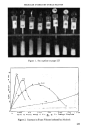
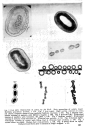
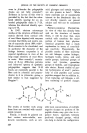
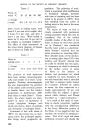
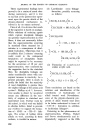
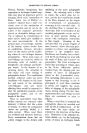
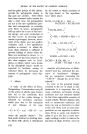
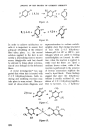
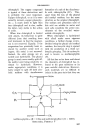
SOME PHYSICO-CHEMICAL PROPERTIES OF KERATIN FIBRES' AND THEIR SIGNIFICANCE IN COSMETOLOGY By DR. J. L. STOVES, F.R.•.C.* HISTOLOGICAL STRUCTURE. Micro- scopic examination shows that mam- malian hair fibres consist of three main zones, an outer layer or cuticle of flat, Overlapping scales surround- ing the cortex, which in turn is traversed by a central core, or medulla, of air-filled cells. The pro- portion and arrangement of these three histological components are characteristic of the animal species, and since the physico-chemical con- stitution of each zone is different •-3, it follows that certain properties of hair fibres will vary from species to species (cf. Figures 1-6). From the cosmetologist's point of view, however, the problem is simplified somewhat by the fact that hair from one genus only is involved and in man the bulk of the fibre substance is present in the cortex, the fibres in general being non-medullated (Figure 7). Recent work 4 has shown that the cuticle consists of three parts, a thin outer coating of epi- cuticle, an intermediate layer, the exocuticle and the scale substance proper, the endocuticle. The epi- cuticle, which prevents the diffusion of large molecules and colloidal aggregates into the fibre is easily * Chemical Consuliant. damaged mechanically and is also degraded by prolonged treatment with alkali. Nevertheless, histo- chemical tests have shown that the cuticle as a whole is much more resistant to alkaline hydrolysis than is the cortex, and treatment which causes complete solution of the cor- tex only partially disintegrates the cuticle s . Medulla cells also resist attack by alkali and can be isolated by treating medullated fibres with 4 N. sodium hydroxide for 17 hours at 20øC. followed by centrifuging and washing. The epicuticle is non- cellular, and of unknown chemical composition. Its inert character, however, is reminiscent of that of medulla calls, the walls of which contain a 1ipo-protein-sterol com- plex 6, and it may well be that similar material is present in the outermost layer of the fibre. Cement- ing the epicuticle on to the main body of the cuticle is a thin protein layer, or exocuticle, which can be digested by trypsin. The endocuticle consistsl of flat overlapping scales arranged with their major axes along the length of the fibre. X-ray and optical studies of wool cuticle show that the protein crystallites in the cuticle are not orientated 158
Purchased for the exclusive use of nofirst nolast (unknown)
From: SCC Media Library & Resource Center (library.scconline.org)