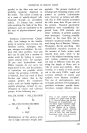
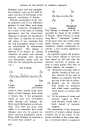
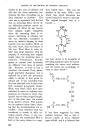
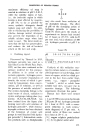
JOURNAL OF THE SOCIETY +hought that the concentration of molecules at an interface of oil and water results in the formation of a film which acts as a barrier between the water and oil globules and thus prevents their coalescence. It is suggested that the phase with the higher surface tension tends to bend the interfacial film and envelope the other phase. There' is a great deal of evidence to show that the mole- cules of emulsifier not only accumu-- late at the interface, but take up an orderly arrangement. It is obvious that a substance designed to hold dispemed globules, one phase in another, must have some affinity for each phase. A non- polar substance will have a strong affinity for non-polar solvents like mineral oil, and a polar substance will have a strong affinity for polar solvents such as water. We must, therefore, seek a substance embody- ing both these properties, that is a body containing both a polar and a non-polar group. The relative strength of these groups is an import- ant factor in determining the efficiency of the emulsifier. The balance in the two tendencies-- polar and non-polar--must be such that they remain at the interface, the polar group strong enough to resist being drawn into the oil phase but not strong enough to pull the whole molecule into the water. The affinity of the polar group for water and the non-polar group for oil results in the molecules taking up an oriented position with the polar heads towards the water particles, and the non-polar heads towards the oil 144 OF COSMETIC CHEMISTS particles. For example, when sodium stearate acts as an emulsifier the hydi•ocarbon or non-polar portion of the molecule faces the oil and the --COONa or polar group faces the water, the electrical charges at the droplet boundary result in the elec- trical repulsion of the suspended droplets and prevent their coales- cence. According to one theory, the dominant portion of the molecule in the emulsifier will cause a bulkiness on one side of the film which causes it to curve, and envelope the par- ticles of the phase facing the le•.• dominant portion of the molecule. Thus sodium stearate, dominantly polar in character and water soluble, will act as an O/W emulsifier. Cetyl Alcohol on the other hand, dominantly non-polar and oil soluble, will act as a W/O emulsifier. The theo• of oriented adsorption explains why only certain sub- stances are efficient emulsifying agents. The action of the soaps are clear under this theory, but we still lack a clear indication of the specific requirements of an emulsifier. The soaps play a most important part in the formation of cosmetics, but on their own they have but a limited application. THE COMPLEX FILM FORMATION THEORY Perhaps the greatest single con- tribution to the cosmetic chemist came from the work of J. H. Schu]- man and E. G. Cockbain, described in a paper entitled "Molecular Interactions at Oil/Water Inter-

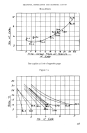
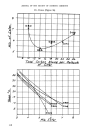
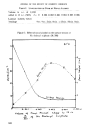
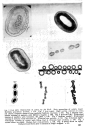
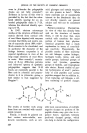
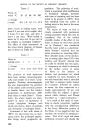
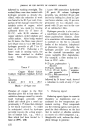
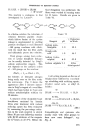
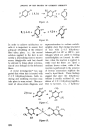
EMULSIONS AND THE COSMETIC CHEMIST faces", Parts 1 & 2. (Transactions of the Faraday Society No. 230, Vol. XXXXVI, Part 6, June, 1940), Part 3 of this subject was given later by A. E. Alexander and J. H. Schul- man. The value of this work was brought to the attention of interested parties by Frank Arkins a few years ago. Drs. Schulman and Cockbain showed a close analogy between previously studied interactions at the air/water interface and 'those at the oil/water interface. According to these authors, the stability of mineral oil-in-water emulsions depends upon the following considerations: The interfacial tilm must be electrically charged. The interfacial film must be stable and in the condensed state, i.e., as many charged molecules as possible should be crowded into the interface. 3. The above two conditions are satisfied when the interfacial film consists of a •nolecular complex of two suitable sub- stances, one of which is an oil soluble substance, and the other an ionisable water soluble substance. 4. •he stability of the interfacial complex film is markedly increased by the presence of excess water-soluble mole- cules above that necessary for a monolayer around the drop- lets, whereas only a monolayer is necessary for the oil soluble component. The following conditions for the stability of water-in-mineral oil emulsions are laid down by the authors: 1. The interfacial film should possess no electrical charge. 2. The interfacial film should possess considerable rigidity. The publication reveals that an inversion from an o/w to a w/o state in an emulsion may be accomplished by removing the electric charge on the oil droplets which results in a breaking of the emulsion. If the composition of the aqueous and oil phases is such as to enable a solid condensed film or, better, an "inter- linked" solid condensed film, to be formed at the interface, then an inversion process occurs with the formation of a w/o emulsion. It had previously been shown that when water soluble substances con- taining an ionised polar group were injected below oil soluble substances containing a polar group, molecular association followed, due to the polar forces on one hand and the non- polar interactions such as van der Waals' on the other. This resulted in a penetration of the water-soluble surface-active agent into the mono- layer structure. This phenomenon at the air/water interface was found to hold good at the oil/water inter- face and was demonstrated by dis- solving polar substances in water and shaking with mineral oil solu- 14b
Purchased for the exclusive use of nofirst nolast (unknown)
From: SCC Media Library & Resource Center (library.scconline.org)