JOURNAL OF THE SOCIETY not encountered in ordinary prac- tice . . . The usual process for the manu- facture of technical chlorophyll con- sists in the extraction of suitable green vegetable matter, such as lucerne or nettles, with alcohol or acetone. Such an extract contains the chlorophylIs along with a com- plex mixture of carotenoids, phos- phatides, fatty esters, etc., and a proportion of water-soluble matter. This water-soluble matter can readily be separated and extracted ß if the residue, after removal of the extraction solvent, is dissolved in a suitable water-immiscible solvent. However, the resultant purified "chlorophyll" still consists of a gross mixture of substances that cannot readily be separated further, since their solubilities in most sol- vents are very similar. Also they are neutral and do not lend themselves to separation by chemical means which do not at the same time alter the chlorophylIs. Even during re- covery of the initial solvent used for extraction, some alteration of the chlorophylIs takes place. It has al- ready been noted that the magnesium is very readily removed from chloro- phyll by the action of acids. This change actually does take place to a greater or les•er extent during re- covery of the solvent, due to the action of natural acidic materials present in the extract. There is no. doubt that each manufacturer ap- plies his own methods, based on re- search and experience, to the solu- tion of these problems. No matter how successful such "know-how" 188 OF COSI•IETIC CHEMISTS may be, however, most commercial products consist of chlorophyll or its derivatives diluted with a much larger amount of other plant consti- tuents or their degradation products. Such commercial chlorophylIs are, in fact, plant extracts containing a fair concentration of chlorophyll, or more usually chlorophyll deriva- tives. Nevertheless, the chlorophyll in such preparations can and does undergo the changes that have been described for the pure material though matters are considerably complicated by the fact that chemi- cal treatment also causes changes in certain of the other substances pre- sent as impurities. OI!L-SOLUBLE CHLOROPHYLLS. Such materials are produced by methods similar to that which has just been outlined. They occur as soft extracts or fluids, and usually contain not more than about 15 per cent of chlo.rophyll or its derivatives. Since most of the magnesium is usually lost in processing, such products con- tain mainly phaeophytin. They nearly always contain quite a large amount of phosphorus, in the form of phosphatides or their degradation products, as well as carotenoids and numerous other natural constituents. When intended for medicinal or pharmaceutical use they are not usually treated with a copper salt to develop the colour. Nevertheless, since green vegetable matter often contains copper to the extent of about 20 p.p.m., such untreated chlorophylIs are liable to contain several hundred p.p.m. of copper.

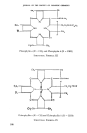
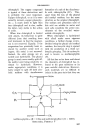
CHLOROPHYLL The largest use of oil-soluble chlorophyll is undoubtedly for im- parting a green colour to soaps. For this purpose it has advantages which are unique. It readily blends with the soap to give uniform colouring without "mottling," and the colour is reasonably light-fast. Most import- ant of all, in use it has no tendency to act as a substantive dye on fabrics washed with soap. Attempts to usc much cheaper synthetic dyestuffs as soap colours have generally been un- successful, owing to such dyes• fail- ing to comply with one or all of these requirements. Oil-soluble chloro- phylis intended as soap colours are treated with copper salts to develop the maximum green colour of greatest light-fastness. Normally they contain between 5,000 and 15,000 p.p.m. of copper. The cop- per salt is added at an appropriate stage during the manufacturing process. Naturally, such material is offered in various standard strengths to suit particular purposes. The diluent in chlorophylis for soap colouring is usually a fatty oil such as palm oil or castor oil. For other uses•, such as the colouring of oils, or ointments, other suitable diluents may be used and grades to meet special purposes are available. Whether copper-treated or not, the oil-soluble grades of chlorophyll have similar solubility characteris- tics. When properly prepared they should be completely soluble in fixed oils and fats, in hydrocarbons such as benzene, and in chlorinated hy- drocarbons such as chloroform. The oil-soluble chlorophylIs are not gen- erally satisfactorily soluble in alco- hols. In ethanol or methanol of 90 per cent, v/v strength or over they dissolve in part but the greater part of the actual green colouring matter remains undissolved. In weaker alcohols they are, for practical pur- poses, insoluble. In water they are entirely insoluble. Most essential oils and essential oil isolates readily dis- solve oil-soluble chlorophylis. How- ever, if such coloured oils are then dissolved in alcohol, even strong alcohol, turbid solutions are obtained from which most of the chlorophyll precipitates on s{tanding. Of course, the nature of the diluent, if any, can modify these solubilities somewhat. Hence it is always wise to investi- gate the solubility characteristics of a given chlorophyll sample in order to ensure its sui.tability for the par- ticular purpose in view. WaTER-SOLUBLE CI-ILOROPI-IYLLS. The so-called water-soluble chloro- phylis are, as already mentioned, sodium or potassium salts of chloro- phyllin. In other words, they are not true chlorophylis, but are really chlorophyll derivatives. When they are prepared by hydrolysis of medi- cinal oil-soluble chlorophyll they consist of the sodium or potassium salt of the dibasic acid chlorophyllin (IV), with possibly a proportion of the corresponding salt of the mono- basic acid from which the methyl group has not been split off. If the hydrolysis has been very vigorously conducted they may also contain some of the corresponding salt of the 189
Purchased for the exclusive use of nofirst nolast (unknown)
From: SCC Media Library & Resource Center (library.scconline.org)