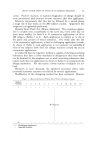
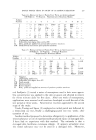
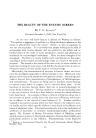
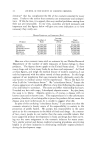
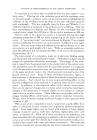
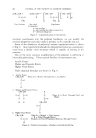
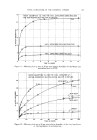
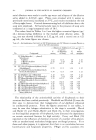
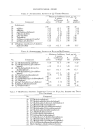
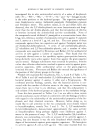
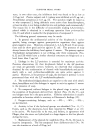
]NSUI,T PATCH TESTS IN STUDY OF CUTANEOUS REACTION 251 zation. Positive reactions to warrant designation of allergic should be more pronounced than primary irritant reactions after first application. Schwartz recommends that this test be followed by a second phase, a usage test of four weeks on the 200 subjects studied. Apparently this usage test is not generally performed. Repeated Insult Patch Text (Draize, Shelanski): This comprises applica- tion to random sites or preferably to the same site, every other day (or three times weekly) for from 8 to 15 consecutive applications on 50 to 100 subjects (Tables 1 to 6). Each application is uniform as to size of the patch and amount of tested substance. Two weeks after the last of the consecutive applications, a final or challenging application is made. As shown in Table 6, such application is not necessary nor advisable if some of the subjects show clear cut allergic reactions toward the end of consecutive applications. It is believed that the repetitive method is capable of eliciting sensitizing substances that have a lower threshold of allergenicity than that which can be detected by the prophetic test or weak sensitizing substances that require more than one application (as shown in Table 6) to consummate the allergic mechanism. For this reason a fewer number of subjects are uti- lized. Moreover, as later discussed, the repetitive procedure elicits other untoward cutaneous reactions not elicited by several applications. Modification of the aforegoing method has been employed. Brunner TABLE l--REPEATED INSULT PATCH TEST WITH A TOPICAl, CREAM Subject Number 1 2 3 4 5 6 7 8 9 10 11 12 C* All Negative C* Challenging application. -- Negative reaction.

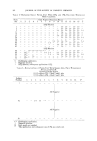
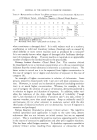
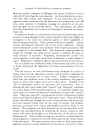
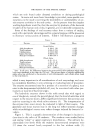
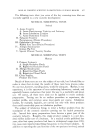
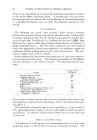
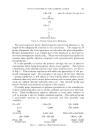
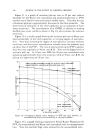
252 JOURNAL OF THE SOCIETY OF COSMETIC CHEMISTS TABLE 2--REPEATED INSULT PATCH TEST WITH 25% AND 15% DILUTION--WATERLESS Num- , ---Only Positive Reactions Shown. ber 1 2 3 4 5 6 7 8 9 10 11 12 13 14 15 • 25% Dilution l .......... 1+ 1+ - 1+ 1-1- -- 3 .......... 1+ 1+ 1+ l+ 1+ -- 5 ......... 1+ 1+ 1+ 1+ 1+ 1+ 1+ 11 .......... 1+ -- 1+ 1+ 1+ - 14 .......... 1-t- 1+ 1+ 1+ 1-t- - 27 ......... 1+ 1+ 1+ 1+ 1+ 1+ - 30 .......... 1+ 1+ 1+ 1+ 1+ 1+ 34 ............. l+ 1+ - 39 ........ 1-b 1-b ld- ld- -- ld- -- ld- 40 ....... l+ -- -- 1+ -- 1+ l+ 1+ -- 41 ......... ld- ld- 1+ 1-b l-b ld- -- 45 .......... l-1- -- -- ld- ld- -- 15% Dilution 48 -- -- ld-*lq-*lq-*l-b* .... ld- ld- 1-b ld- ld- - 49 -- l-b* .... ld- ld- -- 1+ I+ ld- ld- ld- ld- -- 50 -- 1-1 * .... 1-3- -- 1-3- 1-3- 1-3- 1-3- 1-3- -- 1-3- 51 -- 1-1-*-- 1-1- ...... 1+ 1-1- 1+ 1-1- 1-1- -- 52 -- ld-* .............. C Challenging application. - Negative reaction. * 25% dilution, subsequent applications 15%. TABI. E 3---REPEATED INSUI.T PATCH TEST WITH SORBIC Acre, 1% IN' HYDKOPHII.IC P ETROLATUM U.S.P. Primary Irritant Action Of 12 subjects 2%--2 had 2 and 1 plus Of 10 subjects 4%--4 had 2 and 1 plus Subject Number 1 2 3 4 5 6 7 8 9 10 11 12 C* 42 All Negative I I -- -- 2+ R -* ........ All Negative C* Challenging application. -- Negative reaction. R Rest, patch not applied. * This application and subsequent ones 0.5% was employed.
Purchased for the exclusive use of nofirst nolast (unknown)
From: SCC Media Library & Resource Center (library.scconline.org)