242 JOURNAL OF THE SOCIETY OF COSMETIC CHEMISTS tographers. However, a great deal of experience is required for the micro- photography of skin cells, hairs, chemical particles and other objects of interest to a cosmetic chemist, or a research biologist. We feel very sad to have to admit that there are not enough first class microphotographers, and very often, we had to resort to medical art illustration to replace microphotographs which were much too poor to have any informative value. Electrobiology Two electrobiological methods, relatively new in cosmetic chemistry de- serve a special mention. The purpose of both of them is to insure artificial penetration of substances through living tissues. The first one, electron- osmosis, produces a highly localized penetration of the skin or mucous membranes. The second one, iontophoresis penetrates much deeper. Electronosmosis. As the name implies, electronosmosis consists of charg- ing particleg of matter with electrons, and having them bombard living tissues, thus chasing the carried element into the first layers of the tissues. The penetration increases with the intensity of the current, while the amount of chemicals caused to penetrate increases with the duration of the application. Any substance can be made to migrate this way for instance, antibiotics and antiallergens such as Pyribenzamine penetrate just as well as tincture of iodine or a solution of zinc sulfate. Electronosmosis, besides its numerous therapeutic applications has been used in cosmetic research projects dealing with deodorants, antiperspirants, facial creams containing vitamins or hormones, lipsticks and a few others. lontophoresis. Iontophoresis consists in the artificial penetration of an ionized element. For instance, instead of causing the penetration of sodium chloride such as electronosmosis would do it, iontophoresis causes either sodium or chlorine to migrate as ions. When complex formulae are used, the technician selects the proper ion to be carried and uses the proper pole accordingly. Iontophoresis has been mostly used in the study of deodorants, anti- perspirants and dentifrices. Brun and Barail have published several papers on the use of electrobiology and electropenetration in cosmetic research. Odor Measurements What would you say if someone would tell you that he walks at the same speed as a DC3 and the turtle in his garden also walks at the same speed? You would certainly tell this person that he is completely stt•pid. Yet, according to some cosmetic testing methods, you would be wrong, very wrong indeed and he would be perfectly right. He would be merely dividing the speeds of various ways of transportation into four categories of 250 m.p.h. each from 0 to 1000 m.p.h. Therefore, he and the small airliner would be in the same speed class of 0 to 250 m.p.h. and therefore could be

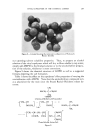
NEW TRENDS IN COSMETIC EVALUATION 243 considered as having the same speed. This is the same reasoning as that of a few routine addicts who stubbornly stick to middle age testing tech- niques and dare maintain that they can classify all odor intensities into three or four categories. This is obviously and ridiculously absurd. Some odors are perceived by the human nose in very minute amounts, while the intensities of some others are so strong that they cannot be measured by the nose alone. It appears as a consequence of the above that the measurement of the intensity of odors is a complex problem. However, it is eased a great deal by the use of the Barail Osmagraph ©. The Osmagraph ©. The Osmagraph is the first precision instrument wherein the elimination of variables has been so perfected that the testing of the intensity of an odor by several individuals brings results with varia- tions of less than 5 per cent. In order to obtain accurate results in the measurement of odors, it was necessary to build an instrument of g•eat reliability. As no way has yet been found to measure odors without using human olfactory nerves, such an instrument should enable anyone to obtain reproducible results, provided the following conditions are met: 1. The amount of air to be smelled should be known. 2. The air to be smelled should reach the nose of the technician under its own pressure and this pressure should be known. 3. The air to be smelled should contain only the odor to be measured and should have no other odor of its own. 4. The air should be cleaned prior to being mixed with the odor to be tested and the moisture of the mixed air should also be controlled. 5. All tests should be made under the same conditions. The Osmagraph © helps the human nose in the same way the microscope helps the human eye. The microscope permits the measurement of cells, micro 3rganisms and fibers invisible to the human eye. The Osmagraph © permits the measurement of the intensity of odors unmeasurable by the human nose. The concentration at which the odor becomes just barely perceptible is called the "threshold value." This threshold value can be expressed numerically and this numerical expression is called the "odor threshold number," (OTN). The ratio between the total final pressure and the pressure increment caused by the odorous air results in the odor threshold number as follows: Odor threshold number Odorous Increment Pressure OIP OTN = Total Pressure TP The value of the total pressure equals 910. It is obtained by adding the atmospheric pressure of the added odor free air, 760 ram. mercury at sea level, to the pressure of the odorous air, the median OIP of which is 150 min. mercury.
Purchased for the exclusive use of nofirst nolast (unknown)
From: SCC Media Library & Resource Center (library.scconline.org)