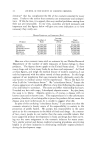
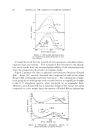
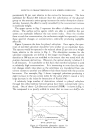
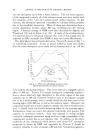
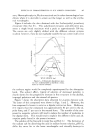
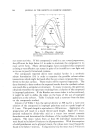
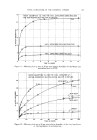
244 JOURNAL OF THE SOCIETY OF COSMETIC CHEMISTS The odor threshold number gives the concentration of the odor in the air dilution which will just barely cause the sensation of odor. For strongly odorous substances, this concentration will below, and the threshold number will be high. For weak odors, it will be the opposite. The Osma- graph © permits theoretically the measurement of 300 intensities of odors. In current practice, however, we have found that after using the proper ,dilutions and preparation requirements of the sampled odors, excellent odor determinations can be made by using a scale of 60 odor threshold numbers. We are now working with electronic engineers on the construction of an electronic Osmagraph. This is a difficult task, but if we succeed the elec- tronic Osmagraph will be very comparable to the electronic microscope. There will then be practically no limitation to the number of odor thresh- .olds which will become measurable. Use of Radioisotope Tracers We were the first to use radioisotope tracers in cosmetic research. As far back as 1949, we presented a paper entitled "Introduction to Testing Cos- metics Containing Radioisotopes." This paper was subsequently pub- lished in the )tourhal of the Society of Cosmetic Chemists (Vol. II, No. 5). Since that time, the use of labeled constituents of cosmetic preparations has greatly increased although not as much as could be expected. This may be due to the unscientific state of affairs in some advertising circles. It is not because tracer findings have not been widely publicized that this valu- able part of research work has not produced commendable results. Our first results on the penetration of cold cream have been widely and fully verified by several researchers. The penetration of the skin has been disproved. Claims made on the presence of antiseptics several hours after washing with antiseptic soaps have also been disproved. Other tests using tagged components of dentifrices definitely established the fact that a very negligible, if any, protective film is left on the teeth by any dentifrice on the market, and for a few minutes only. A single experimental dentifrice containing a chemical not used anywhere else was found to leave on the teeth a film which lasted several hours after brushing. Tracer research is now conducted on lipstick to investigate the possi- bility of a slight penetration of the mucous membrane which would insure long-lasting properties. Contrarily to expectations, vegetable dyes have been found superior to tar dyes in this respect. A great many isotopes have been tried in cosmetic investigations, but only a few have the prerequisite qualities. This reduces the possibility in one way, but on the other hand makes it safer and easier in the long run. The favorites are still carbon 14, tritium, iodine 131 and bromine 82. Some of these studies were made in vilro, using artificial membranes, leather, fabrics and their results were quite erratic. In vivo studies are much more reliable, although experiments made

NEW TRENDS IN COSMETIC EVALUATION 245 on cats and dogs were rather unsatisfactory. Better results were obtained on chinchilla rabbits, rats and suckling pigs. Very extensive studies are now being made on the penetration of vitamins and hormones through the skin. This type of research was practically im- possible for years because of the unavailability of the proper labeled chem- icals. Very recently, a few researchers have succeeded in tagging pre- viously unlabeled compounds and these can be easily incorporated into vitamins, male and female hormones and cortical extracts. These studies are time consuming and very expensive, but when completed they wilI answer the contentions of both the Food and Drug Administration and the cosmetic industry in an indisputable and recognized way. We believe that the use of radioisotopes is an important contribution to the methods the cosmetic industry has at its disposal to establish or improve the quality of its products. H^RM•.F. SSNESS In this section we originally planned to include bacteriological and toxi- cological investigations. However, as no important change has occurred in the approved methods for the bacteriological testing of cosmetics, since our paper entitled "Bacteriological and Dermatological Testing of Cos- roetics," given on December 3, 1947, was published in the •ourna/of ttw Society of Cosmetic Citemists (Vol. I, No. 3) we believe it best to refer the reader to it, and give more space to toxicological studies. ?xicological Met/wds. They are divided into two categories: those which investigate internal toxicity, and those which deal with external or local toxicity. Internal Toxicity. The internal toxicity of cosmetics can be tested three different ways. a. By intravenous i•0ection, whereby the extract is injected directly into the blood stream of rabbits. b. By intraperitoneal injection, whereby the extract is injected into the abdominal cavity of mice or rats. c. By feeding the extract either in drinking water, or mixed with solid food. This study is conducted for a period of two weeks to a lifetime, which corresponds approximately to two and one-half years for rats and one and one-half years for mice. Very often, cosmetic manufacturers are anxious to know the minimum lethal dose of the constituents of their products. This can be determined by either of the three methods. It gives them a numerical figure from which they can compute the toxicity of any concentration of these chem- icals. Save for a few exceptions, such as caustic chemicals, for instance, the MLD by intravenous injection is always smaller than the MLD by intraperitoneal injection, and the latter smaller than the oral MLD. Whereas MLD calls for the death of all test animals, MLD 50 calls for
Purchased for the exclusive use of nofirst nolast (unknown)
From: SCC Media Library & Resource Center (library.scconline.org)