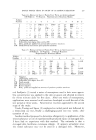
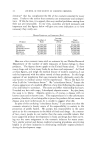
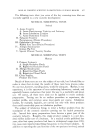
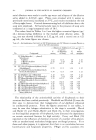
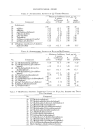
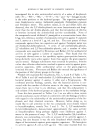
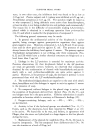
ROLE OF COSMETIC SCIENTIST IN PROTECTION OF PUBLIC HEALTH 277 The following tests show you some of the key screening tests that are routinely applied to a new cosmetic development: MEDICAL SCREENING TESTS Animal I. Acute Toxicity A. Acute Percutaneous Toxicity and Irritancy B. Acute Inhalation Toxicity C. Acute Parenteral Toxicity II. Subacute Toxicity Percutaneous (Draize Procedure) III. Ophthalmic Irritancy Rabbit Eye Test (Draize Procedure) IV. Allergic $ens•tlzat•on Guinea Pig Test V. Special Chronic Toxicity Studies MEDICAL SCREENING TESTS Human I. Primary Irritancy A. Single Occlusive Patch B. Repetitive Occlusive Patch II. Allergic Sensitization A. Repetitive Open Patch B. Repetitive Closed Patch III. Clinic Studies Product Use Tests Details of these tests are not the subject of my talk, but I should like to make it clear that in total, the results of these tests have proven value. No one test, however, standing alone, would be adequate. Rather, in my experience, it is this spectrum of tests embracing laboratory, animal, and especially human evaluations that point the way to a medically safe prod- uct. Of course, all these tests need not be applied to every cosmetic preparation. Testing can be an endless procedure so experience, the product profile, and common sense must guide our course. Inhalation studies, for example, logically, are carried out only with those products that could conceivably pose an inhalation problem. The subject of inhalation brings to mind 'a further problem from the standpoint of the cosmetic scientist carrying out his health protection role. Aerosol hair spray preparations have become a great part of the cosmetic industry. Roughly, this single product category is a one hun- dred million dollar sort of a business. In a medical article published last year, after hair spray products had been in widespread usage since 1951, two cases were reported describing thesaurosis in two female subjects. In addition to reporting the case histories of the two patients involved, animal

278 JOURNAL OF THE SOCIETY OF COSMETIC CHEMISTS work involving three guinea pigs was also described. This report became the basis for tremendous publicity in the scientific and lay press that left ,the readers with the inevitable suspicion that hair sprays were harmful and might even cause cancer of the lung. Think of this--out of the female population of this country, two women plus one experiment with three guinea pigs--involving, incidentally, no control animals--and suddenly a •cosmetic product is rendered medically suspect! A product whose safety has been established not only by the cosmetic scientists who de- veloped these products and the suppliers of the raw materials involved,but by the exposure of millions of women, billions of times, to this preparation. The price that the cosmetic scientists in industry and government had to pay, in time and effort, trying to find some factual basis for this hair spray allegation, was tremendous. All of the laboratory facts growing out of this mighty effort now confirm what the original tests and human experience so clearly established hair sprays are remarkably safe products! This is }ust one case, and I could cite many, where the industrial scientist is forced ro defend his product against the grossly unfair charge. And, less I be misunderstood, let me make it very clear that all scientists have the right, and in fact the duty, to call attention to a potential health problem in connection with any product, be it a food, drug or cosmetic. I submit, however, that when a serious question of medical safety is raised about an established product---one having an impressive safety record based on widespread human experience--I would urge the greatest caution. Facts, the foundation of all science, and not speculations based on inade- quate data and inadequate perspective, should be the hallmark of any charge that an established commercial product may endanger public health. The most difficult assignment that confronts the cosmetic scientist from a protection of public health standpoint, lies in the chronic toxicity direc- tion. When are such studies indicated? Should we carry them out on all preparations? Are animal tests a realistic guide to the exposure of com- pounds and products that may be carcinogenic in man? What do we do when established products are found to contain compounds that are car- cinogenic in animals, when overwhehning human experience tells us they are safe? In the answers to questions such as these lie great confusion with, I suspect, government, food, drug and cosmetic scientists, all holding somewhat different views. ' In the past year or so, under considerable political pressure, I feel we have all been "had." We have permitted animal test results to become the criteria by which the "guilt" or "innocence" of any product or compound is established. Lipstick dyes, are now "guilty" and no longer should be used. Imagine, after billions of lipsticks have been used for many years after billions of human exposures to these products and in the complete absence of any real human evidence that these dyes, as used in lipsticks,
Purchased for the exclusive use of nofirst nolast (unknown)
From: SCC Media Library & Resource Center (library.scconline.org)