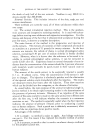
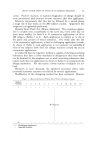
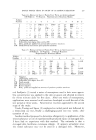
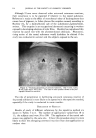
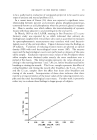
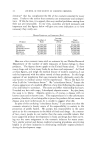
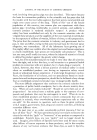
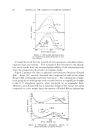
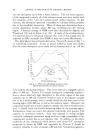
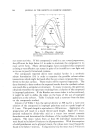
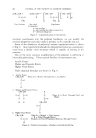
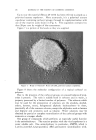
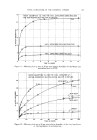
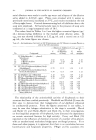
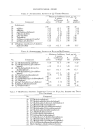
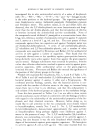
286 JOURNAL OF THE SOCIETY OF COSMETIC CHEMISTS tain the absorption curve from a water solution. The sun screen capacity of the compound in nearly all of the solvents tested were very similar with the exception of the $ per cent sodium lauryl sulfate solutions. In this instance, the absorption spectrum is modified in a unique fashion, possibly due to the micellular interaction. Many of these new derivatives show a second absorption maxima above 300 m•, extending into the tanning region. Chemical analogs of DBR have been discussed by Signore and Woodward (12) and by Knox, et al. (13). A study of the existing absorp- tion spectral data for the group indicates that none of the analogs may be expected to differ markedly from DBR in their sun screen effectiveness. The alkyl phenyl benzotriazole derivative, Tinuvin P, shown in Fig. $ is an interesting compound. It was so poorly soluble in water and alcohol that the water absorption curve could not be obtained and a 1 cm. cell had 06 [ ..... .•_ 04-- __ 02 • 0 4 • / 'NN MO • p 250 •0 350 ado WAVE LENGTH (m•) Figure 5.•Ultraviolet absorption spectra for alkyl phenyl benzotriazole in various solvents. to be used for the alcohol solution. The curves indicate a negligible solvent effect at 308 m•. Tinuvin P is unique among the compounds studied in that it shows relatively high absorption in the entire region of the solar radiation up to 380 mm Cosmetic chemists may at first glance consider this to be a disadvantage, since it would shield the skin &om most of the tanning region (320-400 m•) as well as the sunburn region. However, the compound would have cosmetic appeal to people who tend to keckle easily, since it should block the &eckle-darkening effect of the tanning region. Furthermore, there are many fair-skinned individuals who possess little capacity to synthesize melanin. Such skin exposed to strong sunlight eventually undergoes premature aging and has a high potentiality of de- veloping skin cancers due to sun exposure (14). In addition to the above conditions of use, compounds which possess such broad U.V. absorption properties as shown by'DBR and especially by Tinuvin P should be uniquely valuable in cases of people suffering kom Xeroderma pigmento-

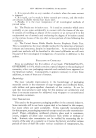
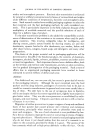
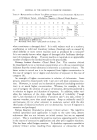
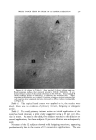
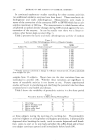
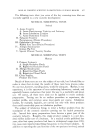
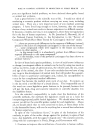
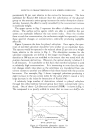
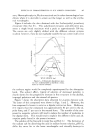
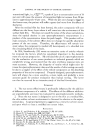
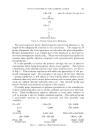
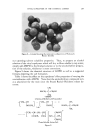
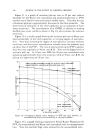
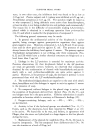
EFFECTS ON CHARACTERISTICS OF SUN SCREEN COMPOUNDS 287 sum, Hematophorphyria, Hydroa aestivale and in other dermatological con- ditions where it is desirable to screen out the longer as well as the erythe- real wavelengths. Figure 6 includes the data obtained with the 2-ethoxyethyl p-methoxy cinnamate (Giv-Tan F.). This substituted cinnamic acid derivative pos- sesses a single broad maximum with a peak at approximately 310 mt•. The curves are only slightly shifted with the different solvent systems studied however, these do not markedly modify the sun screen index since • ß 250 300 350 WAVE LENGTH Figure 6.--Ultraviolet absorption spec- tra for 2-ethoxyethyl p-methoxy cinna- mate in various solvents. the sunburn region would be completely superimposed by the absorption band. The solvent effect, typical of solvents of decreased polarity, is clearly shown by the progressive increase in fine structure in the alcohol, isopropyl palmirate and the mineral oil spectra. Figure 7 shows the absorption data obtained for p-amino benzoic acid. The esters of this compound were shown in Figs. 1 and 2. However, the free compound is known to exist as a dipolar zwitter ion form. Robinson, (15) reports that the compound was approximately 83 per cent in the di- polaf form, and 17 per cent in the neutral form. The transfer of the com- pound to nonpolar solvents will tend to reduce the number of molecules in the dipolar form. This would tend to explain the different shifts and ab- sorption peaks found in the present instance. The solution of the free acid in water has a pH of 3.7. The formation of the sodium salt by dissolving the acid in sodium borate solution, pH 9.2, shifts the curve far to the lower wavelengths and virtually destroys its
Purchased for the exclusive use of nofirst nolast (unknown)
From: SCC Media Library & Resource Center (library.scconline.org)