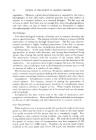
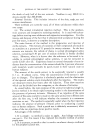
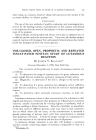
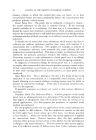
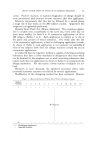
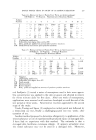
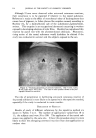
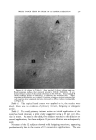
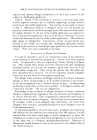
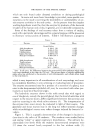
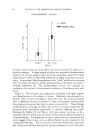
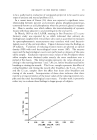
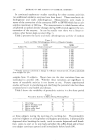
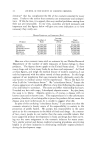
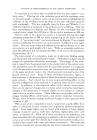
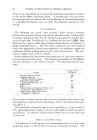
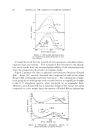
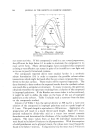
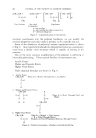
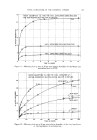
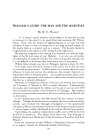
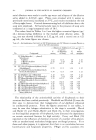
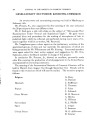
288 JOURNAL OF THE SOCIETY OF COSMETIC CHEMISTS 1.5 I PE AL 'IP 300 3,20 WAVE LENGTH (m•) Figure 7.--Ultraviolet absorption spectra for p-amino benzoic acid in vari- ous solvents. sun screen activity. If this compound is used in a sun screen'preparauon, the pH must be kept below 4.5 in order to maintain the compound in its most active form. Many dermatologists have considered this compound as being a very effective sun screen in spite of its instability to sun light and to its use in poorly formulated systems. The compounds reported above were studied further in a synthetic sebum formulation (16) in order to examine the possible solvent-solute interactions which might be found after the sun screen compound has trans- ferred to the skin surface. These results will be reported separately. The data obtained to date confirm the expected results that the synthetic sebum acts much like a semipolar environment. In many instances, the spectrum obtained resembles the spectrum resulting from a solution of the compound in isopropyl palmitate. If the Kumler sun screen index is to be continued, it might be well to define the index on the basis of the use of isopropyl palmitate as the solvent. Table 1 includes such a summary from the data on the compounds studied. Column 2 of Table 1 lists the optical density at 308 mu for a 1 per cent solution of the compound in isopropyl palmitate and at a path length of 0.1 mm. This path length is equivalent to 100 microns. Application of a preparation will result in a much thinner path length. Ippen (17) incor- porated radioactive diiodo-oleic acid as a tracer into several cosmetic formulations and determined the thickness of the residual fihns on human subjects. The mean values from at least 60 individual measurements were found to be below 10 microns in all preparations. With the exception of solid petrolatum and a glycerol cream, the values were most frequently found to be below 5 microns. Using mineral oil, the mean was 2-8 microns

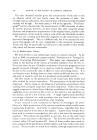
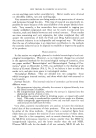
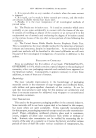
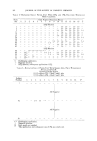
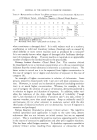
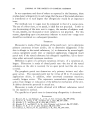
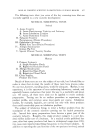
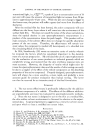
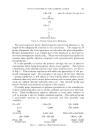
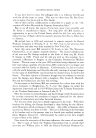
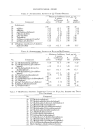
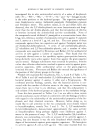
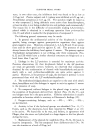
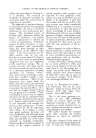
EFFECTS ON CHARACTERISTICS OF SUN SCREEN COMPOUNDS 289 TABLE 1--MODIFIED SUNSCREEN INDEXES, a USING ISOPKOPYL PALMITATE DATA qTl% qTl% Compound .... 0.1 min. ø"'1• C]•%T• b Giv Tan F 9.0 0. 090 2.2% Tinuvin P 5.5 0. 055 3.6% P.A.B.A. 5.2 0. 052 3.8% D.B.R. 4.2 0.042 5.8% Salol 2.5 0. 025 8.0% Benzocaine 2.3 0. 023 8.5% Escalol 106 2.0 0.020 10.0% • The optical density values at 308 m/• for a one per cent solution in isopropyl palmitate column 2 is for a 0.1 min. path length column 3 is for a 0.001 min. (1 micron) path length. b The concentration, pl%T •f '•lu , ,,, a sun screen deposited in a 0.01 mm. (10 micron) layer which is necessary to reduce the intensity of the transmitted light to one per cent of the intensity of the incident light (O.D. = 2.0). 100 - 1% Log % trans - S'I'I• X path length (L3t) X Concn. cl%T 2.0 10• = - 1% S.I.• X 10• and did not exceed 15 microns in the 60 measurements. An aerosol con- taining isopropyl myristate gave similar results. However, the use of a 10 per cent solution of isopropyl myristate in isopropyl alcohol resulted in a mean residual layer of 0.25 to 1.25 microns and the maximum did not exceed 1.25 microns. Table 1, column 3, includes a listing of the sun screen index on the basis of a 0.001 mm. (1.0 micron) path length. The residual film thickness must be determined for each preparation and, indeed, the actual concentra- tion of the sun screen would differ from the initial concentration in the product in relation to the amount of volatiles it contained. The data in column 3 can be used for further computations. Using government specifications allowing only one per cent transmission of the incident light, column 4 lists the residual concentration which must be retained in a deposited layer 10 microns thick in order to reduce the transmitted light to one per cent of the intensity of the incident light. The formula given in the footnote to Table 1 can be used to calculate the concentration required for any film thickness and residual concentration. The thickness of the residual film will be a relatively large variable among individual applications. The water content of the residual film and therefore the concentration of the active constituents may possibly vary with the amount of perspiration. It is important to recognize how much effect these variations may have on the per cent of transmitted light, independent of any change in absorption characteristics due to solvent effects. If the applied cost is only 5.0 microns instead of 10 microns, or if the drug concentration is only 50 per cent of the expected concentration, the amount of transmitted light will increase from 1 per cent to 10.25 per cent. On the other hand, if the vehicle is designed to allow 20 per cent
Purchased for the exclusive use of nofirst nolast (unknown)
From: SCC Media Library & Resource Center (library.scconline.org)