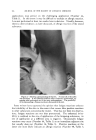
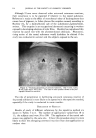
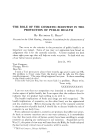
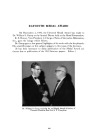
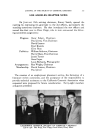
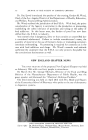
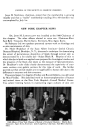
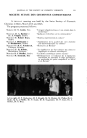
ELEVENTH MEDAL AWARD ON DECEMBER 2, 1959, the Eleventh Medal Award was made to Dr. William S. Gump at the Annual Dinner held at the Hotel Commodore. R. E. Horsey, Vice-President in Charge of Sales of Givaudan-Delawanna, Inc., gave the eulogy which follows. Dr. Gump gave a few general highlights of his work with the bis-phenols. His scientific paper on this subject appears in this issue of the JOURN^L. [It has been necessary to delay publication of the Medal Award ad- dresses due to publication of the 1959 Seminar papers. Editor.] Dr. William S. Gump receiving An ual Medal Award of Society of Cosmetic Chemists from Mr. S. F. Coneybear. 3O3

WILLIAM S. GUMP, THE MAN AND THE SCIENTIST By R. E. HORSE¾ IT •s INDEED a great pleasure and privilege to be here this evening to take part in this award to my good friend and associate, Dr. William Gump. Even with the shadow of rigged programs of all sorts hovering overhead, I have no fear of telling you of my high personal esteem for Dr. Gump both as a scientist and as a person. The Society should be congratulated in the selection of Dr. Gump for this high honor. My pleasant assignment this evening is to acquaint you with the high- lights of the life and career of your Medalist. I am sure you will pardon my informality of using Dr. Gump's first name during these remarks, but it is too difficult to be formal after these many years of association. William Simon Gump was born in Ellwagen, Germany, June 12, 1897. In his early years the family moved to Ulm and it was in this city that he attended the gymnasium. As Bill's father was a lawyer there was some influence to have him pursue this profession, but already chemistry in- trigued him while in the gymnasium. An unconfirmed report relates some rather drastic experiments with explosives which today would have classi- fied him as a juvenile delinquent. However, he avoided the minions of the law and we find him entering the University of Munich in 1916 to study chemistry. Unfortunately, his studies were interrupted by military service and it was not until 1919 that he resumed his studies at the University of Tuebingen. He remained here but a year and then returned to the more exciting city of Munich and its University. It was during these years that Bill showed his first interest in chemo- therapy. Though the details are not complete, this was an extracurricular activity and involved the thorough investigation of the questionable therapeutic effects and untoward reactions of the hydroxyl radical present in various lagers, widely distributed in the famous Munich beer gardens. Nevertheless, his academic studies did not suffer, and in 1923 he received his Ph.D. in chemistry. The subject of his thesis was "The Cleavage of Furfuryl Alcohol and Mechanism of the Formation of Levulinic Acid from Hexoses." From the university we find William in Hamburg, Germany, working as an organic chemist for Chemische Fabrik Stoltzenberg. 304
Purchased for the exclusive use of nofirst nolast (unknown)
From: SCC Media Library & Resource Center (library.scconline.org)