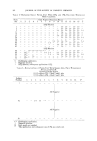
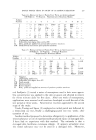
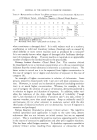
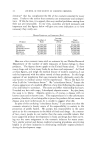
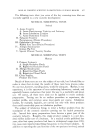
CHEMICAL STRUCTURE AND ANTIMICROBIAL ACTIVITY OF BIS-PHENOLS By WILLIAM S. GUMP and GEORGE R. WALTER Sindar Corp., De/awanna, N. )'. The marked antimicrobial properties of 2,2'-methylenebis [4-chloro- phenol], (G-4 ©, dichlorophene) and of 2,2'-methylenebis-[3,4,6-trichloro- phenol], (G-11 ©, hexachlorophene) reported from our laboratories (1-4) induced the senior author to prepare numerous bis-phenols during the past two decades. This was done with the hope of finding more potent anti- septics, especially as additives for soap, and of correlating biological ac- tivity with chemical structure. By establishing such a relationship, a pattern might evolve which would lead to the synthesis of compounds with superior qualities. The behavior of various series of bis-phenols against fungi, such as Chaetomium g/obosum and •lspergi//us niger, had been thoroughly investi- gated by Marsh and his co-workers (5, 6). We shall present here only the study of the activity of a selected group of bis-phenols against Staphy/o- coccus aureus and Escherichia co/i, and against a pathogenic fungus, Tri- chophyton mentagrophytes, and their comparison with hexachlorophene being chosen as a standard in view of its wide use as an antiseptic. It had been previously stated that bis-phenols, such as hexachlorophene or bithionol, do not kill bacteria rapidly whether they are on the skin or in any substrate, but exert a slow inhibitory action which in time will lead to the death of the organisms. For this reason, we determined the bac- teriostatic levels of the compounds against the three micro Srganisms em- ploying serial dilution technique. The results are shown in Tables 1 to 5. While, naturally, we have done work of this kind in previous years, the data presented here are derived from a recent study carried out under identical conditions. S. aureus would appear to be the most suitable organism for the evaluation of topically applied antiseptics we felt that the tests with this organism should also be run in the presence of soap. The latter results provide a better indication of the utility of the compounds, es- pecially as the principal use of active Ns-phenols lies in the field of anti- septic and deodorant soaps and detergents. We are aware that the data obtained in vitro, while helpful for selecting the most promising com- pounds, do not constitute the final criterion of their value as skin anti- 307

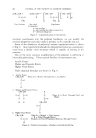
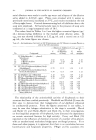
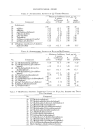
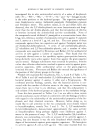
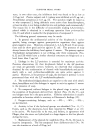
308 JOURNAL OF THE SOCIETY OF COSMETIC CHEMISTS septics. This depends on in vivo studies of their ability to degerm the skin, as may be demonstrated by standard hand-washing techniques. There appears to be a fairly good relationship between in vitro and in vivo ac- tivity (7). EXPERIMENTAL Preparation of the Bis-Phenols The compounds used in this study were prepared by standard methods. Many of the compounds listed in the tables have been described in the scientific literature and in patents * for the substances which are new, the synthesis is largely evident from their structure and the procedure may be derived from the known preparation of analogs. This paper would not be the proper place to present experimental details it may suffice to make a few general statements. All compounds of Table 1 are derivatives of diphenylmethane an/t were obtained by condensation of the appropriate phenols with aqueous for- maldehyde or paraformaldehyde in the presence of sulfuric acid of varying strength, the conditions depending on the reactivity of the phenol em- ployed. The asymmetrical compounds Nos. 13 and 14 had to be made in two steps: alkaline condensation of 2,4-dichlorophenol with t•)rmalde- hyde yielded 2,4-dichloro-6-hydroxymethylphenol which was brought to reaction with p-chlorophenol (No. 13) and 2,4,5-trichlorophenol (No. 14) under acid conditions. It should be mentioned that compound 9 was synthesized by debromination of compound 5 by means of zinc dust in potassium hydroxide solution. Similarly, the compounds listed in Table 2 were prepared by conden- sation of the monophenols with acetaldehyde, chloral, benzaldehyde and substituted benzaldehydes. Bromination of compounds 15 and 18 re- sulted in compounds 16 and 19, respectively. The stilbenediols (Nos. 20 and 21) were obtained from the corresponding benzoins (8). The reaction of phenols with sulfur dichloride led to the formation of the 2,2'-thiobis-phenols listed in Table 3. If the phenols are substi- tuted by more than one chlorine, aluminum chloride is needed as a catalyst. Dechlorination of compound 30 led to compound 29, bromination to com- pound 33. The bis-phenols listed in Tables 4 and 5 were generally prepared by the same methods as had been employed for the compounds of the pre- ceding tables. We might add that compound 43 was obtained by first preparing octachlorodiphenylene dioxide from potassium pentachloro- phenoxide at 300øC., and heating the dioxide with sodium hydroxide in aqueous methanol at 160øC. Compounds 45, 58 and 59 resulted from * Many references are found in the review article "Ths Bis-phenols" (4).
Purchased for the exclusive use of nofirst nolast (unknown)
From: SCC Media Library & Resource Center (library.scconline.org)