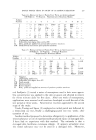
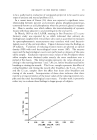
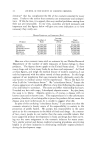
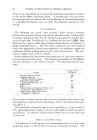
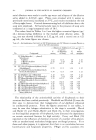
EI,EVENTH MEDAL AWARD 309 the oxidation of the corresponding 2,2'-thiobis-phenols with hydrogen peroxide. Bromination of compound 46 led to compound 47, chlorination of compound 48 to compound 49. •lntimicrobia/ In Fitro Study Bacteriostatic and fungistatic levels were ascertained for Staphylococcus aureus ATCC 6358, Escherichia coli ATCC 11229, and Trichophyton menta- grophytes ATCC 9129 by serial dilution technique. Stock solutions of the compounds to be tested were made in acetone or N,N-dimethylformamide followed by twofold serial dilutions in alcohol (S.D.A. 30). Aliquots from the solvent serial dilutions were added to A.O.A.C. agar tubes for bacterial tests and Sabouraud's Dextrose Agar (Difco) tubes for fungal tests. The tube contents were mixed and poured into sterile plates which were then spot-inoculated with the test organisms. Twenty-four hour A.O.A.C. broth cultures of S. aureus and E. coli were employed, the inoc- ulum being diluted 1-100 in A.O.A.C. broth. Spores and roycelia frag- ments harvested from a seven-day Sabouraud's dextrose agar slant with water served as the Trichophyton inoculum. Inhibitory levels were recorded at the end of forty-eight hours at 37 ø C., and seven days at 30øC., for the bacteria and mold respectively. Controls were included to demon- strate lack of inhibition by the solvents employed. Replicate tests were conducted on different days in an attempt to minimize the day-to-day variation in the test procedfire. Bacteriostatic levels of the compounds in the presence of soap were ascertained by a similar technique except that aliquots of the stock solu- tions were added to a Maxine (Swift & Co.) soap solution. Twofold TABLE I--ANTIMICKOBIAL ACTIVITY OF 2•2'-METHYLENEBIS-PHENOLS •--Minimum Inhibitory Level, t•g./ml.--• S. aureus T. Compound S. (in Presence E. menta- No. Substituents aureus of Soap) coli grophytes 1 3,4,6-Trichloro,hexachlorophene, G~11© 0.39 1.56 25 3.12 2 4,5,6-Trichloro 0.39 0.78 25 6.12 3 3,4,5-Trichloro 0.20 0.39 6.25 3.12 4 4-Bromo-3,6-dichloro 1.56 6.25 50 6.25 5 4-Bromo-5,6-dichloro 1.56 6.25 50 12.5 6 4-Chloro, dichlorophene, G-4 3.12 12.5 25 6.25 7 4-Methyl 25 12.5 50 50 8 4,6-Dichloro 0.78 1.56 50 1.56 9 5,6-Dichloro 3.12 6.25 50 3.12 10 4,6-Dibromo 0.78 3.12 50 3.12 11 6-Bromo-4-chloro 0.78 1.56 50 6.25 12 4-Chloro-6-methyl 1.56 3.12 50 6.25 13 2,2'-Dihydroxy-3,5,5' -trichlorodiphenyl- methane 1.56 ! ! ! ! 14 2,2-Dihydroxy-3,5,3,5,6 -pentachloro- diphenylmethane , 0.78 3.12 50 3.12 1.56 50 3.12

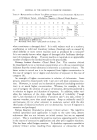
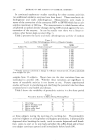
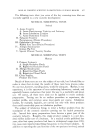
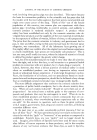
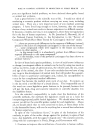
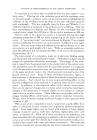
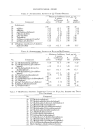
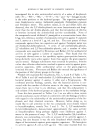
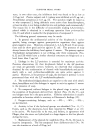
31(I JOURNAL OF THE SOCIETY OF COSMETIC CHEMISTS serial dilutions were made in sterile tap water and aliquots of the dilution series added to A.O.A.C. agar. Plates were streaked with $. aureus as previously mentioned, incubated at 37øC., and results recorded at the end of forty-eight hours. Controls demonstrating lack of inhibition due to the soap were employed. All bacteriostatic tests in the presence of soap were conducted at a soap/compound ratio of 50/1. The values listed in Tables 1 to 5 are the higher numerical figures (•g./ mi.) demonstrating inhibition in the twofold serial dilution series. If, e.g., one test showed inhibition at 3.12 ug./ml. and a second one at 6.25 ug./ml., the latter figure was chosen. TABLE 2--ANTIMICROBIAl. ACTIVITY OF 2•2'-ETHYLIDENE AND 2•2t-BENzYLIDENEBIS-PHENOLS, AND OF 2•2/-STILBENEDIOLS No. Compound r--Minimum Inhibitory I,evel, og./ml.---- S. aureus T. S. (in Presence E. menta- aureus of Soap) coli grophytes 2,2'-Ethylidenebis (... phenol) Substituent 15 4-Chloro 3.12 12.5 50 3.12 16 6-Bromo-4. chloro 3.12 6.25 50 3.12 17 4-Methyl 12.5 12.5 50 50 18 2,2'-(2,2,2-Trichloroethylidene)-bis(4- chlorophenol) 0.78 12.5 50 3.12 19 2,2'-(2,2,2-Trichloroethylidene)-bis!6- bromo-4-chlorophenol) 0.78 12.5 50 3.12 20 5,5'-Dichloro-2,2'-stilbenediol 3.12 12.5 50 3.12 21 3,5,3',5'-Tetrachloro. 2,2'-stilbenediol 0.39 3,12 50 6.25 22 2,2'-Benzylidenebis(4. chlorophenol) 3.12 12.5 50 50 23 2,2'-Benzylidenebis(6- bromo-4-chloro- phenol) 6.25 12.5 50 50 24 2,2'-Benzylidenebis(4,6-dimethylphenol) 6.25 12.5 50 50 25 4,4qBenzylidenedithymol 1.56 12.5 50 50 26 4,4'-(2-Chlorobenzylidene)dithymol 0.78 6.25 50 50 27 4,4'-(4-Chlorobenzylidene)dithymol 0.78 6.25 50 50 28 4,4'-(4-Hydroxy-3-me thoxybenzyl- idene)-dithymol 3.12 6.25 50 50 The relationship of the antimicrobial activity of Ns-phenols to their structure had been studied previously. Bechhold and Ehrlich (9) were the first ones to demonstrate that halogenation of o,o'-diphenol enhanced its antibacterial potency. From the figures presented in our tables, it may be seen that halogen substitution in the rings is essential. Marsh and Butler (5) and Marsh, Butler and Clark (6), in their investigations on the fungicidal properties of bis-phenols, have discussed the dependence on certain structural features for high activity. Corey and Shirk (10) reported on the influences of chemical structure of a number of Ns-phenols with an unsubstituted methylene bridge upon antifungal potency. From these and other papers, it is apparent that there is no correlation between bacteriostatic and fungistatic properties. Pfieger and his associates (11)
Purchased for the exclusive use of nofirst nolast (unknown)
From: SCC Media Library & Resource Center (library.scconline.org)