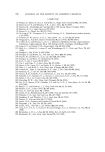
714 JOURNAL OF THE SOCIETY OF COSMETIC CHEMISTS (6) Scriven, L. E. und Sternling, C. V., Nature (London) 187, 186 (1960). (7) Bancroft, W. D., J. Phys. Chem. 17, 501 (1913). (8) van den Tempel, J. Colloid Sci. 13, 125 (1958). (9) Sonntag, H., Z.f. physikal. Chemie 221, 373 (1962), 227, 248 (1964), IV. Intern. KongreB fiir Grenzfliichenaktive Stoffe, Briissel 1964, Preprints B/VI. 14. (10) Derjaguin, B. V. und Titijevskaya, A. S., Proc. lind Intern. Congress of Surface Activity, Vol. I, 211 London (1957). (11) van der Waarden, M., J. Colloid Sci. 5, 317 (1950), Chem. Weekblad 55, 494 (1959). (12) Mackor, E. L., J. Colloid Sci. 6, 492 (1951) Mackor, E.L. und van der Waals, J. H., J. Colloid Sci. 7, 535 (1952). (13) Heller, W. und Pugh, Th. L., J. Po&mer Sd. 47, 203 (1960). (14) Davies, J. T., Proc. Ilnd Intern. Congress of Surface Activity, Vol. I, 426 (London 1957). (15) Biswas, B. und Haydon, D. A., III. Intern. KongreB f. Grenzfliichenaktive Stoffe, B 580 K61n (1960). (16) Griffin, W. C., J. Soc. Cosmet. Chem. 1, 311 (1949), 5, 249 (1954). (17) v. Stackelberg, M., Klockner, E. und Mohrhauer, P., Kolloid-Z. 115, 53 (1949). (18) Winsor, P. A., Trans. Faraday Soc. 44, 376 (1948).

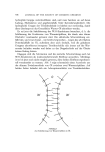
jr. Soc. Cosmetic Chemists 16, 715-720 (1965) Amphotere Emulgatoren auf Basis yon Di-fettalkyl-triithanolaminiither- Derivaten GREGOR SCHUSTER* [/•orgetragen am 7. Mai 1965 in Main E Synopsis--Amphoteric emulsifiers based on derivatives of difatty alkyl triethanolamine ethers. Disodium triethanolamine distearyl heptaglycolether sulfosuccinate (Compound W) is described. It has emulsifying properties as well as a specific desirable effect on human skin. Compound Wist suitable for the preparation of cetyl/stearyl alcohol emulsions, which have the ad- vantage of not whitening on rubout. It is also possible to incorporate other fatty materials into the cetyl/stearyl alcohol emulsions. Compound W exhibits amphoteric behavior, has its major utility in the pH range of 6--7, and has a structure related to sulfobetain. Compound W combines the advantages of soaps and fatty amines without their disadvantages. Jts tolerance by skin and mucous membranes was demonstrated on animals and humans no irritation was noticed. Es ist eine groBe Zahl anionaktiver, kationaktiver, amphoterer und nichtionogener Emulgatoren bekannt. Dennoch hat man nach solchen Ver- bindungen gesucht, die auBer der emulgierenden Eigenschaft gleichzeitig spezifische Hautwirkungen aufweisen. Eine M/Sglichkeit, das Integument dutch Emulgatoren giinstig zu beeinflussen, schien uns zu sein, bestimmte, als Emulgatoren wirksame Stoffe dutch Einfiihrung substantiver Gruppen lingere Zeit auf der Haut zu fixieren. Die anionaktiven Verbindungen zeigen eine gewisse Substantivit•it, erge- ben abet keine deutliche Verbesserung des Hautgefiihls. Die Substantivit•it der kationaktiven Verbindungen zur Haut ist stark ausgeprigt und je nach Struktur dieset Verbindungen ist eine Beeinflussung des Integuments m/Sg- lich. Ein groBer Nachteil dieset Verbindungen ist der, dab sie auf Grund ihrer Hautvertr•iglichkeit, insbesondere der Augenschleimhautvertr•iglich- * Chemische Fabrik Grtinau GmbH., 7918 Illertissen/Bayern. 715
Purchased for the exclusive use of nofirst nolast (unknown)
From: SCC Media Library & Resource Center (library.scconline.org)