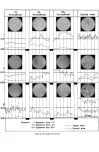
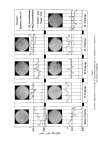
jr. Soc. Cosmelic Chemists 23, 775-789 (1972) A of Comparison of the Effectiveness Several External Antiperspirants J. Z/•HEJSI•5* and J. ROVENSK•** Synopsis--The anhidrotic effects of aqueous solutions offormaldehyde, aluminium chloride, zinc chlorides hexamethylene tetramines and sodium hexametaphosphate were investigated on the volar side of the forearm of human subjects. Changes in the dynamics and quantity of s•veat were recorded with a quickly responding resistance hygrometer (- 0.5 sec.) and simul- taneously with a contact indicator test under conditions of physiological s•veating caused by heating. Changes which occurred in the microstructure of the epidermal surface were objectively examined by the contact print method according to Sarkany and Caron. Based on the rate and the intensity of the anhidrotic effect, formaldehyde appears to be most effective it is followed by aluminum chloride and finally by zinc chloride. The rene•val of s•veating after successive stripping indizates that the anhidrotic effects of the above agents is related to the mechanical closure of the eccrine sweat ducts as a result of denaturation-caused contraction of the horny layer. The depth of the contraction changes depending on the concentration and the period of application of the tested anhidrotic agent. The antiperspirant action of hexamethylene tetramine could not be demonstrated on the forearm due to the absence of sweat which is essential for the release of formaldehyde. Sodium hexametaphosphate does not reduce sweating it appears to act by accelerating the hydration of the horny layer and thus facilitating speedier and more intensive penetration of other antiperspirants. The need for considering the physiology of sweating and the characteristics of the epidermal surface in the experimental evaluation of the antiperspirant effects of anhidrotics has been stressed. This includes differences between various body areas, temperature conditions of the examined person, etc. Non-occlusive moistening of the control area with distilled water leads, depending on the time of exposure, to an increase in s•veat output and to changes in the imbibition of the expelled sxveat into the 12eriporal horny layer. Sweating has fundamental significance in the maintenance of the proper levels of water and temperature of the body as well as in the hydration and "plasticization" of the surface horny layer (1) (2) (3). Deliberate regulation of the intensity of generalized sweating and of sweating limited to certain areas of the body is often expedient not only for clinical and therapeutic reasons but also for social and cosmetic considerations. The intensity of generalized sweating can be influenced by a number of * Dermatological Department, J. E. Purkyn• University Brno/0SSR, Pekafskfi 53 ** Pediatric Research Institute, Brno/0SSR, 0ernfi Pole 775

776 JOURNAL OF THE SOCIETY OF COSMETIC CHEMISTS physiological factors or by artificial means (cooling, heating, relative humid- ity of the air, drugs, etc.). The intensity of local sweating can be increased in specific limited areas by several locally applied drugs however, this is of significance primarily for experimental work. Topical agents, capable of limiting or temporarily stopping excessive sweating on a given area of the body surface, have found much greater utility in medicine and cosmetics. In addition to the other effects, their applica- tion leads to changes in the microcirculation of water in the skin and can form the etiopathogenetic basis for certain pathological skin conditions, such as miliaria etc. The objective evaluation of the antiperspirant effects of various agents used for this purpose is very difficult and in such studies, several basic physiological facts related to sweating must be considered. On the palms and soles, the regions of so-called psychic sweating, the structural and chemical dissimilarity of the thick horny layer (2), the position of the person under study (3) (4), and the intensity of the psychic or sensory stimulus (5) are significant. In these areas, penetration of externally applied drugs occurs primarily through numerous eccrine sweat ducts of glands which are continuously elaborating sweat. In the extra-palmoplantar regions, the areas of so-called thermal sweating, sweating can be caused by the generalized or local application of drugs, such as pilocarpine, or by general heating. Pharmacological sweating differs from physiological/thermal sweating both in the course and the composition of the expelled perspiration (6). Absorption in these areas occurs primarily via the direct transcorneal path and to a lesser extent via the hair follicles. Absorption via sweat gland ducts does not occur under normal temperature conditions. In the evaluation of experimental data one must realize, however, that even under subthreshold thermal stimulation, psychic sweating may occur in extra-palmoplantar regions in the same way as on the palms and soles (5). The penetration of antiperspirants and also the depth of their action are largely dependent on the degree of hydradon of the surface horny layer which in turn is significantly influenced by the type of vehicle from which the antiperspirant is applied (7) (8) (9). Excessive hydradon, i.e., conditions of occlusion, can by itself limit sweat output through swelling of the terminal portions of the eccrine sweat duct (hidromeiosis) (10) (11) (12). The authors have attempted to overcome the noted difficulties via a rational approach based on current publications. In addition, the authors' experience was utilized which was obtained during earlier work in this field (a combination of the measurement of the actual sweat output with the aid of a quickly responding resistance hygrometer and of a perspiration
Purchased for the exclusive use of nofirst nolast (unknown)
From: SCC Media Library & Resource Center (library.scconline.org)