COMPARISON OF THE EFFECTIVENESS 777 print test with the aid of a contact indicator). Simultaneous application of these methods yielded a complete picture of the quantity and the dynamics of sweat secretion and of the frequency distribution of active sweat glands. This type of information cannot be obtained simply by employing only one of the two above-mentioned methods. During recent years many authors have dealt with problems associated with the evaluation of topical anti- perspirants [(13) to (25)]. The antiperspirant efficacies of several chemical agents, which are used either in pure form or in combinations for topical antiperspirancy as well as deodorization, are compared in the present study. It includes formaldehyde, aluminum chloride, zinc chloride, hexamethylene tetramine, and sodium hexametaphosphate. MATERIALS AND METHODS The anhidrotic effects of aqueous solutions of the following chemical agents at the indicated concentrations were investigated: Formaldehyde--l% , 5%, 10% aluminum chloride--15% zinc chloride--5% hexamethylene tetramine--20ø//0 sodium hexametaphos- phate--10 •o. For control purposes, distilled water was tested by the same procedure. The exposure to the test agent was either 1, 3, or 10 hours. Measurements were commenced within one hour after the removal of the test material from the volar side of the forearm. METHOD OF APPLICATION Several layers ofWhatman 1 filter paper squares (4 x 4 cm) were moistened with the test solution of the antiperspirant and applied to a previously de- lineated area. The central portion of the moistened squares was then covered with a polypropylene film to an extent of approximately 2 x 2 cm. The purpose of this partial covering with a water-proof film was twofold: to prevent rapid drying of the test solutions and to allow partial evaporation of water vapor formed underneath the occlusive film. The occurrence of anhydrosis due to excessive swelling of the horny layer (hydromeiosis) was thus avoided and the efficacy of this procedure had been verified by pre- liminary experimentation. It was also possible to remoisten the protruding filter paper margins with the solutions of the tested antiperspirants whenever long exposures were required. The final fixation to the skin was carried out with a layer of polyurethane foam sponge and a bandage. Tests were con- ducted on a total of 15 subjects ranging in age from 14 to 16 years. Sweating was elicited by exposing the subjects to heat in a polypropylene tent with the aid of a hot air stream (55 øC). During the measurement, the test subjects

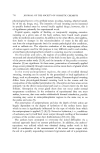
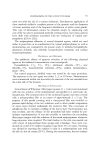
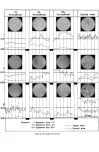
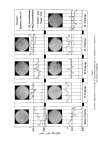
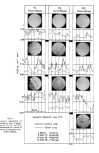
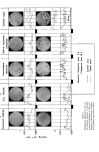
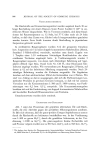
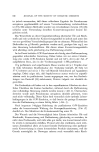
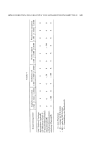
778 JOURNAL OF THE SOCIETY OF COSMETIC CHEMISTS were lying in a supine position on a soft polyurethane foam sponge (moli- tane ©) mat. The dynamics of sweat output were recorded by a resistance hygrometer with a short response time ( 0.5 sec.) (26). Contact indicator sweat tests, according to Rovensk• and Toman (27) were simultaneously conducted and are based on the color reaction between pyrogallol and ferric hydroxide in the presence of water from the sweat. Microstructural changes in the tested areas on the epidermal surfaces were investigated with the aid of the print method conducted according to Sarkany and Caron (28), and these results have already been published in a separate paper (29). Successive stripping of the horny layer was carried out with the aid of cellophane adhesive tape. RESULTS Forma/deh•yde Fig. ! shows the changes of sweat activity rs. the concentration and exposure time to formaldehyde. By comparing the hygrometric recording of sweat output and the print tests, one clearly notes a growing reduction of sweating in the tested area vs. a simultaneous increase of sweating in the control area as a function of increasing thermal stress. The decrease of sweat- ing is already pronounced in the case of 1 ø/o formaldehyde after one hour. This decrease becomes more pronounced with increasing concentrations of formaldehyde and duration of action. Almost complete anhidrosis occurs after the action of 5 % formaldehyde for 3 hours, and complete anhidrosis is observed in the case of 5% and 10% formaldehyde after 10 hours of interaction. The indicator perspiration prints show a decrease of the number and a reduction of the size of the dark spots by comparison to the control area to which only distilled water had been applied. This is a consequence of a constriction and ultimate closure of the eccrine sweat duct caused by formal- dehyde denaturation and contraction of the surfacy horny layer. A detail of a perspiration print at a large magnification is shown in Fig. 5•1. The hygrometric recordings and perspiration prints in Fig. 2 and 3 show increasing sweating as a function of the number of adhesive tape strippings at places where formaldehyde had caused either hypo- or even anhidrosis. Both the number and the size of the dark spots on the sweat print are in- Figure ! Simultaneous recording of sweating with resistance hygrometer and contact indicator perspiration prints of areas of application of 1%, 5 %, and 10 % formaldehyde for a period of 1, 3, and 10 hours. Distilled water used as control.
Purchased for the exclusive use of nofirst nolast (unknown)
From: SCC Media Library & Resource Center (library.scconline.org)