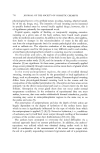
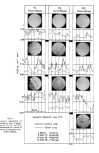
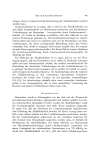
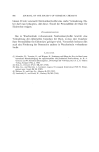
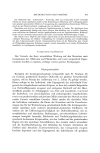
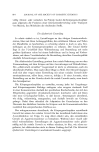
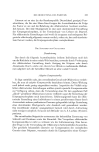
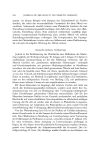
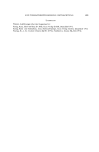
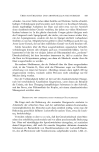
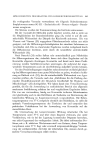
I 0,10 1% Forma Idehyde s% Forma Idehyde 10% Forma Idehyde 0,00 II 0,10 0,00 0,10 0,00 •Figure Y recessive regeneration of •eating in areas of applica- an of 1%,5%, and 10% ß maldehyde for a period of hours as a function of suc- cessive stripping. Forearm: Exposure time 10 h Control area ............. Tested area I Before stripping II after 10 strippings III after 25 strippings IV after 50 strippings ,00

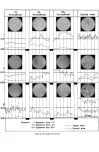
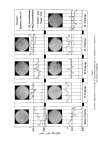
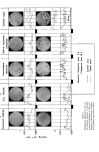
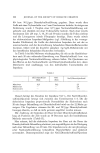
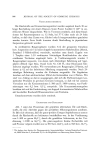
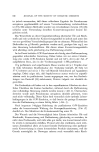
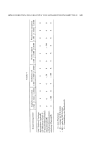
782 JOURNAL OF THE SOCIETY OF COSMETIC CHEMISTS creased which indicates an opening and widening of the terminal portions of the eccrine sweat ducts which depends on the depth of the formaldehyde denaturation of the horny layer (see also Fig. 5 C). It is interesting to note from Fig. 3 that, after 10 hours' action by 10% formaldehyde, the barrier is still not severely damaged by as many as 50 strippings which would have become apparent on the contact print by diffuse blackening at the spots at which water had penetrated the barrier. Changes in sweating after application of other tested materials are docu- mented in Fig. 4 with the aid of hygrometric recordings and indicator per- spiration prints. •lluminium Chloride After 3 hours of action, a significant reduction of sweating is observed (see also Fig. 5B) which becomes more pronounced after a 10 hours' applica- tion. No complete anhidrosis is observed, however, as in the case of formal- dehyde. After 40 strippings, sweat output through the reopened eccrine sweat ducts increases. Zinc Chloride After 3 hours of action, the degree of sweating at the tested area is not altered. After 10 hours o,• interaction, a clear reduction of sweating is noted, but to a much lesser extent than that observed in the case of formaldehyde or aluminium chloride. Forty strippings lead to complete normalization of sweating. Hexameth•ylene Tetramine No influence of sweat activity is observed after either 3 or 10 hours of application on the forearm. Sodium Hexametaphosphate This material causes no decrease of sweating. However, after 10 hours of interaction, large polymorphous dark spots appear on the sweat prints which are similar to those occurring after application of distilled water (periporal sweat inhibition). Distilled lF/ater As shown in Figs. 1, 4, 5D, E, and F, distilled water is used as a control. Sweat outputs at the same time of interaction is greater than that in a control
Purchased for the exclusive use of nofirst nolast (unknown)
From: SCC Media Library & Resource Center (library.scconline.org)