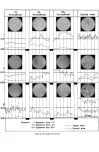
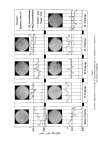
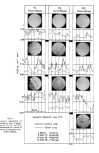
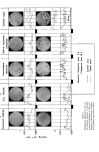
COMPARISON OF THE EFFECTIVENESS 787 reacting sweat (17) (23) and can thus occur only in a sufficiently acidic and moist environment which is required for its hydrolysis. Thus, on the volar side of the forearm, where there is no sweating under normal temperature conditions, it exhibits no anhidrotic effect. Sodium hexametaphosphate and the metaphosphate po•mer are used as bath additives with antiperspirant action (Calgon ©, Dulgon ©) (17) (23). From our measurement it is concluded that these materials by themselves have no antiperspirant effect. They act instead as agents which accelerate the penetra- tion of water into the horny layer and thus can assist the penetration of simultaneously or subsequently applied antiperspirants (powders with zinc oxide, boric acid, salicylic acid, etc.). It the bath lasts very long, they can cause temporary constriction or closure of the eccrine s•veat duct through swelling of the periporal horny layer. Distilled water applied to the forearm skin as the control causes, depending on the period of skin moistening, increased sweat expulsion in the test area after a given period of drying. This certainly is not direct stimulation of the sweat gland. On the other hand, one could attribute this effect to hydration (plasdcization) of the horny layer which surrounds the sweat gland outlets. The inside dimensions of the outlets regulate the rate of passage of sweat through the eccrine ducts and thereby the quality and the quantity of the expelled sweat and to a degree also the activity of the sweat gland via feed- back (33). Prolonged increased hydradon even after termination can lead to changes in the sorptive capacity and sweat diffusion within the periporal horny layer perhaps as a result of the elution of water-binding substances. The authors have shown changes on the epidermal surface after maceration in water by microtopographical prints (29), and these are confirmed by their results from perspiration print tests (Fig. 5 D, E, F). Excessive hydration with total prevention of water evaporation (occlusion) leads, after a period of time, to swelling of the horny layer which includes the periporal rings which can lead to a temporary stoppage of sweating via hidromeiosis. Maceration lasting longer than 48 hours leads to irreversible denaturation changes in the horny layer (34). CONCLUSIONS From the above results it can be concluded that the tested antiperspirants can be rated with regard to their effectiveness for sweat reduction as follows: Formaldehyde aluminium chloride zinc chloride. Perspiration print tests, microtopographical observations of the epidermal surfaces, and the reversal of hypo- and even anhidrosis by stripping lead to

788 JOURNAL OF THE SOCIETY OF COSMETIC CHEMISTS convincing support for a mechanism of antiperspirant action which is based on contraction of the horny layer by denaturation. The intensity and depth of these denaturation-caused changes depend on the concentration and on the time of action of the tested agents. The influence of the hydration of the horny layer on the rate and intensity of penetration of topically applied ma- terials was stressed in the discussion. No anhidrotic effect of hexamethylene tetramine could be demonstrated on the forearm because here, under normal temperature conditions, sweat activity is lacking which is necessary for hydro- lysis and liberation of formaldehyde. Sodium hexametaphosphate by itself did not reduce sweating. In the control areas which had been moistened only with distilled water, greater expulsion of sweat was observed after some drying out (1-2 hours) modified imbibition of water in the periporal region was also observed. The discussion also concerned itself with the improved passage through the terminal portions of the eccrine sweat glands as a con- sequence of hydration (plasticization) of the periporal horny layer. Finally, the possibility of modifying the periporal layer's ability to bind water was explored. REFERENCES (1) Montagna, W., Eccrine Sweat Glands and Eccrine Sweating, Pergamon Press Inc., Publishers, New York 1956. (2) Kligman, A. M., in: W. Montagna and W. C. Lobitz, Jr. (Editors) The Epidermis, Academic Press, New York-London 1964, p. 387-430. (3) Kuno, Y., Human Perspiration, Charles Thomas Publishers, Springfield, USA, 1959. (4) Zfihejsk•, J., und Rovensk•, J., Arch. Min. exp. DermatoL 233, 227 (1968). (5) Rovensk•, J., und Zfihejsk•, J., Parfiimerie u. Kosmet. 51, 145 (1970). (6) Emrich, H. M., Pfliiger's Arch. ges. Physiol. Menschen Tiere 290, 298 (1966). (7) Potter, B., Ann. Rev. PhysioL 28, 159 (1966). (8) Malkinson, F. D., Arch. Environment. Health 11, 538 (1965). (9) Spier, H. W., Berufsdermatosen 15, 121 (1967). (10) Peiss, C. N., Randall, W. C., and Hertzmann, A. B., J. invest. Dermatol. 26, 459 (1956). (11) Randall, W, C., and Peiss, C. N., J. invest. DermatoL 28, 435 (1957). (12) Brown, W. K., and Sargent, F., Arch. Environment. Health 11, 442 (1958). (13) Brun, R., et Grasset, N., Dermatologica (Basel) 112, 357 (1956). (14) Brun, R., Dermatologica (Basel) 111, 316 (1955). (15) Jellinek, J. S., Kosmetologie, Dr. A. Hiltbig Verlag, Heidelberg 1967. (16) Plechner, S. L., in: E. Sagatin (Editor) Cosmetics, Science and Technology, Interscience PubL Inc., New York 1957. (17) Fiedler, H. P., Der SchweiJ•, Editio Cantor, Aulendorf/Wiirtt. 1968. (19) Janistyn, H., Taschenbuch der modernen Parf•'merie und Kosmetik, Wissenschaftliche Verlags- gesellschaft mbH, Stuttgart 1966. (19) Papa, Ch. M., and Kligman, A.M., J. invest. DermatoL 46, 193 (1966) J. invest. DermatoL 47, 1 (1966) J. invest. DermatoL 49, 139 (1967). (20) Shelley, W. B., Laskas, J. j., and Satanova, A., Arch. Dermatology 69, 713 (1954). (21) Klarmann, E.G., Acta Dermato-venereoL (Stockholm) 37, 59 (1957).
Purchased for the exclusive use of nofirst nolast (unknown)
From: SCC Media Library & Resource Center (library.scconline.org)