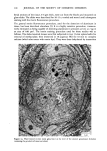
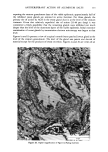
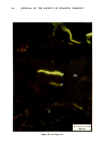
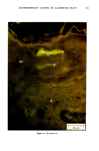
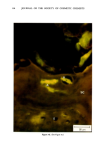
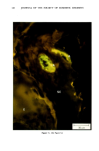
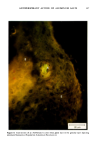
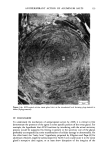
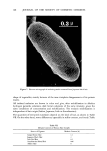
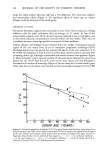
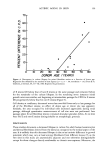
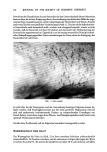
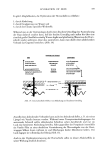
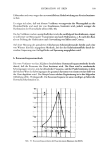
ANTIPERSPIRANT ACTION OF ALUMINUM SALTS 133 Figure 14a. ACH-treated eccrine sweat gland duct at the intradermal level showing plug material in lumen (?:plug material). IV. DISCUSSION To understand the mechanism of antiperspirant action by ACH, it is critical to first demonstrate the presence of the agent in some specific portion of the sweat gland. For example, the hypothesis that ACH functions by interfering with the actual secretary process would be supported by finding it present in the secretary coil of the gland, preferably accompanied by some manifestation of cellular damage or abnormality. On the other hand, the "leaky hose" hypothesis, proposed by Kligman and Papa (6) for aluminum chloride, might be substantiated for ACH if one could locate it in the sweat gland's resarptive duct region, or at least show disruption of the integrity of the

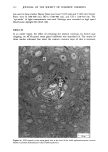
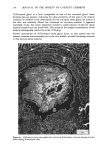
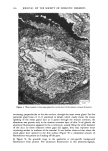
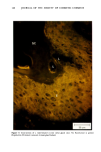
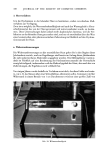
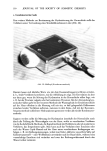
134 JOURNAL OF THE SOCIETY OF COSMETIC CHEMISTS Figure 14b. Higher magnification of Figure 14a (P:plug material). intradermal duct wall. Finally, if the suggestion that ACH acts by forming a poral occlusive mass which obstruct• the free delivery of sweat to the skin surface is to be established, then ACH, one of its reaction products, or at least aluminum itself must be demonstrated in substantial amounts within the gland. To this point, the "plug" hypothesis for explaining the mechanism of antiperspirant action in human sweat glands by aluminum salts has been favored by many, but has been largely unsubstantiated. Recently, Relier and Luedders have presented some evidence that the mode of antiperspirant action by aluminum salts is emphractic, the emphraxis probably resulting from the formation of an obstructive hydroxide gel
Purchased for the exclusive use of nofirst nolast (unknown)
From: SCC Media Library & Resource Center (library.scconline.org)