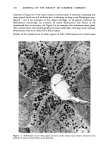
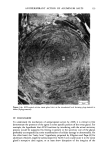
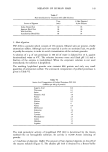
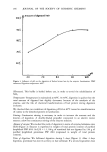
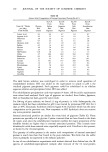
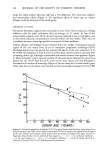
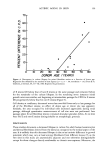
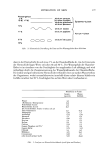
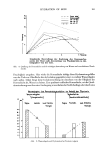
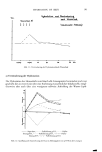
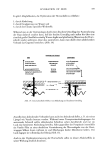
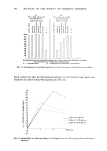
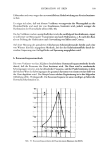
ACTINIC AGING IN SKIN 157 50 cells as well as colonies of intermediate size. All cultures obtained from a single skin specimen were similar in plating efficiency and distribution of colony sizes, however. Five of the six subjects formed visible colonies in secondary cultures tertiary cultures were achieved in only one instance. Vigorous growth was restricted to the primary cultures in the case of nonexposed skin in four of the six subjects and in the case of exposed skin in all but the youngest subject. The plating efficiency for primary cultures obtained from biopsies of nonexposed skin was approximately 0.01% in all cases. In each of the six subjects proliferative capacity was greater among cells cultured from chronically sun-exposed skin (E cells) than among cells cultured from nonexposed skin (non-E cells). The plating efficiency of E cells was 1.2 to 32.5-fold higher than that of non-E cells (Figure 1), and the total keratinocyte yield per plate was also greater. However, the average colony size achieved during the first passage and number of cell generations was always greater for the non-E cell cultures, with non-E cell colonies 40% to 10.5-fold larger than E colonies on the average. The discrepancy between both colony size and number of generations for sun-exposed vs. nonexposed keratinocytes varied with donor age. The youngest subject (28 years old) had only a 2% difference between number of generations in his paired cultures, SO- 40- 30- z i 1,1 ß 10 20 30 ß 40 SO 60 70 80 AGE (YEARS) Figure 2. Discrepancy in the average number of generations achieved in culture by keratinocytes from chronically sun-exposed(E) and non-exposed (non-E) sites, (non-E -- E)/E, as a function of donor age. Regression line obtained by the method of least squares, (y = x - 35, correlation coefficient = .99). (From B. A. Gilchrest,J. Invest. DermatoL, 72, 219-223, 1979. Reprinted by permission.)

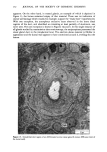
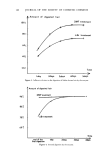
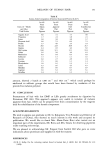
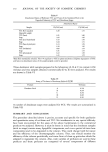
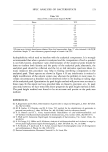
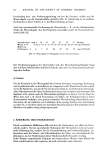
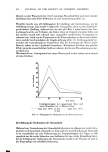
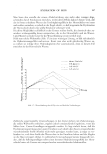
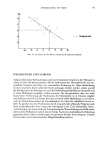
158 JOURNAL OF THE SOCIETY OF COSMETIC CHEMISTS while the oldest subject (80 years old) had a 45% difference. The other four subjects had intermediate values (Figure 2). No significant effect of donor age on culture lifespan could be detected in this small group. FIBROBLAST CULTURES The paired fibroblast explants were successful in nine of the twelve instances, yielding sufficient cells for serial cultivation after an average of 3.5 weeks. In two of the unsuccessful explants, none of the derreal fragments adhered to the scored plates, and in the others bacterial contamination occurred within the first weeks. There was no correlation between donor age and the occurrence of these problems. Culture lifespan of fibroblast strains derived from the medial, nonexposed (non-E) aspect of the arm varied from 29 to 42 cumulative population doublings (CPD) fibroblast strains from the lateral, sun-exposed (E) aspect of the arm underwent 18 to 39.5 CPD. The lifespan for both E and non-E fibroblast strains tended to decrease with increasing donor age, although considerable individual variation was apparent (Figure 3). More strikingly, in each case the number of cell generations obtained in culture was greater for the non-E than for the E strain of the same donor, and this discrepancy increased as a function of donor age (Figure 4). In two cases, the E strains initially grew faster than the non-E strains, then slowed so that intermediate passage level the CPD 60 50 90- I0- I i I I I I I I 0 I0 20 30 40 50 60 70 80 DONOR AGE (YEARS) Figure 3. Cumulative population doublings (C.P.D.) for paired human skin fibroblast strains plotted as a function of donor age. Open circles indicate strains derived from the medial, non-exposed (non-E) aspect of the arm closed circles indicate strains derived from the lateral, sun-exposed (E) aspect of the arm. Regression lines obtained by the method of least squares (y = -.23 x q- 50, correlation coefficient = --.51 for non-E strains y = --.44 x q- 57, correlation coefficient = --.76 for E strains). (From B. A. Gilchrest, J. GerontoL, 35, 537-541, 1980. Reprinted by permission.)
Purchased for the exclusive use of nofirst nolast (unknown)
From: SCC Media Library & Resource Center (library.scconline.org)