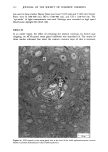
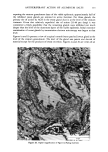
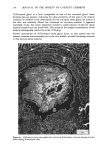
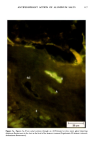
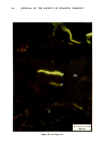
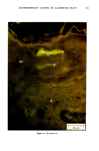
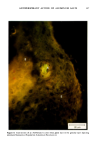
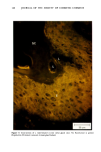
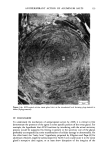
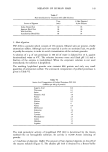
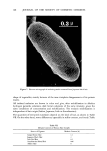
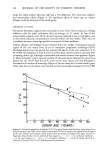
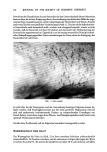
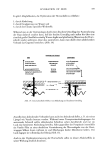
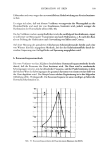
ANTIPERSPIRANT ACTION OF ALUMINUM SALTS 111 in graded aqueous alcohol (30, 50, 70 and 85%, 15 min each). Next, they were reacted for ! min with 0.2% marin stain in 85% ethanol with 0.5% acetic acid added. Following immersion for 3-5 s in 1% HCI in 70% ethanol to reduce excess background staining, the tissues were given three 1-min rinses in distilled water, air-dried, and mounted in glycerin under coverslips. After allowing approximately one hour for the marin color stain to develop fully, the tissue samples were examined by fluorescence microscopy. Between evaluation periods, the samples were stored at 4øC, since the color fades with time. The aluminum-marin complex emits a characteristic brilliant jade green fluorescence which has an excitation maximum of 430 nm and a fluorescence maximum of 500 nm (5). An Olympus microscope, model Vanax with fluorescent illuminator attachment, Figure lb. Higher magnification of Figure la (MV:microvilli of the ductal wall).

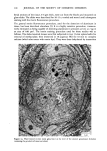
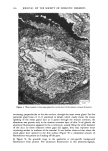
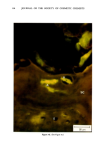
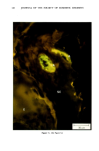
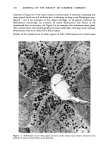
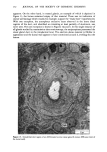
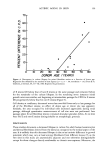
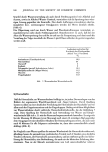
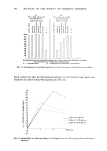
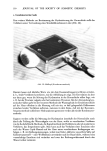
112 .JOURNAL OF THE SOCIETY OF COSMETIC CHEMISTS was used in these studies. Barrier filters used were V (455 nm) and Y (495 nm). Exciter filters were B (340-490 nm), BG-12 (340-490 nm), and UG-5 (250-430 nm. The "epi-mode" of light transmittance was used. Findings were recorded on high speed Ektachrome daylight film (ASA 260). RESULTS In an earlier report, the effect of removing the stratum corneum, by Scotch tape stripping, on ACH-caused sweat gland inhibition was described (3). The results of those studies indicated that when the stratum corneum layer of skin is removed, Figure 2a. ACH-treated eccrine sweat gland duct at the level of the viable epidermis-stratum comeurn interface (L:lumen K:keratinized cells E:viable epidermis).
Purchased for the exclusive use of nofirst nolast (unknown)
From: SCC Media Library & Resource Center (library.scconline.org)