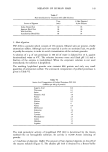
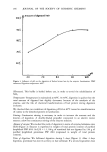
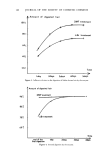
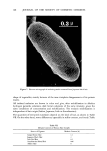
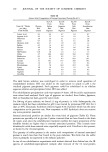
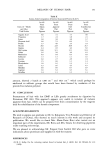
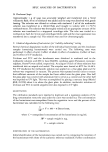
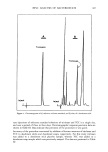
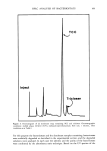
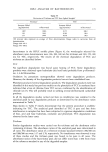
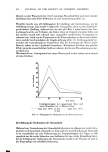
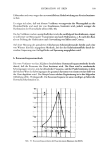
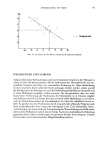
HPLC ANALYSIS OF BACTERIOSTATS 171 Table IV Recoveries of Triclosan and TCC from Spiked Samples • Triclosan 2 TCC 3 Amount Added Amount Added (/•g/injection) % Recovered (/•g/injection) % Recovered 1.007 100.6 0.155 100.2 1.26 100.3 0.206 99.9 1.51 100.4 0.258 99.9 •AII recovery data represent an average of three determinations. Range refers to recoveries from all determinations. 2Range: 99.8-101.1. 3Range: 99.4-100.6. bacteriostats in the HPLC mobile phase (Figure 4), the wavelengths selected for absorbance ratio determination were 266, 288, 300 nm for triclosan and 240, 270, 280 nm for TCC, respectively. The results of the chemical degradation of TCC and triclosan are described below: TCC No significant degradation was found upon heating of TCC. Some degradation products were observed upon hydrolysis (acid and base) probably from p-chloroanil- ine, 3, 4-dichloroaniline. Oxidation by potassium monopersulfate showed some degradation products. However, the identity of the degradation products has not been established here. Photolysis produced several degradation products. The degradation products were not identified in this study but previous studies on the photolysis of TCC in methanol have indicated that a loss of chlorine from TCC occurs, confirmed by the identification of chloride ion (7). This will probably result in yielding several dechlorinated carbanilide products. In all the degradation studies carried out here no interference was rendered to the analytical peak by any degradation products as determined by the absorbance ratios summarized in Table V. Data shown in Table V clearly demonstrate that the present procedure is stability- indicating for TCC. The analytical peak identified as TCC is pure and free from interferences in samples that have been subjected to vigorous degradation conditions of heat, acid and base hydrolysis, oxidation and photolysis. TCC degradation was observed in the latter cases. Triclosan Similar degradation studies were carried out for triclosan and the deodorant sticks containing triclosan. The absorbance ratios of the analytical peak were determined in all cases. The absorbance ratios of a reference triclosan standard between 288/266 nm and 288/300 nm were 3.17 and 2.78, respectively. No interference was observed in any of these studies and the triclosan peak was found to be pure in all cases. The absorbance ratios of the bacteriostat peak did not differ more than + 10% from those of the reference standard in any of the degraded samples.

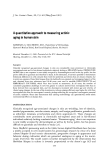
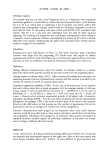
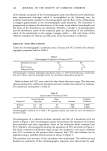
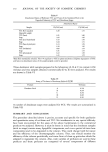
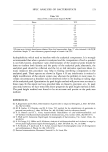
172 JOURNAL OF THE SOCIETY OF COSMETIC CHEMISTS Table V Absorbance Ratios of Reference TCC and Those of the Analytical Peak in the Degraded Solutions of TCC and Deodorant Soaps Absorbance Ratio Sample 270/240 (nm) 270/280 (nm) TCC Ref. standard 6.28 1.55 Degraded samples TCC (heat) 6.21 1.60 Soap 5.92 1.56 TCC (acid hydrolysis) 6.15 1.59 Soap 6.44 1.51 TCC (base hydrolysis) 6.13 1.58 Soap 6.18 1.56 TCC (oxidation) 6.03 1.55 Soap 6.31 1.55 TCC (photolysis) • 6.22 1.58 Soap 6.21 1.55 •Data from methanolic solution. The UV exposure to TCC on plates resulted in complete degradation of TCC and hence no absorbance ratios of the analytical peak could be provided. Three deodorant stick samples prepared in the laboratory (A, B & C) to contain 0.25% triclosan and two samples obtained commercially (D & E) were analyzed. The results are shown in Table VI. Table VI Assay of Triclosan in Deodorant Sticks (% W/W) Product Triclosan Deodrant Stick A 0.258 B 0.256 C 0.254 D 0.265 E 0.261 A number of deodorant soaps were analyzed for TCC. The results are summarized in Table VII. SUMMARY AND CONCLUSION The procedure described above is precise, accurate and specific for both qualitative and quantitative assay of triclosan and TCC. No interferences or any special difficulty have been encountered for the assay of the above bacteriostats in the commercial products we analyzed. However, it must be borne in mind that the deodorant samples (stick or soaps) contain many lipophillic components, and over a period of time these components tend to be deposited in the column. This could change both the nature and the efficiency of the chromatographic column. Thus, one should monitor the efficiency of the column periodically, and some form of clean up procedure should be adopted to regenerate the column. Also, wide varieties of perfumes are used in these products and these perfumes are composed of several components of different
Purchased for the exclusive use of nofirst nolast (unknown)
From: SCC Media Library & Resource Center (library.scconline.org)