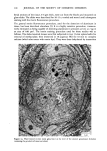
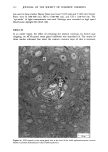
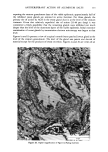
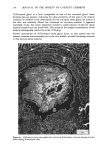
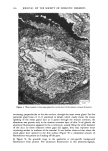
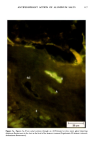
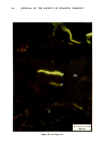
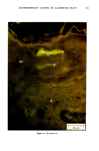
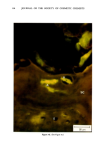
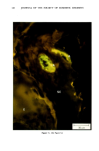
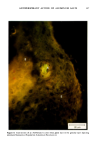
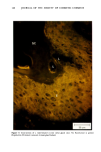
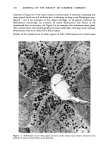
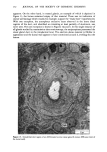
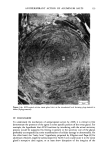
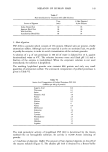
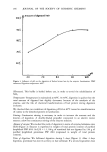
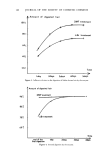
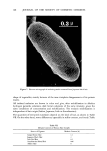
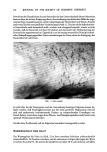
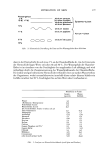
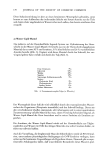
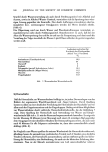
ANTIPERSPIRANT ACTION OF ALUMINUM SALTS 135 within the sweat duct (2). The investigators provided histological evidence of the presence of aluminum (following treatment with an AI-Zr salt) within the sweat gland duct. Although they stated broadly that a similar mechanism was likely in force for all metal salt antiperspirants, including ACH, they provided no histological evidence to support their contention for that commonly used antiperspirant form. Lansdown also demonstrated the presence of aluminum in the outermost segment of the sweat gland duct in the rat after it had been treated with AIC13. However, his efforts to similarly show aluminum after ACH treatment were unrewarded (7). Transmission electron microscopy studies have demonstrated an obstructive mass which fills virtually the entire sweat gland lumen. This mass was shown to extend from the sweat gland opening down to as deep as the intraepidermal duct at the level of the stratum granulosum. Companion morin fluorescence histology studies indicated that this mass consisted at least in part of aluminum. The fluorescing aluminum was observed within sweat glands at specific locations which were similar to those shown to contain the electron dense mass using TEM. That is, the material was found predominantly in the stratum corneum level of the duct, but it also extended frequently into the intraepidermal duct at the stratum granulosum layer. The observations made using both methods of microscopy techniques have provided strong evidence for support of the poral occlusion mechanism of antiperspirant action by ACH. The plug, regardless of its chemical composition, appears adequately extensive and dense to prevent the escape of secreted sweat to the skin surface simply through its presence. Alternatively, neither mode of study, particularly TEM, provided evidence to support other hypotheses. Neither evidence of gross damage to the resorptive duct, nor subtle ultrastructural changes in cell membranes lining the duct could be found. On the basis of these observations, the leakage of secreted sweat through a damaged duct back into the interstitial space must be rejected. Nor was aluminum found in the secretory coil despite the use of a highly sensitive detection method. Accordingly, the metal's direct effect on secretory processes can not be substantiated. V. CONCLUSIONS Transmission electron microscopy of ACH-treated sweat glands indicated that just as the duct leaves the epidermis, and passes through the stratum corneum to the skin surface, its lumen is completely filled with an electron dense, amorphous material. This material, the counterpart of the morin fluorescence with regard to relative location, is believed to be the plug, consisting of ACH or one of its reaction products, responsible for sweat gland inhibition. In contrast, untreated glands were patent and devoid of comparable material. Morin fluorescence microscopy of those glands revealed that aluminum was present within the duct, generally as a solid mass at the level of the stratum corneum. Occasionally, some aluminum fluorescence was also observed in the duct at the level of the upper epidermis. Fluorescence was never obserwd in control (untreated) glands.

136 JOURNAL OF THE SOCIETY OF COSMETIC CHEMISTS VI. ACKNOWLEDGEMENT We are indebted to Morris Shelanski, M.D. of Products Investigations, Inc., Consho- hocken, PA. for performing the biopsy procedures. REFERENCES (1) W. B. Shelley and H.J. Hurley, Jr., Studies on topical antiperspirant control of axillary hyperhydrosis, Acta Derm. Venereol. (Stockholm)., 55, 241-260 (1975). (2) H. H. Relier and W. L. Luedders, Pharmacologic and toxicologic effects of topically applied agents on the eccrine sweat glands. Part II. Mechanism of action of metal salt antiperspirants, Adv. Mod. Tox., 4, 18-54 (1977). (3) R. P. Quatrale, A. H. Waldman, J. G. Rogers and C. B. Felger, The Mechanism of Antiperspirant action by aluminum salts. I. The effect of cellophane tape stripping on aluminum salt-inhibited eccrine sweat glands. J. Soc. Costa. Chem., 32, 67-73 (1981). (4) M. Wada and T. Takagaki, A simple and accurate method for detecting the secretion of sweat, Tokohu J. Exp. Med. 49, 284 (1948). (5) A. G. E. Pearse, Histochemistry, Theoretical and Applied, (The Williams and Wilkens Company: Baltimore, Md., 1972) p. 1137, p. 1407. (6) C. M. Papa and A. Kligman, Mechanism of eccrine anhidrosis. II. The antiperspirant effect of aluminum salts,J. Invest. Derm. 49, 139-145 (1967). (7) A. B. G. Landsdown, The rat foot pad as a model for examining antiperspirants,J. Soc. Costa. Chem. 24, 677-684 (1973).
Purchased for the exclusive use of nofirst nolast (unknown)
From: SCC Media Library & Resource Center (library.scconline.org)